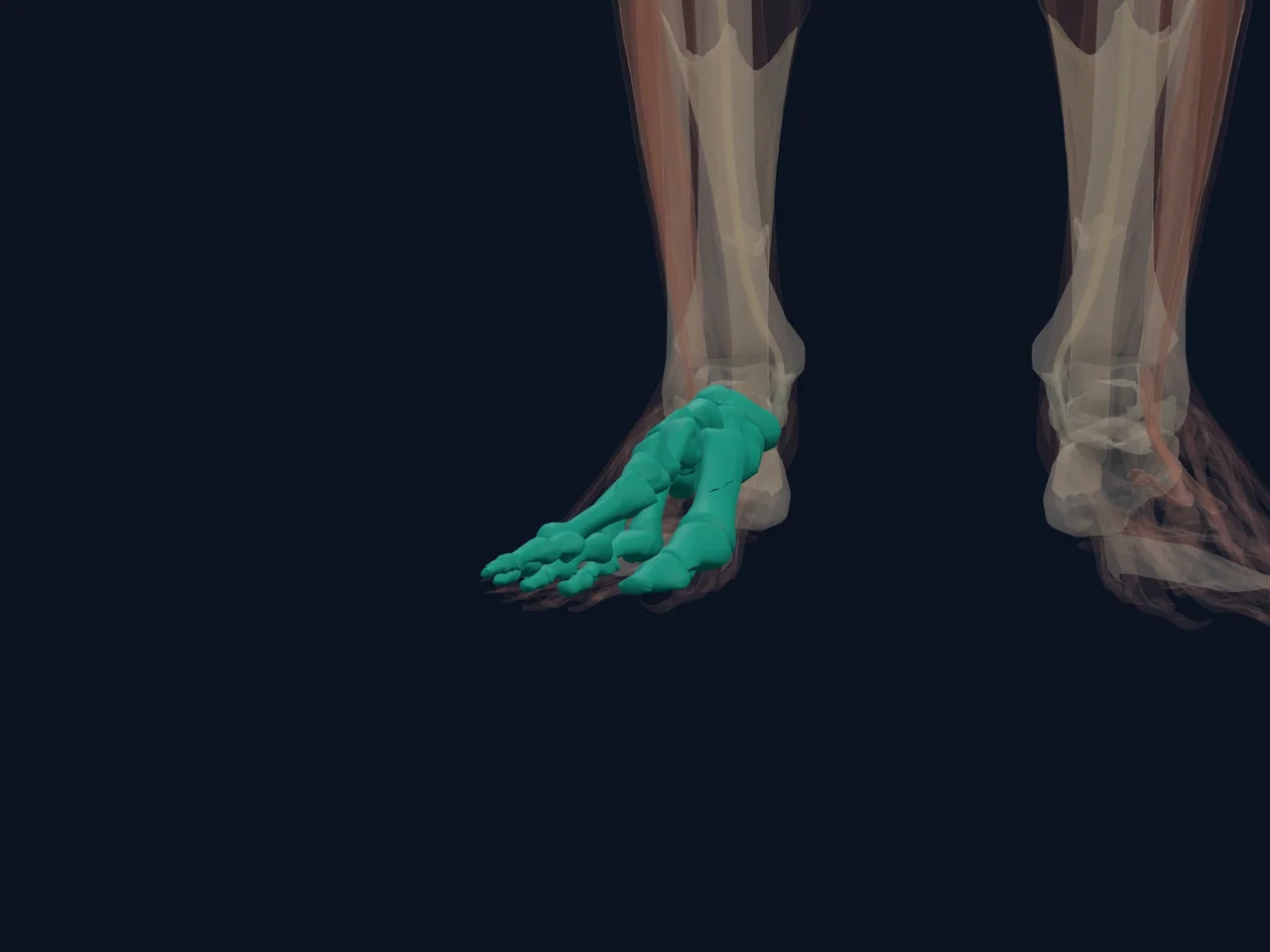
Overview
The foot is not one rigid platform. Its 26 bones and many joints form a structure that can soften landing forces, adapt to uneven ground and then stiffen for push-off.
The Arches
- Medial longitudinal arch: the higher inner arch, running from heel to big toe.
- Lateral longitudinal arch: the lower outer arch, which provides a stable base.
- Transverse arch: curves across the midfoot and forefoot.
The arches are supported by bone shape, ligaments, the plantar fascia and muscles—not by one structure alone. Arch height varies normally between people.
Midfoot and Forefoot
The tarsal bones make up the rear- and midfoot. The five metatarsals run from the midfoot to the toes and take repeated load during running, jumping and long walks. The first metatarsal and sesamoid bones under the big toe help with powerful push-off.
When to Take Midfoot Pain Seriously
Focal pain over a metatarsal that gets worse with impact, swelling on top of the foot, bruising on the sole after a twist, or pain that is progressing rather than settling should be assessed. Bone stress injury and important midfoot injuries can be missed when they are treated as a simple “sore foot.”
Related Guides
This information is for education only and is not a medical diagnosis.