Knee pain can take the enjoyment out of running quickly. The good news is that many running-related knee problems improve when you identify the likely pattern, make a sensible change to your training and build the area back up gradually.
This page helps you sort through the most common patterns by location. It cannot tell you exactly what is wrong, but it can point you toward the right full guide and help you recognise when you should get assessed.
Interactive guide
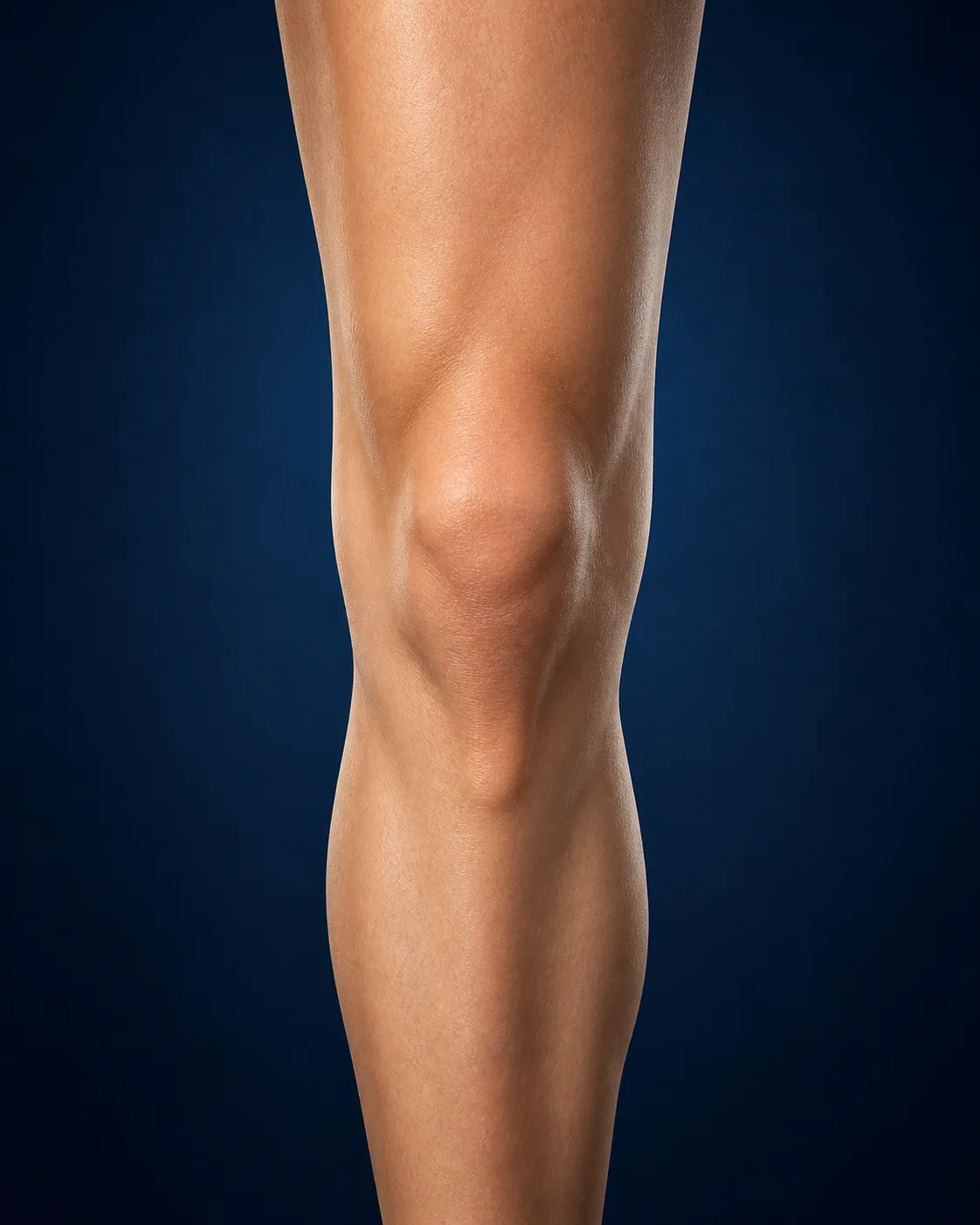
Where does your knee hurt?
Choose the closest spot to see common patterns and the guides that explain them. This can help you understand your options, but it cannot diagnose an injury.
Common possibilities
Pain at the front of the knee
Often load-related and common in runners, but the exact point matters.
Common possibilities
Pain on the outside of the knee
A gradual, precise outer-knee pain during a run often fits this pattern.
Common possibilities
Pain on the inside of the knee
The difference between joint-line pain and pain below it is useful.
Common possibilities
Pain behind the knee
This area is less specific, so the wider pattern matters more than the exact point.
Common possibilities
A focal spot on the upper shin or bone
Focal bone pain deserves more caution than diffuse muscle soreness.
Get assessed promptly for a major twist or fall, rapid swelling, locking, repeated giving way, inability to bear weight, a hot swollen knee with fever, or focal bone pain that is worsening.
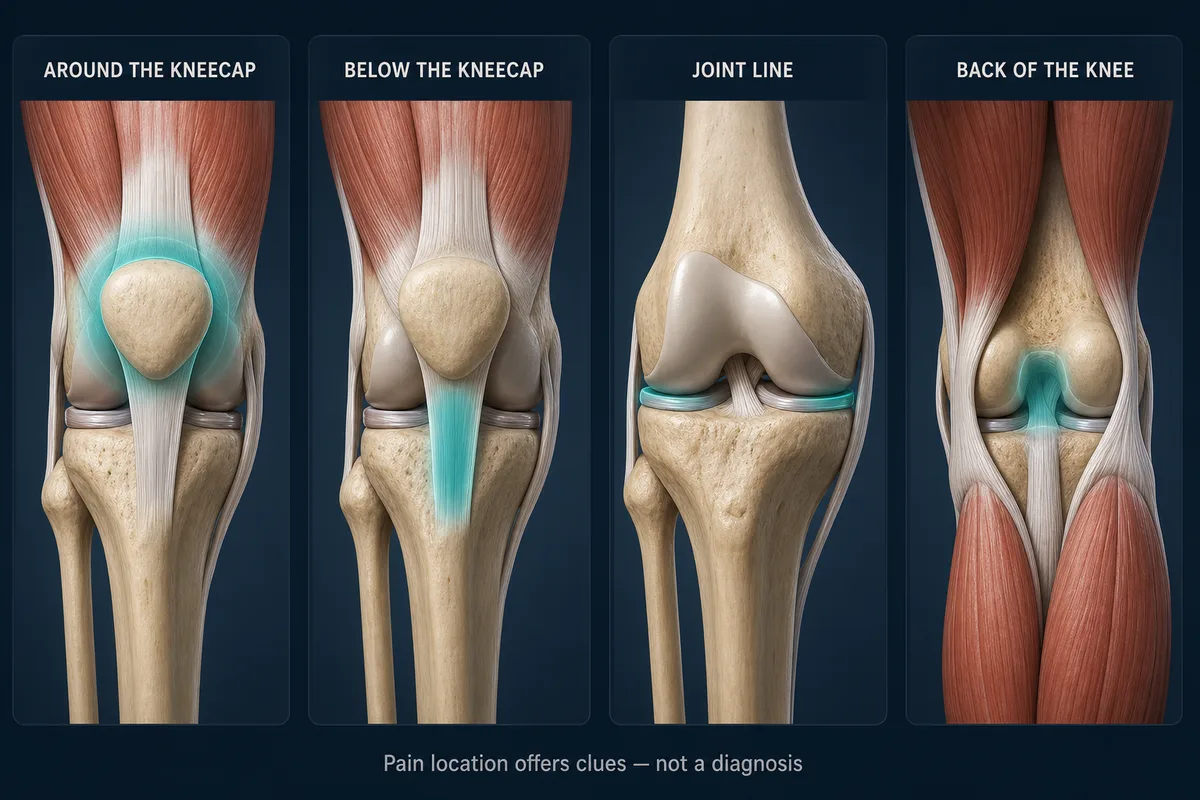
The exact spot matters, but more than one structure can cause pain in the same area.
First: When Should You Get It Checked?
Pause running and seek prompt assessment if you had a twist, collision or fall with rapid swelling; your knee locks or cannot fully straighten; it repeatedly gives way; you cannot bear weight; or the joint is hot, very swollen or paired with fever. A very specific bony spot that gets worse with every run, progresses to walking or rest pain, or hurts with hopping also needs checking for a possible bone stress injury.
If none of those apply, use the closest pain location below as a starting point.
Front of the Knee: Around or Behind the Kneecap
A common pattern is patellofemoral pain. This is the classic “runner’s knee” ache around or behind the kneecap. It can also show up on stairs, in squats or after sitting with the knee bent. It often follows a jump in distance, hills, speed work or a return to running.
Also consider: pain very specifically just below the kneecap can fit patellar tendinopathy; pain directly above it can fit quadriceps tendinopathy or, after a sudden pull, a quadriceps strain.
Outside of the Knee
A common pattern is iliotibial band syndrome. This is usually a fairly local pain on the outer side of the knee that builds during a run. Hills, cambered roads and a quick mileage increase are common triggers.
Also consider: a lateral meniscus or LCL injury is more relevant after a twist or direct blow, especially with swelling, joint-line pain, catching or instability.
Inside of the Knee, Below the Joint Line
A common pattern is pes anserine pain. Tenderness a few centimetres below the inner knee joint can come from the pes anserine tendons and bursa. Running volume, hills and stairs can aggravate it.
Also consider: pain exactly on the joint line after a twist, locking or swelling needs consideration of the medial meniscus. Pain directly along the inner ligament after a side impact may fit an MCL injury.
Back of the Knee
The back of the knee is less specific. It can reflect hamstring tendon irritation, a fluid-filled Baker’s cyst, a meniscus problem or another joint issue. A visible lump, a lot of swelling, sudden calf swelling or pain after a significant injury should be assessed rather than treated as a routine running niggle.
Upper Shin or a Very Specific Tender Spot on Bone
Pain that spreads along a broader inner shin can fit medial tibial stress syndrome. Pain that is focused in one small bony spot, worsens with impact and does not settle as usual can be more concerning for a tibial stress fracture. Do not keep testing focal bone pain with more runs.
What to Do With a New, Gradual Running Pain
- Make one small training change first. Reduce distance, pace, hills or frequency instead of stopping every activity at once.
- Pay attention to the pattern. Notice where it hurts, when it starts on a run and how it feels later that day or the next morning.
- Keep strength in the plan. Gradual hip, quadriceps, calf and hamstring work helps your leg handle running again.
- Build back in stages. Get comfortable on flat, easy runs before adding speed, hills or a big jump in distance.
- Get help when it is not settling. A physiotherapist or sports-medicine clinician can look at your knee, hip, foot and training history together.
Pain location is a starting point. If the pattern is worsening, affecting normal walking or not improving with a sensible reduction in load, it is time for an assessment.
Related Reading
- Patellofemoral pain
- IT-band syndrome
- Pes anserine pain
- Patellar tendinopathy
- Knee pain when squatting
References
- Willy RW, et al. "Patellofemoral Pain: Clinical Practice Guidelines." Journal of Orthopaedic & Sports Physical Therapy. 2019;49(9):CPG1-CPG95. https://doi.org/10.2519/jospt.2019.0302
- Louw M, et al. "Iliotibial band syndrome in runners: a systematic review." Journal of Orthopaedic & Sports Physical Therapy. 2020;50(4):205-214. https://pubmed.ncbi.nlm.nih.gov/31893333/
- Mohseni M, Mabrouk A, Li D. "Pes Anserine Bursitis." StatPearls. Updated 2024. https://www.ncbi.nlm.nih.gov/books/NBK532941/
This information is for education only and is not a medical diagnosis. InjuryAtlas does not replace an assessment by a qualified health professional. Seek urgent care for major trauma, a hot swollen joint with fever, loss of function, or calf swelling with chest pain or shortness of breath.