Anatomy at a Glance
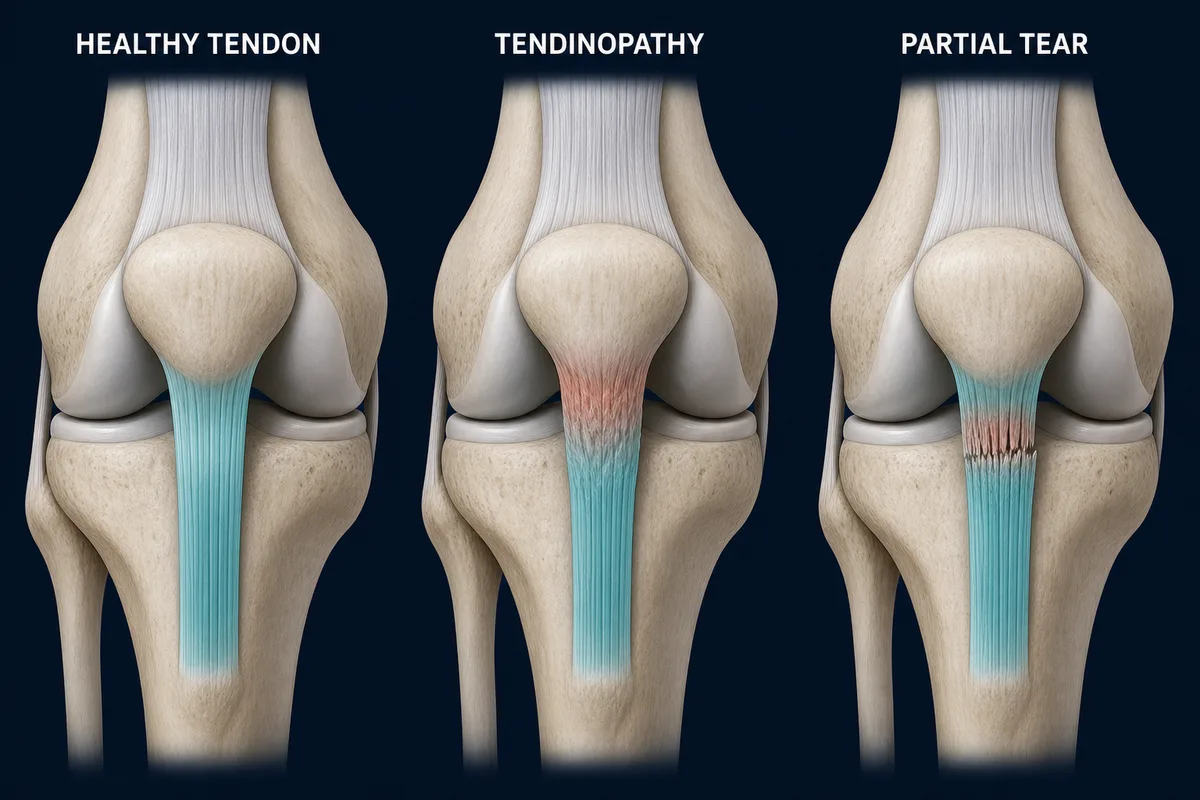
Patellar tendinopathy usually affects the upper tendon just below the kneecap. Tendinopathy is not the same as a partial tendon tear.
Overview
Patellar tendinopathy is a load-related tendon problem usually felt just below the kneecap. It is common in jumping sports but can also occur with sprinting, heavy squats or a rapid increase in training.
The term tendinopathy is preferred to “tendinitis” because persistent tendon pain is not explained by inflammation alone.
Typical Pattern
- Localized pain near the lower pole of the kneecap
- Pain with jumping, landing, sprinting or heavy knee-dominant exercise
- Stiffness or discomfort when beginning activity
- Symptoms that may warm up during training, then feel worse afterward
- Tenderness over the tendon
Pain at the front of the knee can also come from the patellofemoral joint, fat pad, bursa, growth plate or other structures. Tenderness alone does not confirm tendinopathy.
Why It Develops
Symptoms often follow a mismatch between tendon capacity and demand—for example, a sharp increase in jump volume, sprinting or heavy squatting without enough recovery. This does not mean loading is harmful. Appropriately dosed loading is also central to rebuilding capacity.
Treatment
Complete rest may settle symptoms temporarily but does not rebuild the tendon. Management usually combines short-term adjustment of aggravating volume with progressive strengthening. Isometric exercise can sometimes help manage pain, while slow resistance or other progressive tendon-loading programs build capacity over time.
Exercise choice and progression should reflect symptom response, strength and sport demands. Passive treatments may help symptoms for some people, but they do not replace gradual loading.
When to Get Assessed
Arrange an assessment when pain is persistent, worsening or limiting everyday activity. After a sudden pop, rapid swelling, a palpable gap or inability to actively straighten the knee or perform a straight-leg raise, seek urgent assessment for a possible tendon rupture.
Related Reading
- Patellar tendinopathy rehabilitation guide
- Patellar tendon anatomy
- Patella anatomy
- Why does my knee hurt when I squat?
References
- Breda SJ, et al. “Effectiveness of progressive tendon-loading exercise therapy in patients with patellar tendinopathy.” https://pubmed.ncbi.nlm.nih.gov/33219115/
- Malliaras P, Cook J, Purdam C, Rio E. “Patellar Tendinopathy: Clinical Diagnosis, Load Management, and Advice for Challenging Case Presentations.” https://pubmed.ncbi.nlm.nih.gov/26390269/
This information is for education only and is not a medical diagnosis. InjuryAtlas does not replace an assessment by a qualified health professional. If you have severe pain, visible deformity, numbness, loss of function, or symptoms that are getting worse, seek medical care promptly.