Overview
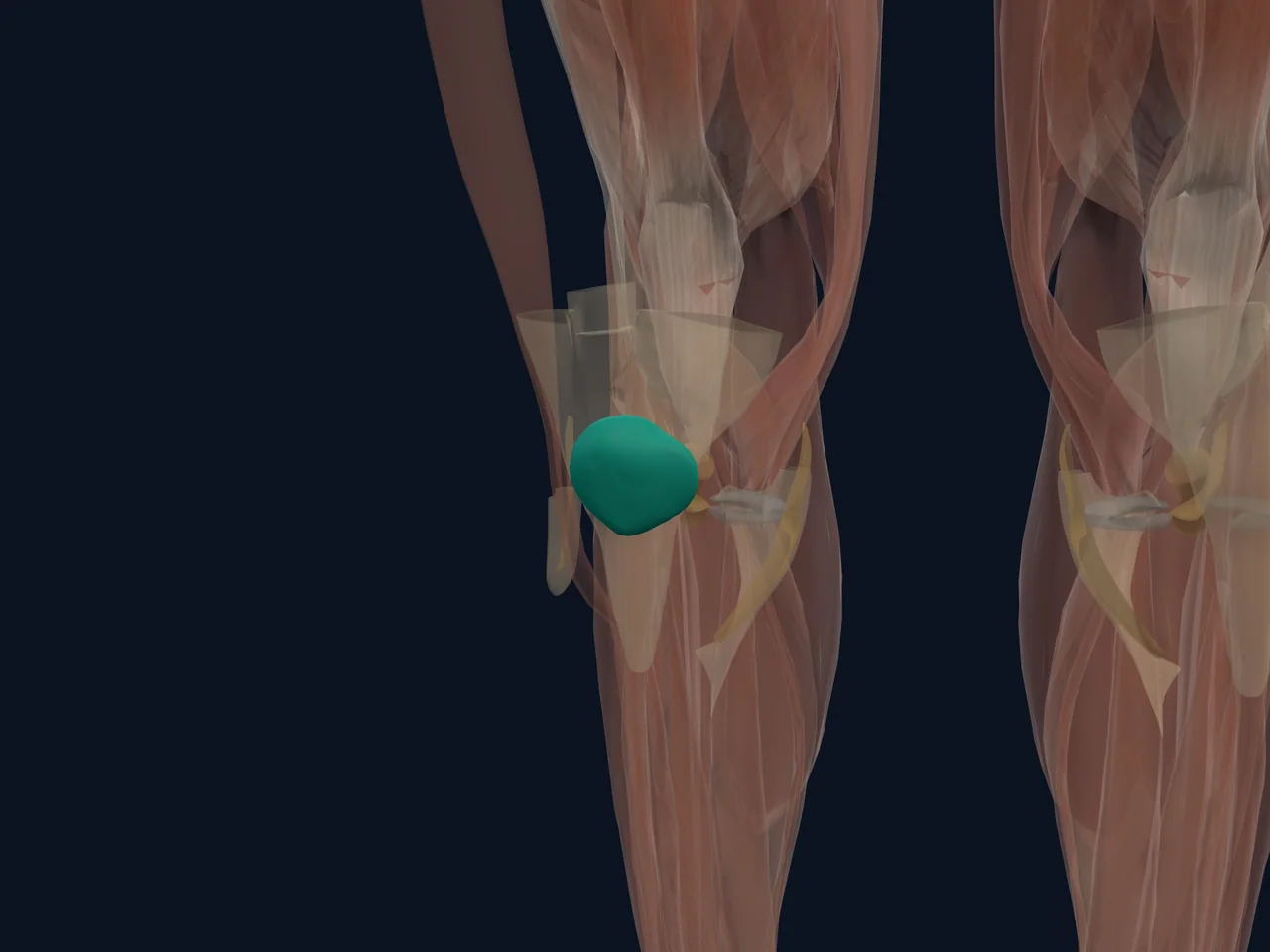
The patella, usually called the kneecap, is the small bone at the front of the knee. It sits inside the quadriceps extensor mechanism: the quadriceps tendon attaches above it and the patellar tendon continues from its lower edge to the shinbone.
The patella is not just a shield. By holding the tendon farther away from the knee's centre of rotation, it gives the quadriceps better leverage when you straighten the leg.
Location and Connections
- Sits in front of the lower end of the femur
- Glides within the trochlear groove as the knee bends and straightens
- Connects superiorly with the quadriceps tendon
- Connects inferiorly with the patellar tendon
- Has smooth cartilage on its back surface where it meets the femur
What It Does
The patella helps transmit force from the quadriceps to the tibia, improves the mechanical advantage of the quadriceps and protects deeper joint structures. Its contact with the femur changes as the knee bends, so the load behind the kneecap also changes with activities such as stairs, squats and jumping.
Common Problems
- Patellofemoral pain around or behind the kneecap
- Patellar instability or dislocation
- Cartilage irritation or wear
- Bone bruise or fracture after direct trauma
- Irritation where the quadriceps or patellar tendon attaches
Pain at the front of the knee does not prove the patella itself is damaged. Tendons, the fat pad and nearby soft tissues can create pain in the same area.
Clinical Relevance
A clinician may assess swelling, tenderness, patellar movement, leg alignment and how the knee responds to loaded tasks. A sudden injury with deformity, rapid swelling or an inability to straighten the knee needs prompt assessment.
Related Anatomy
References
- StatPearls. "Anatomy, Bony Pelvis and Lower Limb, Knee Patella." https://www.ncbi.nlm.nih.gov/books/NBK519534/
- AAOS OrthoInfo. "About Your Knee." https://orthoinfo.aaos.org/globalassets/pdfs/about-your-knee.pdf