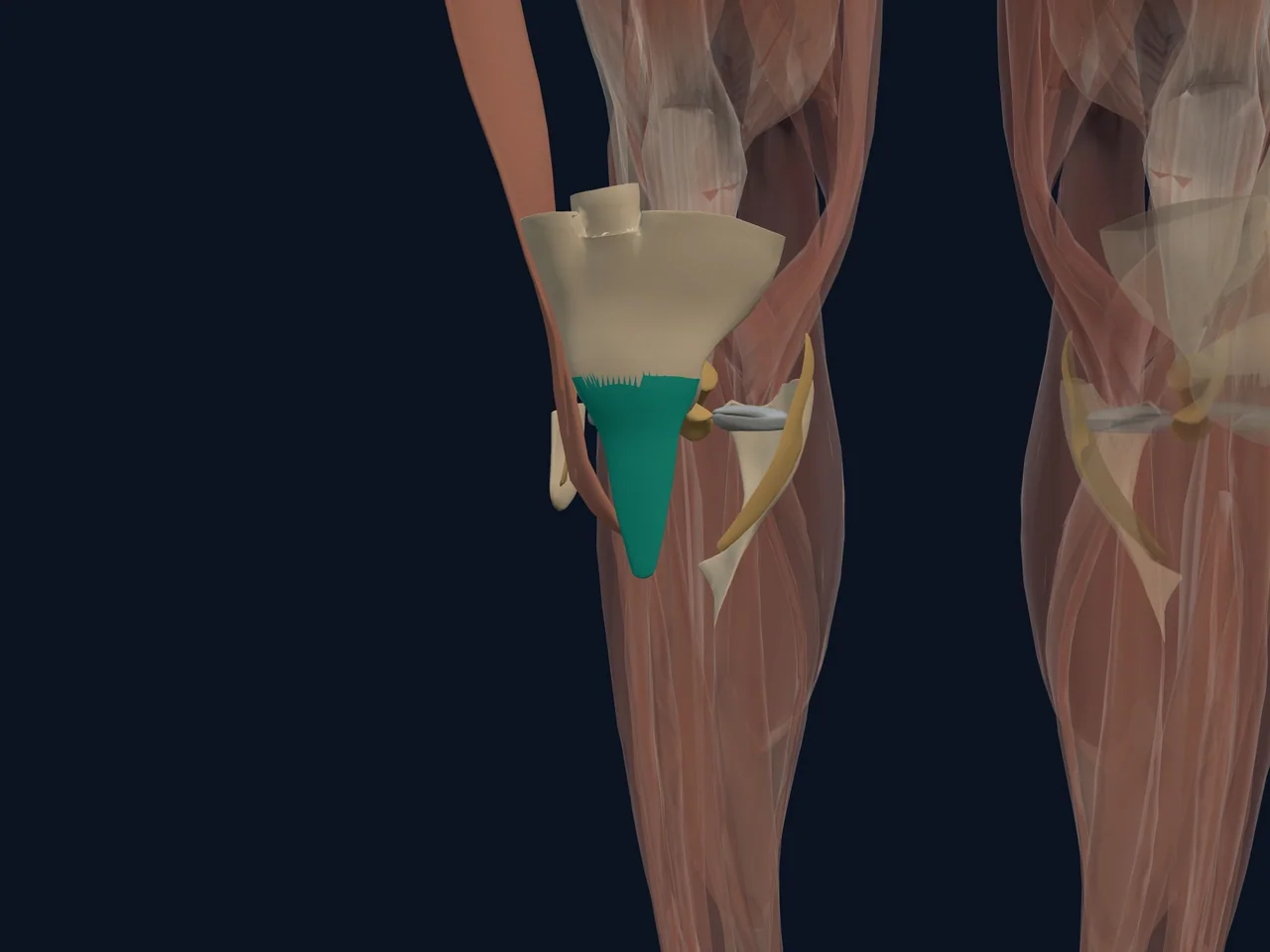
Overview
The patellar tendon is the strong band between the bottom of the kneecap and the tibial tubercle at the front of the shinbone. Together with the quadriceps, quadriceps tendon and patella, it forms the knee's extensor mechanism—the system that straightens the knee and controls it as you land or lower into a squat.
Although it connects bone to bone and is technically ligament-like, clinicians commonly call it a tendon because it continues the force produced by the quadriceps.
Location and Attachments
- Begins at the inferior pole of the patella
- Runs downward at the front of the knee
- Attaches to the tibial tubercle
- Blends with tissue from the quadriceps tendon and patellar retinacula
What It Does
The tendon transfers quadriceps force across the knee. It works hard during jumping, landing, sprinting, stairs and heavy knee-dominant strength training. Those activities do not automatically harm it; symptoms more often appear when loading exceeds what the tendon currently tolerates.
Common Problems
- Patellar tendinopathy, often felt near the lower pole of the kneecap
- Partial or complete rupture
- Irritation at the tibial tubercle in growing athletes
- Pain from neighbouring structures that feels tendon-related
Tenderness in this area alone cannot confirm tendinopathy. The pattern of pain, loading history, strength and clinical examination all matter.
When Function Is Lost
A complete rupture can interrupt the extensor mechanism. After a sudden injury, an inability to actively straighten the knee or perform a straight-leg raise needs urgent medical assessment.
Related Anatomy
References
- StatPearls. "Patellar Tendon Rupture." https://www.ncbi.nlm.nih.gov/books/NBK513275/
- StatPearls. "Patellar Tendinopathy." https://www.ncbi.nlm.nih.gov/books/NBK532969/