Overview
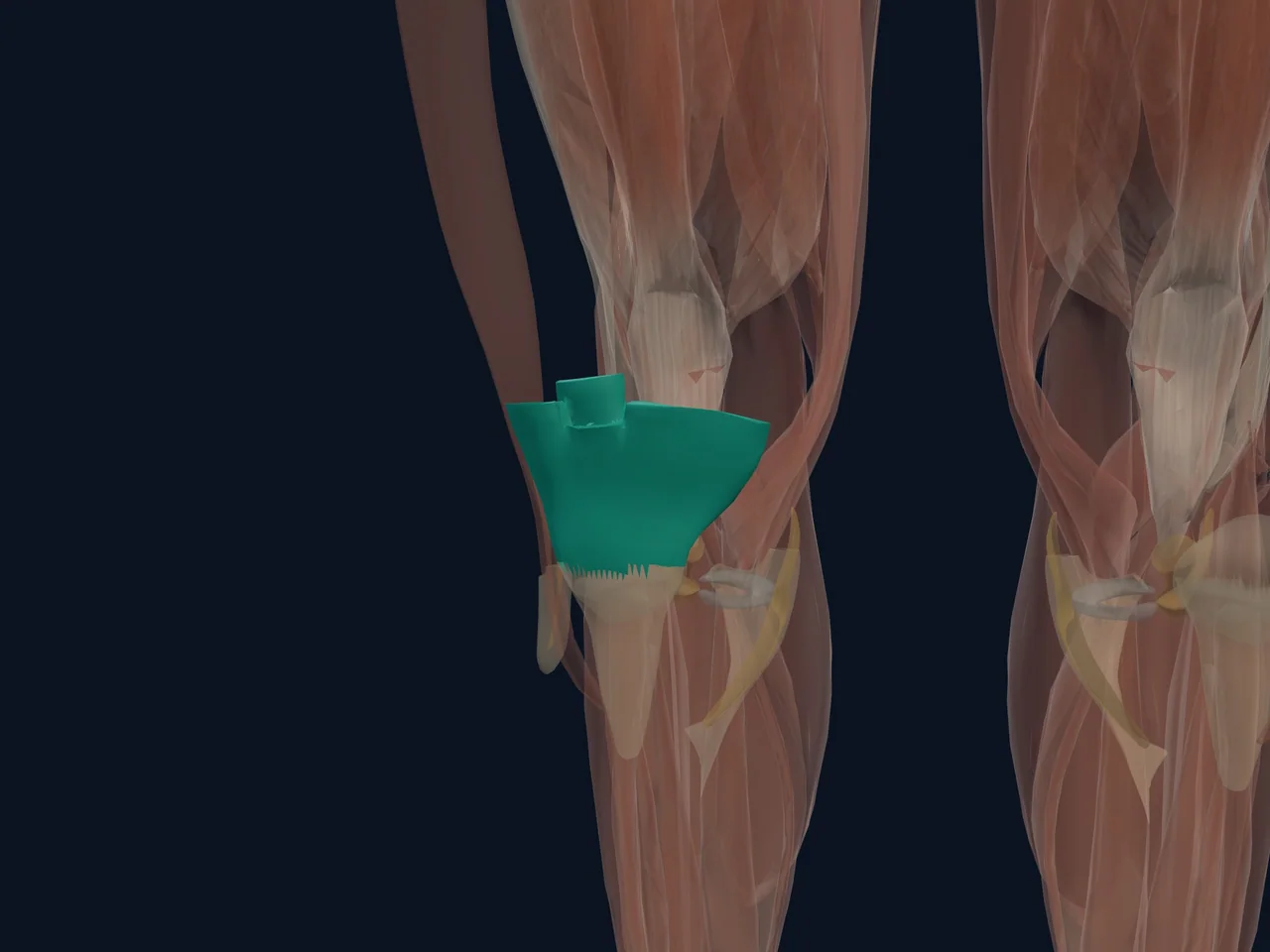
The quadriceps tendon is the broad tendon above the kneecap. It gathers force from the four quadriceps muscles and attaches them to the patella. From there, force continues through the patellar tendon to the tibia.
Location and Connections
- Formed by the rectus femoris, vastus lateralis, vastus medialis and vastus intermedius
- Attaches to the upper border and surface of the patella
- Blends with the tissues beside the patella that help support the extensor mechanism
- Continues functionally into the patellar tendon
What It Does
The quadriceps tendon helps straighten the knee, control knee bending under load and stabilize the kneecap. It is active when you stand up, climb stairs, squat, run, jump and decelerate.
Common Problems
- Quadriceps tendinopathy or load-related pain above the kneecap
- Strain near the muscle–tendon junction
- Partial tear
- Complete rupture, more often after a forceful contraction or fall
Pain above the kneecap can also come from the patellofemoral joint or nearby tissue, so location is only one clue.
Clinical Relevance
Assessment usually considers the injury mechanism, swelling, tenderness, active knee extension and whether a straight-leg raise is possible. A sudden pop with a gap above the kneecap or loss of active extension warrants prompt medical care.
Related Anatomy
References
- StatPearls. "Anatomy, Bony Pelvis and Lower Limb, Knee." https://www.ncbi.nlm.nih.gov/books/NBK500017/
- StatPearls. "Patellar Tendon Rupture" (extensor mechanism anatomy). https://www.ncbi.nlm.nih.gov/books/NBK513275/