Muscle-growth potentialHow well this movement can be loaded and progressed for building muscle.
Exercises · IA-SHO-EXE-012
Dumbbell Shoulder Press
Learn dumbbell shoulder press form, muscles worked, benefits, common mistakes and safe progressions.
At a glance
Exercise profile
- Target muscles
- deltoid
- Exercise type
- Strength
- Equipment
- Dumbbells and adjustable bench optional
- Mechanics
- Compound
- Movement pattern
- Push (bilateral)
- Experience level
- intermediate
- Secondary muscles
- triceps brachii, serratus anterior
What the science says
Study including the shoulder press
What it found: A shoulder-exercise comparison found the shoulder press created more front-deltoid activity than the other exercises tested and high middle-deltoid activity.
What that means here: That is acute EMG, not a hypertrophy ranking. It supports using a press as a primary front-shoulder strength movement alongside more direct side-deltoid work.
Overhead shoulder and triceps strength
What this exercise works
The deltoids and triceps raise the dumbbells overhead while the rotator cuff and shoulder blade muscles guide the position.
Primary emphasis
- deltoid
Secondary muscles
- triceps brachii
- serratus anterior
Stabilizers
- rotator cuff
- upper trapezius
- abdominal muscles
Movement and joint actions
- Shoulder elevation
- Elbow extension
- Upward scapular rotation
Muscle contribution changes with position, range, resistance and individual technique.
Why it can help
Potential benefits and carryover
Benefits depend on technique, dosage, consistency and whether the exercise suits the person. Sport carryover means supporting the physical demands of the activity—not guaranteeing performance or preventing injury.
Everyday benefits
- Lets each arm work independently through an overhead pressing pattern
- Provides a clear way to add direct shoulder and triceps volume
- Can be performed seated for more support or standing for more trunk demand
Training carryover
- Builds toward barbell pressing, landmine presses and overhead carries
- Balances horizontal pressing with direct overhead work
Sport carryover
- Supports overhead strength in throwing, racquet and contact sports
Technique
Dumbbell Shoulder Press tips
Use these cues to keep the movement controlled and focused on its intended purpose.
- Start with a comfortable grip and keep the wrists stacked over the forearms.
- Keep the ribs over the pelvis rather than turning the press into a low-back lean.
- Press up and slightly back so the weights finish over the shoulders.
- Use a pain-free range and reduce the load if the shoulder starts to pinch.
Overview
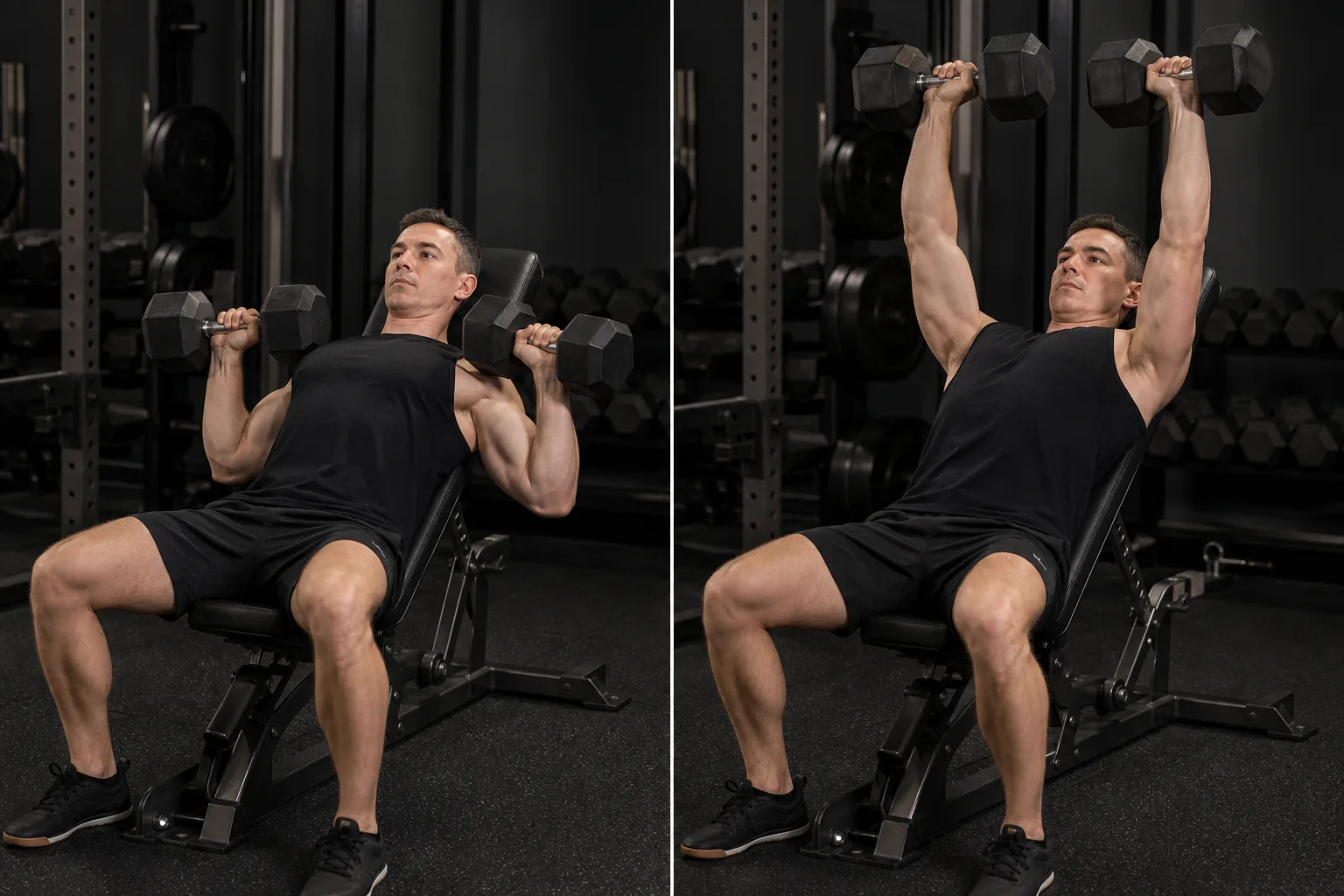
The dumbbell shoulder press is a versatile overhead press for the shoulders and triceps. Dumbbells allow each arm to find a comfortable path, making it a practical option after the barbell press or as a main shoulder movement.
How to Do It
- Sit or stand tall holding dumbbells around shoulder height.
- Brace the trunk and keep the wrists stacked over the elbows.
- Press the dumbbells overhead in a smooth, controlled path.
- Finish with the weights over the shoulders, not drifting far forward.
- Lower slowly to the starting position.
What You Should Feel
Shoulders doing most of the work, with the triceps helping near the top. A strong effort is normal; sharp pain, catching or instability is not.
Common Mistakes
- Leaning the low back to turn the movement into an incline press
- Starting too low if the shoulder does not tolerate that range
- Letting the elbows flare far behind the body
- Moving the dumbbells unevenly when the load is too heavy
Progression
Use a seated version first if bracing is limiting the set. Add repetitions with the same controlled path, then increase the dumbbells in small steps.
When to Stop
Reduce the range or load if symptoms increase during the set or remain worse afterward. Stop for sharp pain, catching, instability, new numbness or a sudden loss of strength.
Educational information only — not a diagnosis.
This information does not diagnose an injury or replace care from a qualified healthcare professional.