Exercises · IA-BAC-EXE-006

Seated Thoracic Rotation

Learn a gentle seated thoracic rotation drill while keeping the pelvis stable.

Browse Lower Back
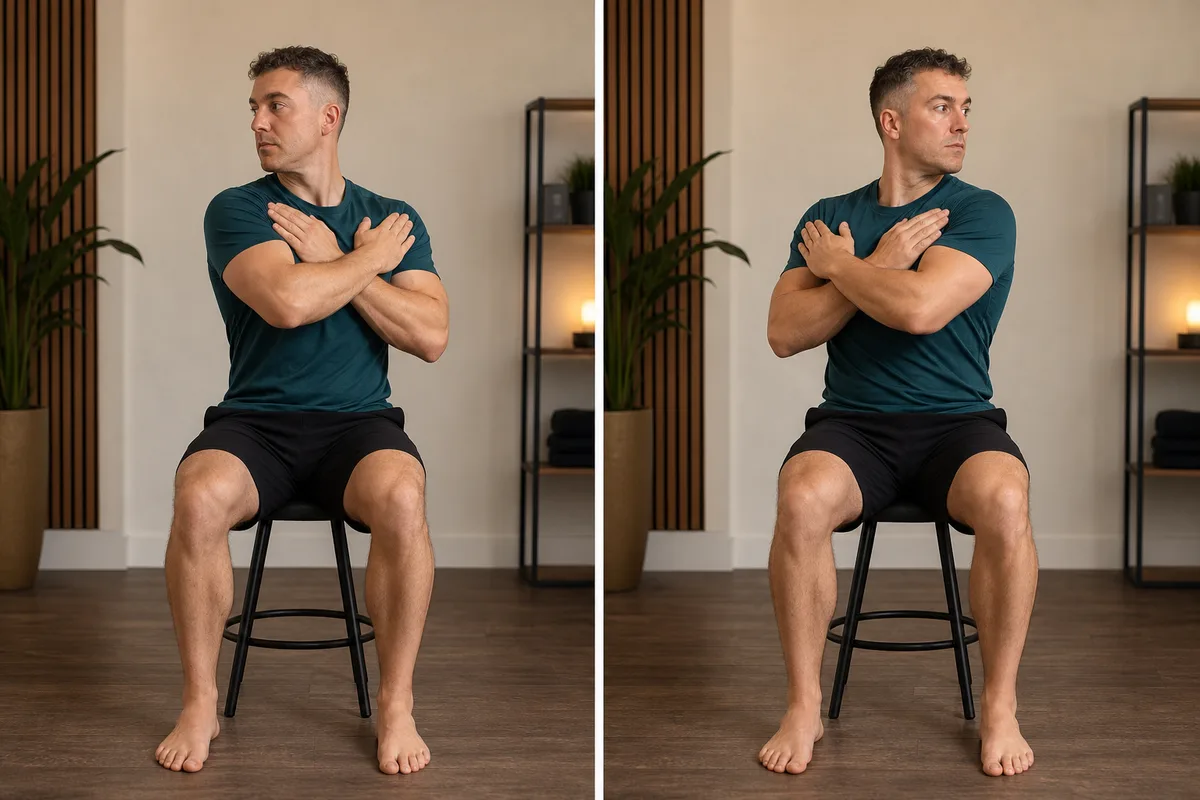
Start and finish demonstration of Seated Thoracic Rotation
Start and finishUse the written steps below for the full technique and safety guidance.

At a glance

Exercise profile

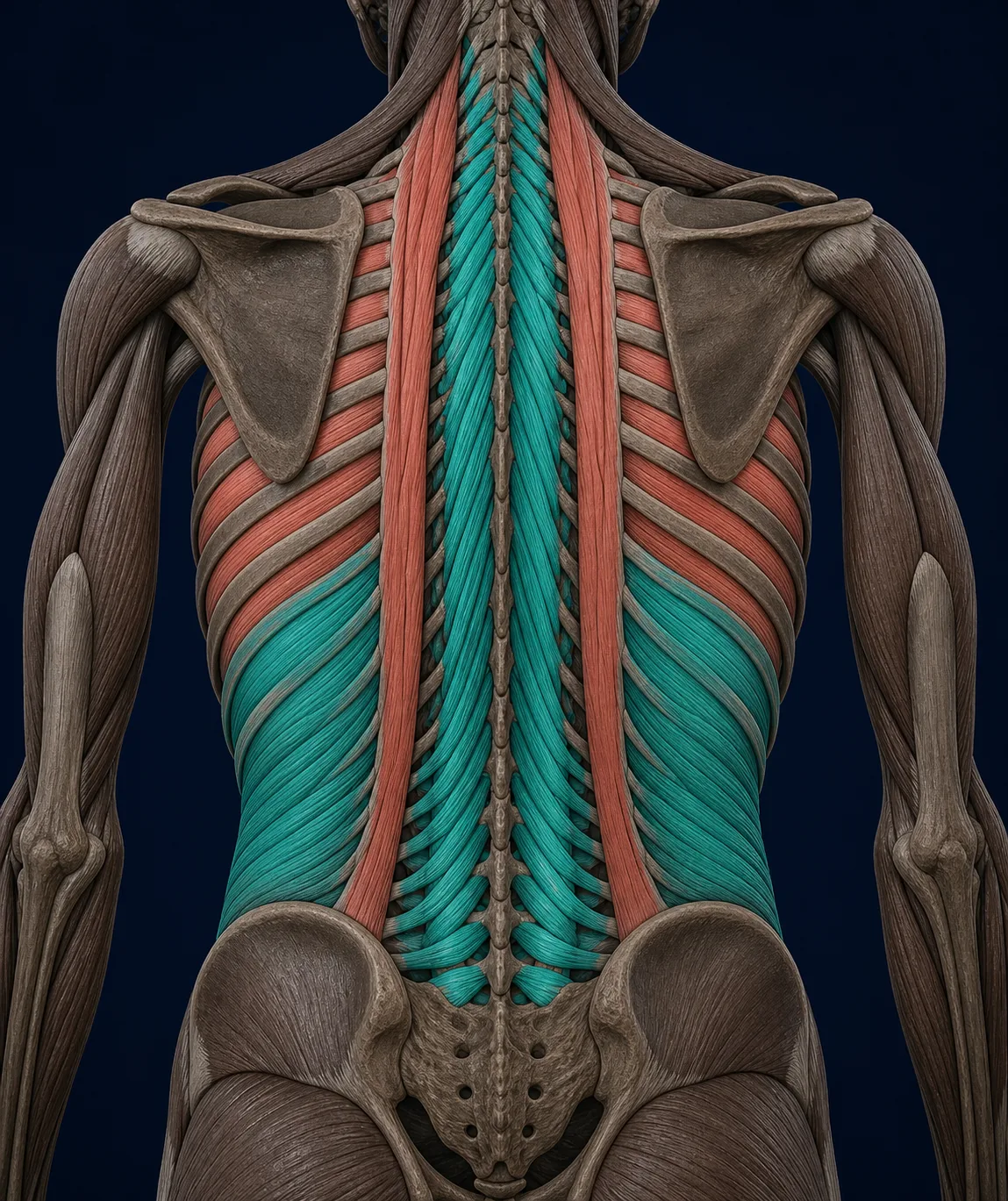
Target muscles
internal and external obliques, thoracic multifidus, thoracic rotatores
Exercise type
Mobility
Equipment
Chair
Mechanics
Compound
Movement pattern
Rotation (bilateral)
Experience level
beginner
Secondary muscles
erector spinae, semispinalis thoracis, intercostal muscles

Thoracic mobility

What this exercise works

This drill uses the obliques and small spinal rotators to turn the thoracic spine while the pelvis and lower back remain controlled.

Anatomy highlighting the structures involved in Seated Thoracic Rotation
Teal — primary muscles doing most of the workRed — secondary muscles assistingGrey — stabilizers and surrounding anatomy

Primary emphasis

  • internal and external obliques
  • thoracic multifidus
  • thoracic rotatores

Secondary muscles

  • erector spinae
  • semispinalis thoracis
  • intercostal muscles

Stabilizers

  • deep abdominal muscles
  • lumbar multifidus
  • hip stabilizers

Movement and joint actions

  • Thoracic spinal rotation
  • Controlled trunk rotation
  • Pelvic stabilization

Muscle contribution changes with position, range, resistance and individual technique.

Why it can help

Potential benefits and carryover

Benefits depend on technique, dosage, consistency and whether the exercise suits the person. Sport carryover means supporting the physical demands of the activity—not guaranteeing performance or preventing injury.

Everyday benefits

  • Practises turning through the mid-back rather than forcing the lower back
  • Can reduce the feeling of stiffness after prolonged sitting
  • Builds awareness of keeping the pelvis still while the trunk rotates
  • Uses a supported position that is easy to control

Training carryover

  • Supports comfortable torso rotation during rows and reaching drills
  • Can be used in warm-ups before rotational or upper-body training
  • Helps separate thoracic motion from lumbar and pelvic movement

Sport carryover

  • Supports the rotational range used in golf and racquet sports
  • Supports turning mechanics used in throwing and field sports

Technique

Seated Thoracic Rotation tips

Use these cues to keep the movement controlled and focused on its intended purpose.

  1. Sit on the front half of the chair with both feet firmly supported.
  2. Keep the knees and belt line facing forward as the chest turns.
  3. Grow tall through the crown of the head instead of leaning backward.
  4. Stop at a comfortable range; the goal is smooth movement rather than forcing a stretch.

Overview

Seated thoracic rotation practises turning through the trunk while the pelvis stays facing forward.

How to Do It

  1. Sit tall with feet flat and arms crossed over the chest.
  2. Keep the knees and pelvis facing forward.
  3. Rotate the chest comfortably to one side.
  4. Return to centre and repeat on the other side.
  5. Begin with 5 slow repetitions per side.

What You Should Feel

Expect gentle movement through the mid-back. Stop for sharp pain, dizziness or spreading neurological symptoms.

Common Mistakes

  • Moving the knees with the trunk
  • Slouching before rotating
  • Forcing the range
  • Holding the breath

Progression

Increase comfortable range or repetitions gradually; resistance is not required for the mobility version.

References

  • North Tees and Hartlepool NHS Foundation Trust. "Thoracic spine rotations in sitting." https://www.nth.nhs.uk/services/trauma-orthopaedics/upper-limb/post-op-physiotherapy/
This is general education, not a diagnosis. Seek assessment for major trauma or new neurological symptoms.
Educational information only

This information does not diagnose an injury or replace care from a qualified healthcare professional.