Muscle-growth potentialHow well this movement can be loaded and progressed for building muscle.
Exercises · IA-CHE-EXE-008
Barbell Bench Press
Learn barbell bench press setup, form cues, muscles worked, common mistakes and safe progressions.
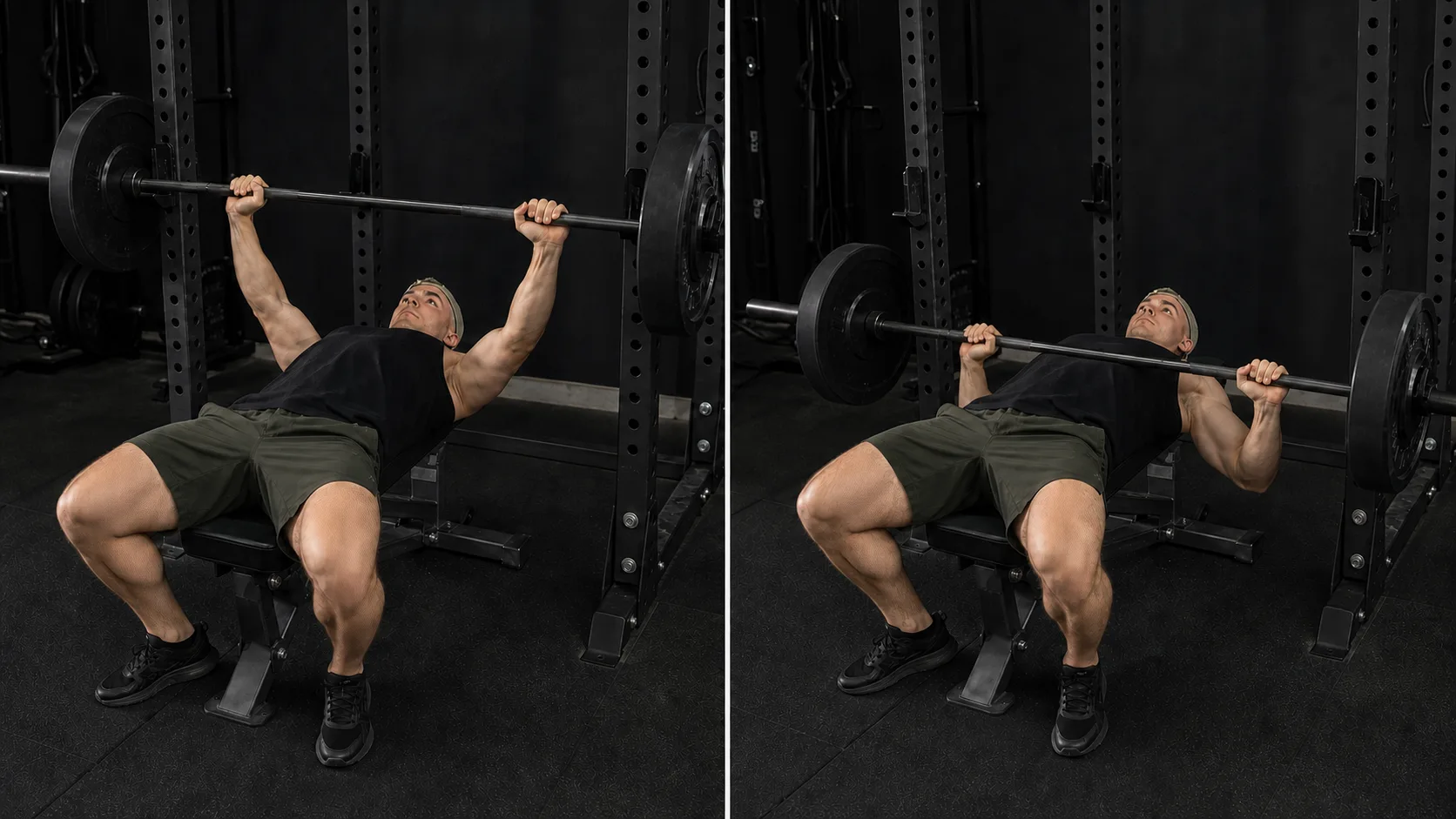
At a glance
Exercise profile
- Target muscles
- pectoralis major
- Exercise type
- Strength
- Equipment
- Flat bench, barbell, rack and safety arms or a spotter
- Mechanics
- Compound
- Movement pattern
- Push (bilateral)
- Experience level
- intermediate
- Secondary muscles
- triceps brachii, anterior deltoid
What the science says
Study in the bench press
What it found: An eight-week trial found low-load bench press and push-ups both increased chest and triceps size and strength when training was progressed to a hard effort.
What that means here: For bench press, a repeatable range and enough effort matter more than chasing one “perfect” loading style.
Heavy horizontal pressing strength and chest development
What this exercise works
The pectoralis major drives the press while the triceps and front deltoids assist; the shoulder-blade muscles provide a stable base.
Primary emphasis
- pectoralis major
Secondary muscles
- triceps brachii
- anterior deltoid
Stabilizers
- rotator cuff
- serratus anterior
- abdominal muscles
Movement and joint actions
- Shoulder horizontal adduction
- Elbow extension
Muscle contribution changes with position, range, resistance and individual technique.
Why it can help
Potential benefits and carryover
Benefits depend on technique, dosage, consistency and whether the exercise suits the person. Sport carryover means supporting the physical demands of the activity—not guaranteeing performance or preventing injury.
Everyday benefits
- Builds chest, triceps and pressing strength with measurable progression
- Allows stable loading for strength and hypertrophy work
- Trains upper-body bracing and shoulder-blade control
Training carryover
- Carries into dumbbell pressing, push-ups and many upper-body strength programs
- Builds a base for heavier compound pressing
Sport carryover
- Supports pushing strength and upper-body contact tolerance
Technique
Barbell Bench Press tips
Use these cues to keep the movement controlled and focused on its intended purpose.
- Set the shoulder blades gently back and down before unracking.
- Keep your feet planted and use a grip that lets the wrists stay stacked over the forearms.
- Lower the bar with control to the lower chest area if comfortable.
- Use safety arms or a competent spotter for challenging sets.
Overview
The barbell bench press is a compound chest exercise performed lying on a flat bench. It is one of the simplest ways to load horizontal pressing progressively, provided the shoulders and bar path stay controlled.
How to Do It
- Set the bar in a rack with safety arms or arrange a reliable spotter.
- Lie with the eyes under the bar, feet planted and shoulder blades gently set.
- Unrack the bar and bring it over the lower chest with straight wrists.
- Lower under control, keeping the elbows at a comfortable angle from the torso.
- Press the bar back up over the shoulders without losing the shoulder-blade position.
What You Should Feel
Chest and triceps effort, with front-shoulder work near the top. Stop if you feel sharp shoulder pain, numbness or an unstable feeling.
Common Mistakes
- Flaring the elbows aggressively
- Bouncing the bar off the chest
- Losing shoulder-blade tension under load
- Bench pressing without safety arms or a spotter when close to failure
Progression
Build consistent sets with a modest load first. Add small plates or repetitions gradually while the bar path and shoulder position remain controlled.
Educational information only — not a diagnosis.
This information does not diagnose an injury or replace care from a qualified healthcare professional.