Exercises · IA-CHE-EXE-005

Doorway Pec Stretch

Learn a controlled doorway pectoral stretch for the front of the chest and shoulder.

Browse Chest & Pecs
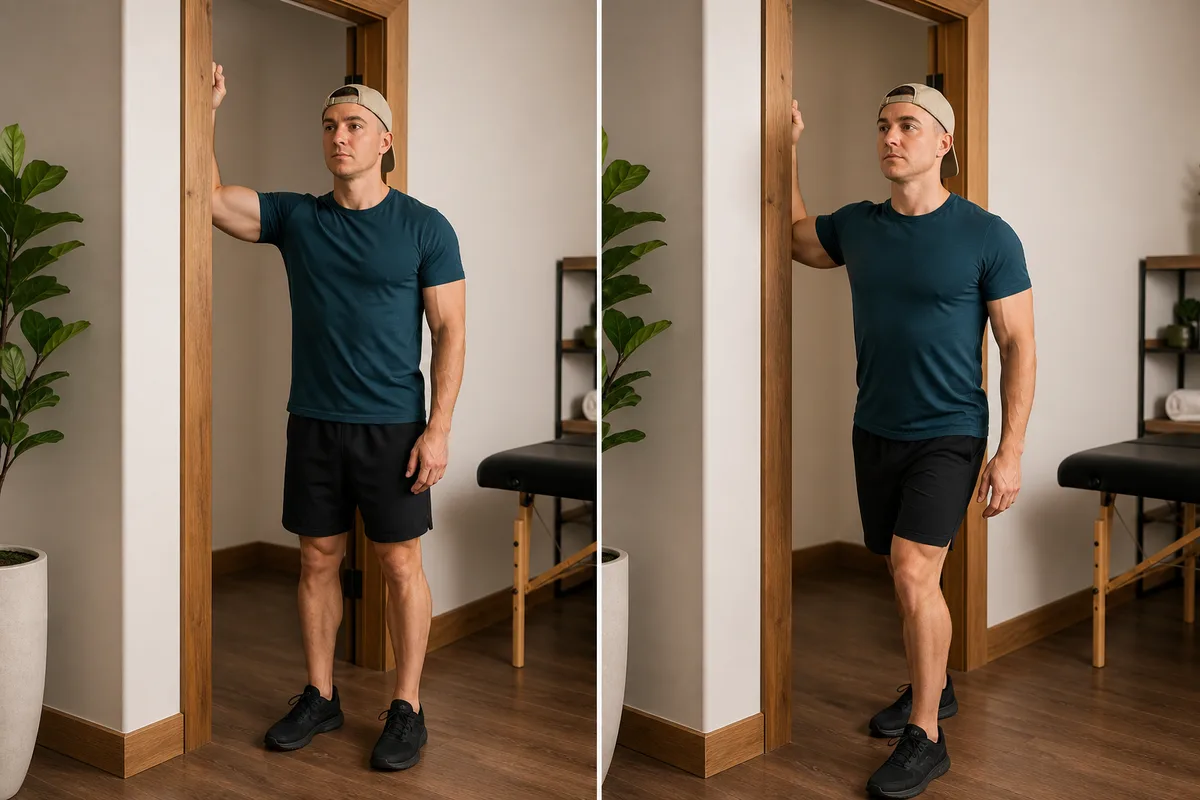
Start and finish demonstration of Doorway Pec Stretch
Start and finishUse the written steps below for the full technique and safety guidance.

At a glance

Exercise profile

Target muscles
pectoralis major, pectoralis minor
Exercise type
Flexibility
Equipment
Door frame
Mechanics
Isolation
Movement pattern
Passive stretch (unilateral)
Experience level
beginner
Secondary muscles
anterior deltoid, biceps brachii

Chest and front-shoulder mobility

What this exercise works

The doorway stretch lengthens the pectoralis major and minor, with a gentler contribution from the anterior shoulder and upper arm.

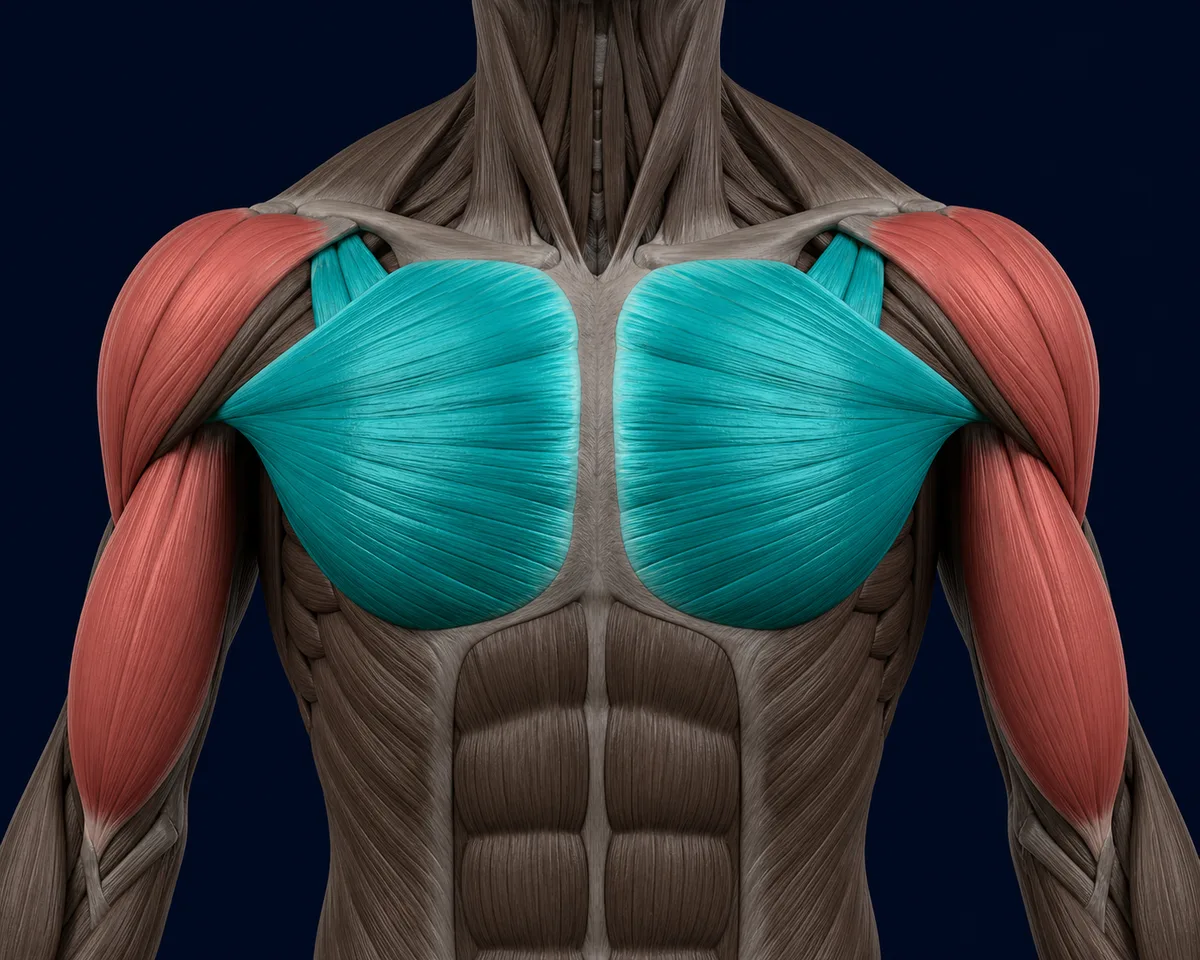
Anatomy highlighting the structures involved in Doorway Pec Stretch
Teal — primary muscles doing most of the workRed — secondary muscles assistingGrey — stabilizers and surrounding anatomy

Primary emphasis

  • pectoralis major
  • pectoralis minor

Secondary muscles

  • anterior deltoid
  • biceps brachii

Stabilizers

  • rotator cuff
  • serratus anterior
  • abdominal muscles

Movement and joint actions

  • Shoulder horizontal abduction
  • Gentle external rotation of the shoulder
  • Scapular positioning

Muscle contribution changes with position, range, resistance and individual technique.

Why it can help

Potential benefits and carryover

Benefits depend on technique, dosage, consistency and whether the exercise suits the person. Sport carryover means supporting the physical demands of the activity—not guaranteeing performance or preventing injury.

Everyday benefits

  • Provides a controllable stretch across the front of the chest
  • Can offset sustained rounded postures from desk work
  • Allows each side to be adjusted independently
  • May make upright reaching and shoulder positioning feel more comfortable

Training carryover

  • Can prepare the chest and shoulders for pressing or overhead sessions
  • Supports comfortable setup positions for rows and upper-body mobility work
  • Helps restore motion after repeated pressing when appropriate

Sport carryover

  • Supports shoulder positioning for swimming and throwing preparation
  • Can assist warm-ups for racquet and overhead sports

Technique

Doorway Pec Stretch tips

Use these cues to keep the movement controlled and focused on its intended purpose.

  1. Keep the elbow close to shoulder height or slightly below it.
  2. Step forward with the whole body instead of twisting sharply away from the arm.
  3. Keep the ribs stacked and avoid arching the lower back.
  4. Use only a mild-to-moderate stretch and stop for tingling, numbness or sharp front-shoulder pain.

Overview

The doorway pec stretch uses a door frame to create a gentle stretch across the front of the chest while the shoulder remains supported.

How to Do It

  1. Stand beside a doorway and place one forearm on the frame with the elbow near shoulder height.
  2. Keep the shoulder relaxed and the ribs stacked over the pelvis.
  3. Take a small step forward until a mild stretch develops across the chest.
  4. Hold for 10–30 seconds without bouncing.
  5. Step back, relax and repeat up to 3 times per side.

What You Should Feel

Expect a broad, gentle stretch across the chest. Stop for sharp front-shoulder pain, tingling, numbness or a pulling sensation at a recent injury site.

Common Mistakes

  • Placing the elbow far above shoulder height
  • Arching the lower back
  • Forcing the shoulder forward
  • Twisting aggressively away from the frame

Progression

Increase the hold gradually before increasing the step. A slightly different arm height changes where the stretch is felt.

References

  • NHS Scotland Right Decisions. "Shoulder Rehabilitation: Pectoralis Stretch in a Doorway." https://www.rightdecisions.scot.nhs.uk/media/alqcguhk/shoulder-rehabilitation-exercises.pdf
This is general education. Follow clinician restrictions after a pectoralis tear, shoulder dislocation or surgery.
Educational information only

This information does not diagnose an injury or replace care from a qualified healthcare professional.