Exercises · IA-CHE-EXE-001

Pec Isometric Press

Learn a gentle pec isometric press that creates chest-muscle tension without moving through a deep pressing range.

Browse Chest & Pecs
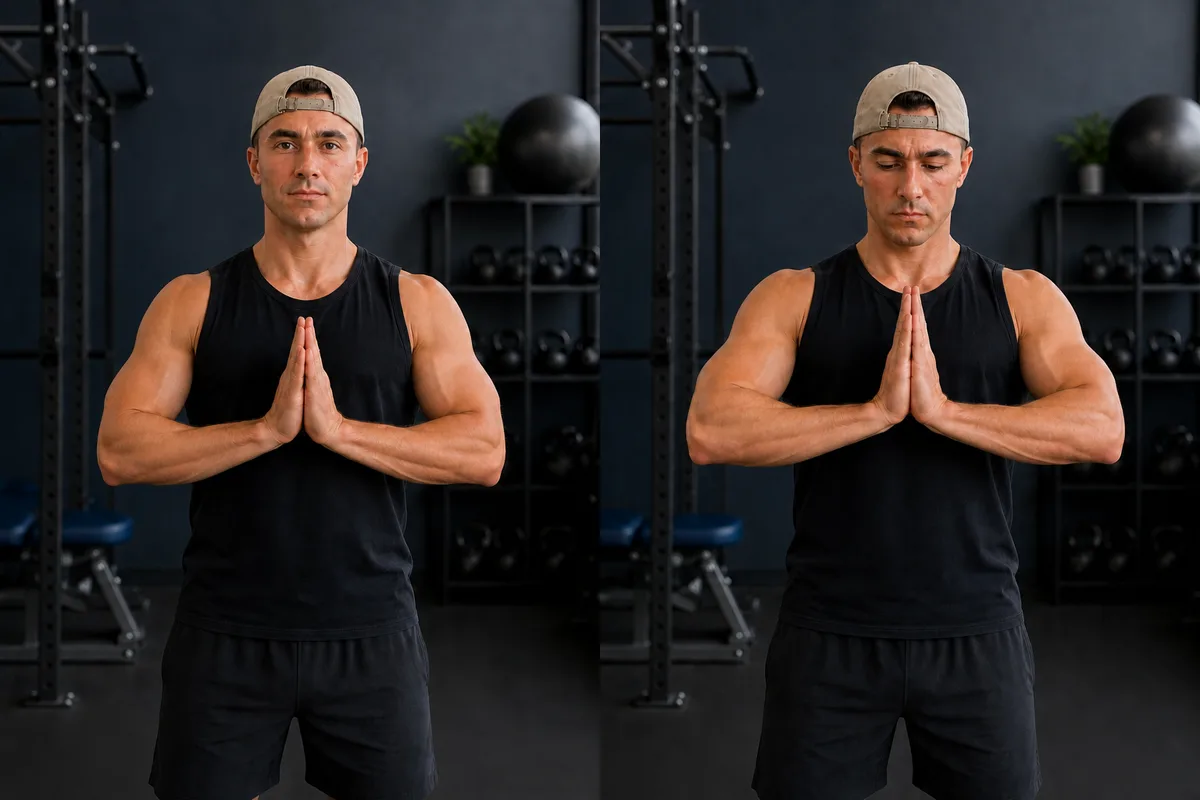
Start and finish demonstration of Pec Isometric Press
Start and finishUse the written steps below for the full technique and safety guidance.

At a glance

Exercise profile

Target muscles
pectoralis major, pectoralis minor
Exercise type
Strength and rehabilitation
Equipment
None
Mechanics
Isolation
Movement pattern
Isometric push (bilateral)
Experience level
beginner
Secondary muscles
anterior deltoid, triceps brachii

Static chest strength

What this exercise works

The palm press creates an adjustable isometric contraction of the pectoral muscles while the shoulders and trunk maintain a steady position.

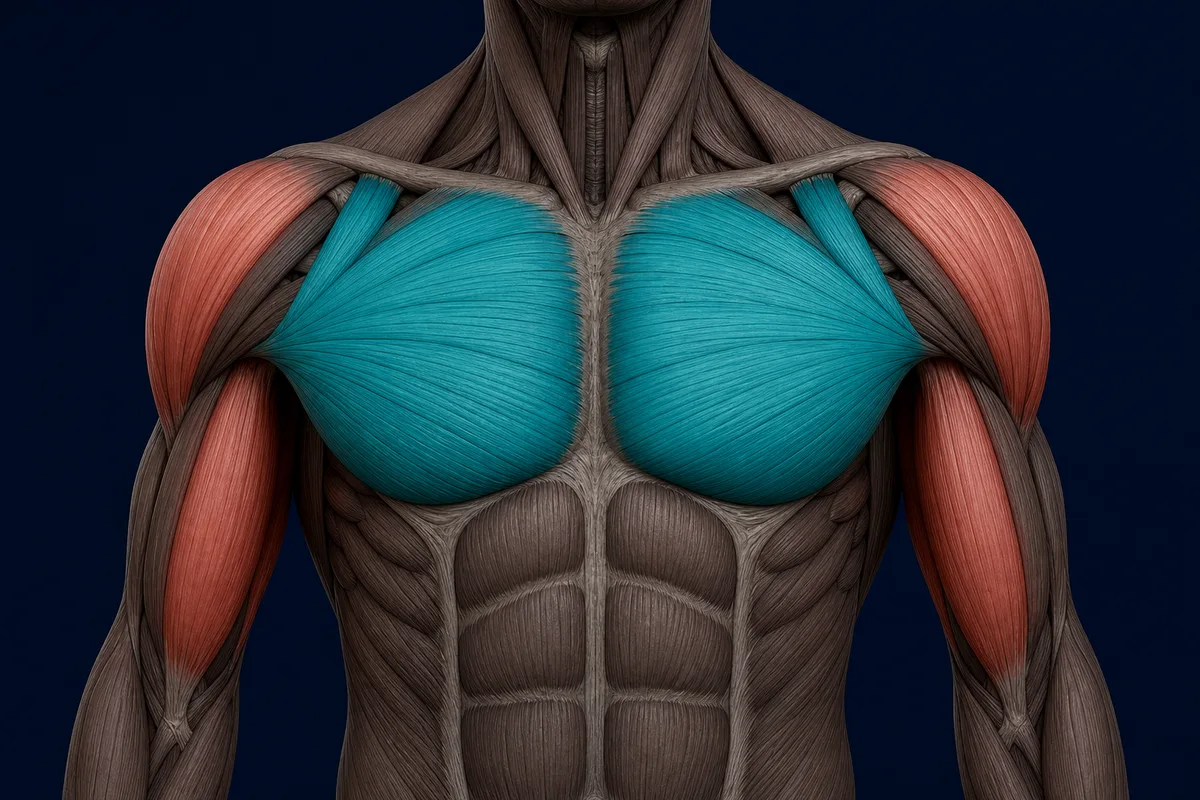
Anatomy highlighting the structures involved in Pec Isometric Press
Teal — primary muscles doing most of the workRed — secondary muscles assistingGrey — stabilizers and surrounding anatomy

Primary emphasis

  • pectoralis major
  • pectoralis minor

Secondary muscles

  • anterior deltoid
  • triceps brachii

Stabilizers

  • rotator cuff
  • serratus anterior
  • abdominal muscles

Movement and joint actions

  • Isometric shoulder horizontal adduction
  • Scapular stabilization
  • Static elbow positioning

Muscle contribution changes with position, range, resistance and individual technique.

Why it can help

Potential benefits and carryover

Benefits depend on technique, dosage, consistency and whether the exercise suits the person. Sport carryover means supporting the physical demands of the activity—not guaranteeing performance or preventing injury.

Everyday benefits

  • Loads the chest without moving through a deep pressing range
  • Makes effort easy to adjust from very light to moderately challenging
  • Can help rebuild confidence with chest-muscle contraction
  • Requires no equipment and little space

Training carryover

  • Provides an early bridge toward wall push-ups and pressing
  • Practises creating even tension through both sides of the chest
  • Can be used as a chest activation drill before suitable upper-body training

Sport carryover

  • Supports controlled pushing strength used in contact sports
  • Builds static horizontal-adduction strength relevant to grappling and ball control

Technique

Pec Isometric Press tips

Use these cues to keep the movement controlled and focused on its intended purpose.

  1. Begin around 30–50% effort instead of squeezing as hard as possible.
  2. Keep the shoulders relaxed and the elbows comfortably in front of the body.
  3. Build pressure gradually, hold it steadily, then release gradually.
  4. Do not use the exercise to test a recent pop, bruising, deformity or sudden loss of strength.

Overview

The pec isometric press creates chest-muscle tension without moving through a deep bench-press position. It is a controllable starting point for a mild, assessed strain—not a test for a suspected tear.

How to Do It

  1. Sit or stand tall with the elbows bent comfortably.
  2. Place the palms together in front of the chest.
  3. Press the hands together gradually at about 30–50% effort.
  4. Hold for 10–20 seconds while breathing normally.
  5. Relax fully and repeat 3–5 times.

What You Should Feel

Expect a broad chest contraction. Reduce the effort if you feel a sharp pull at the chest, armpit or upper arm.

Common Mistakes

  • Starting with a maximum contraction
  • Forcing the elbows far behind the body
  • Holding your breath
  • Using this to test a recent pop, bruising, deformity or marked weakness

Progression

Increase effort gradually, then progress to a wall push-up or another shallow, stable press before returning to deep or heavy pressing.

References

  • Yu J, et al. "Outcomes and Return to Sport After Pectoralis Major Tendon Repair: A Systematic Review." Sports Health. 2019. https://pmc.ncbi.nlm.nih.gov/articles/PMC6391551/
This is general education, not a personalised program. Follow surgeon or physiotherapist restrictions after a tear or repair.
Educational information only

This information does not diagnose an injury or replace care from a qualified healthcare professional.