Overview
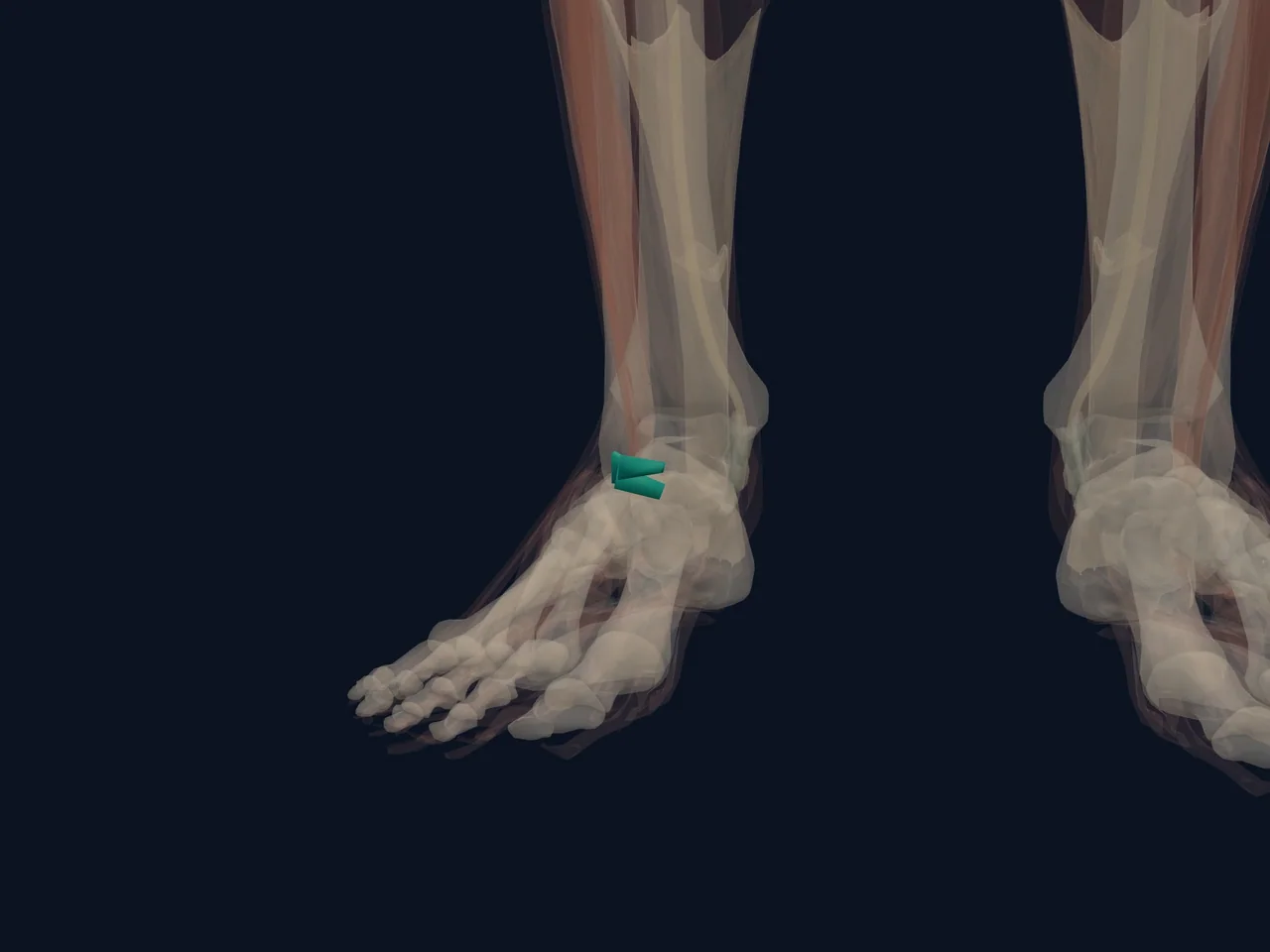
The lateral ankle ligaments sit on the outside of the ankle and are the structures most often stressed when the foot rolls inward. They guide motion rather than create movement; the calf and foot muscles add dynamic support around them.
The Three Main Ligaments
- ATFL — anterior talofibular ligament: runs from the fibula to the talus at the front-outside of the ankle. It is the ligament most often injured in a typical inversion sprain, especially when the foot is pointed down.
- CFL — calcaneofibular ligament: runs from the fibula toward the heel bone. It helps resist inward rolling when the ankle is more neutral.
- PTFL — posterior talofibular ligament: sits at the back of the ankle and is usually involved only in more substantial trauma or dislocation.
What a “Rolled Ankle” Means
Most lateral sprains happen when the foot is forced inward beyond what the ligaments can control. Swelling, bruising and tenderness are common, but the amount of bruising alone does not tell you exactly which fibres are injured or how long recovery will take.
Watch Out For
Pain high above the ankle, tenderness directly over bone, inability to walk, a visible deformity, numbness or a foot that looks pale/cold needs assessment. Repeated giving-way episodes are also worth addressing: balance, calf strength and return-to-sport control matter alongside ligament healing.
Related Guides
References
- Martin RL, et al. Lateral Ankle Ligament Sprains: Clinical Practice Guideline. J Orthop Sports Phys Ther. 2021.
This information is for education only and is not a medical diagnosis.