Exercises · IA-KNE-EXE-008

Heel Slide

Learn the supine heel slide for gentle, controlled knee bending and straightening.

Browse Knee
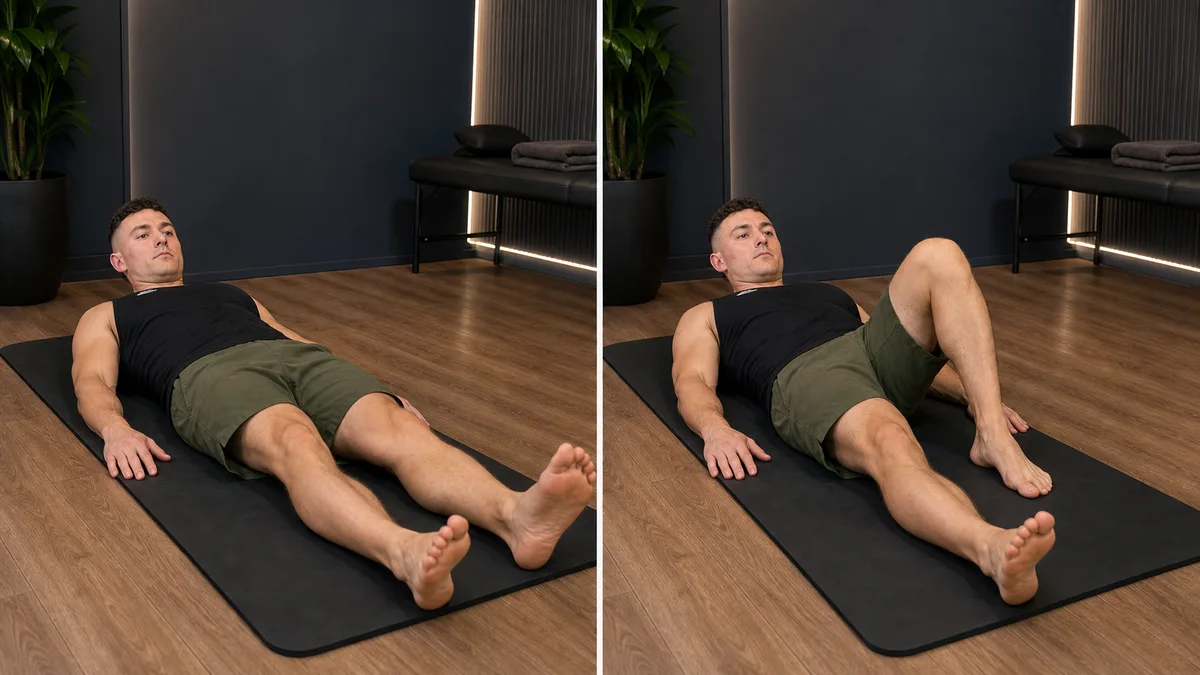
Start and finish demonstration of Heel Slide
Start and finishUse the written steps below for the full technique and safety guidance.

At a glance

Exercise profile

Target muscles
Hamstrings during bending, Quadriceps during straightening
Exercise type
Mobility
Equipment
Exercise mat, Optional towel or slider
Mechanics
Single-joint
Movement pattern
Supported knee bend and straighten
Experience level
beginner
Secondary muscles
Calf muscles, Hip flexors

Supported knee mobility

What this exercise works

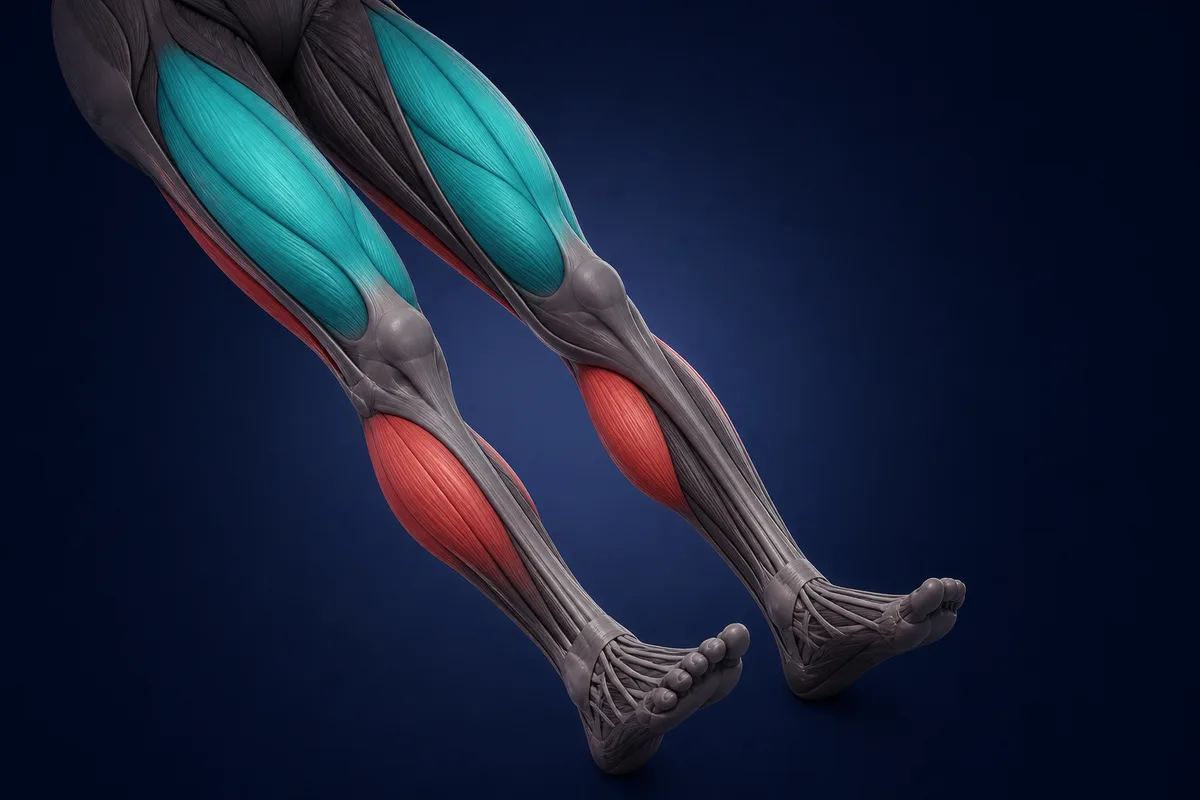
This is primarily a mobility exercise: the hamstrings help bend the knee and the quadriceps help straighten it while the heel stays supported.

Anatomy highlighting the structures involved in Heel Slide
Teal — primary muscles doing most of the workRed — secondary muscles assistingGrey — stabilizers and surrounding anatomy

Primary emphasis

  • Hamstrings during bending
  • Quadriceps during straightening

Secondary muscles

  • Calf muscles
  • Hip flexors

Stabilizers

  • Hip and trunk muscles controlling leg alignment

Movement and joint actions

  • Knee flexion
  • Knee extension
  • Supported range-of-motion control

Muscle contribution changes with position, range, resistance and individual technique.

Why it can help

Potential benefits and carryover

Benefits depend on technique, dosage, consistency and whether the exercise suits the person. Sport carryover means supporting the physical demands of the activity—not guaranteeing performance or preventing injury.

Everyday benefits

  • Practises knee bending and straightening with the leg supported
  • Provides a gentle way to explore comfortable knee range
  • Can help rebuild confidence in moving a stiff knee
  • Makes progress easy to monitor by tracking comfortable heel travel

Training carryover

  • Helps restore knee motion needed before squats, step-ups and cycling
  • Provides a low-load warm-up before more demanding knee exercises
  • Can help track range-of-motion progress during staged rehabilitation

Sport carryover

  • Supports restoring the knee range required before running and field-sport progressions
  • Can serve as an early mobility step before sport-specific loading resumes

Technique

Heel Slide tips

Use these cues to keep the movement controlled and focused on its intended purpose.

  1. Keep the heel supported so the leg can slide with minimal effort.
  2. Move only through a comfortable range rather than forcing the knee farther.
  3. Keep the kneecap and toes pointing upward as the heel travels.
  4. Use the same starting position each time if you are monitoring range progress.

Overview

The heel slide moves the knee through a comfortable bending and straightening range while the heel stays supported.

How to Do It

  1. Lie on your back with both legs straight.
  2. Slide one heel toward the buttock, allowing the knee to bend.
  3. Keep the kneecap pointing upward and foot in contact with the surface.
  4. Slide the heel away until the leg straightens comfortably.
  5. Begin with 10 slow repetitions.

What You Should Feel

Expect a gentle stretch or stiffness. Do not force through sharp pain or a hard mechanical block.

Common Mistakes

  • Lifting the heel off the surface
  • Letting the knee fall outward
  • Forcing maximum bend
  • Moving too quickly

Progression

Gradually increase comfortable range or add a brief pause at the bend. Follow surgical restrictions when applicable.

References

  • Cambridge University Hospitals NHS Foundation Trust. "Knee exercises: Seated Heel Slides." 2026. https://www.cuh.nhs.uk/patient-information/knee-exercises/
This is general education. Follow your surgical or rehabilitation plan after an operation.
Educational information only

This information does not diagnose an injury or replace care from a qualified healthcare professional.