Overview
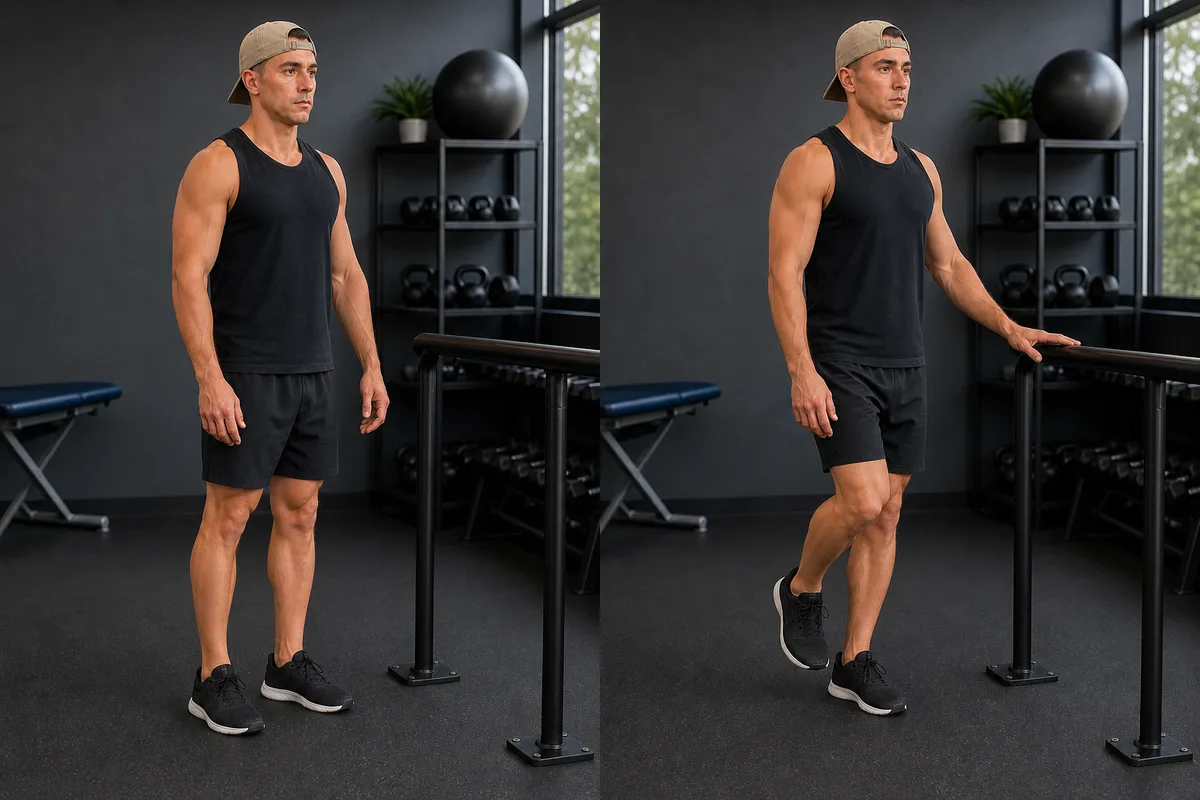
The single-leg balance is a simple way to train the knee, ankle and hip to work together. Balance and control on one leg matter for walking, stairs, running and most sports, and they often need retraining after a knee injury.
Primary Purpose
- Improve balance and joint control on one leg
- Strengthen the small stabilizing muscles around the ankle, knee and hip
- Rebuild confidence in weightbearing after injury
Equipment Required
- A sturdy counter, wall or rail nearby for support
- Optional: a cushion or folded towel for progression
Step-by-Step Instructions
- Stand tall near a support, feet hip-width apart.
- Shift weight onto one leg and lift the other foot slightly off the floor.
- Keep the standing knee soft (not locked) and in line with the toes.
- Hold for 20–30 seconds, breathing normally.
- Lower the foot, rest, and repeat 3–5 times, then switch legs.
What You Should Feel
Work in the foot, ankle and thigh. Some wobbling is normal at first. Stop if the knee gives way, swells or hurts.
Common Mistakes
- Locking the knee straight
- Letting the knee collapse inward
- Holding the breath
- Holding a support so firmly that balance is never challenged
Easier Alternatives
- Hold a support with one or two hands
- Keep the toes of the lifted foot on the floor
- Shorten the hold time
Progressions
- Balance on a softer surface, such as a cushion
- Close the eyes once balance on one leg is steady
- Add small movements, such as reaching forward or passing an object
- Progress to single-leg squats or step-downs once balance is solid
Who Should Avoid This
Do not balance on a leg that is acutely injured, repeatedly gives way or cannot bear weight without assessment. If the knee feels unstable during standing activities, arrange an assessment before training around it.
Related Guidance
References
- Willy RW, et al. "Patellofemoral Pain: Clinical Practice Guidelines." Journal of Orthopaedic & Sports Physical Therapy. 2019;49(9):CPG1-CPG95. https://doi.org/10.2519/jospt.2019.0302
- Neal BS, et al. "Best practice guide for patellofemoral pain." British Journal of Sports Medicine. 2024;58(24):1486-1495. https://bjsm.bmj.com/content/58/24/1486
This information is for education only and is not a medical diagnosis. InjuryAtlas does not replace an assessment by a qualified health professional. If you have severe pain, visible deformity, numbness, loss of function, or symptoms that are getting worse, seek medical care promptly.