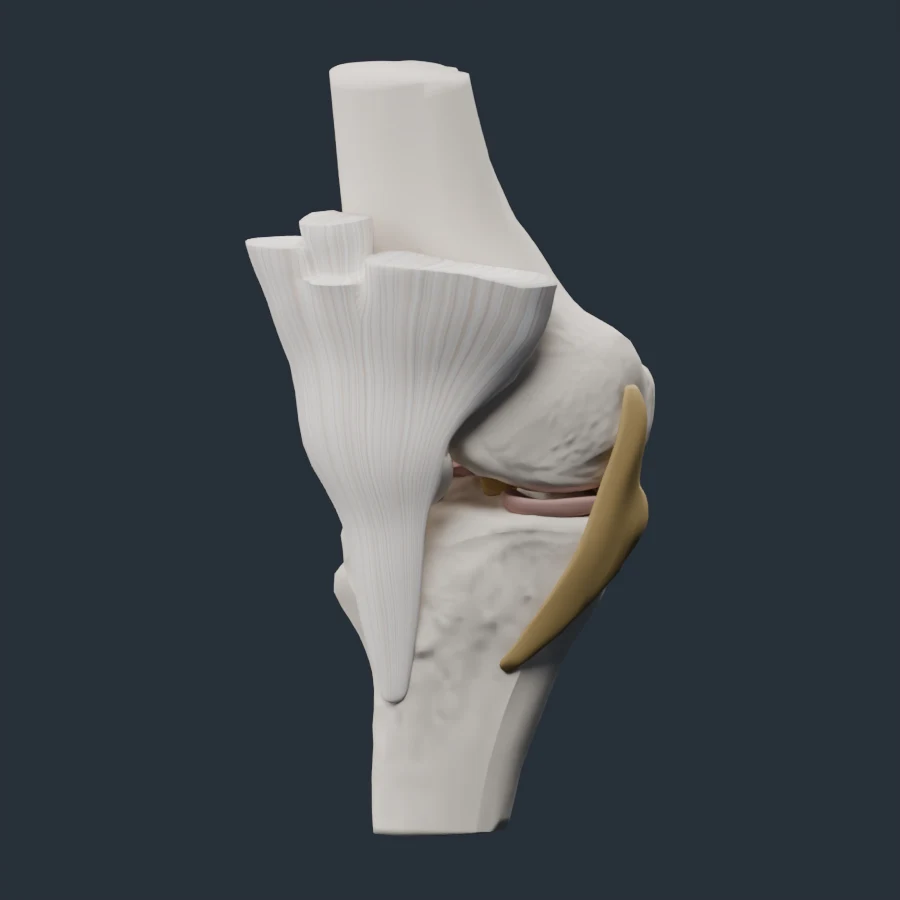
Anatomy at a Glance
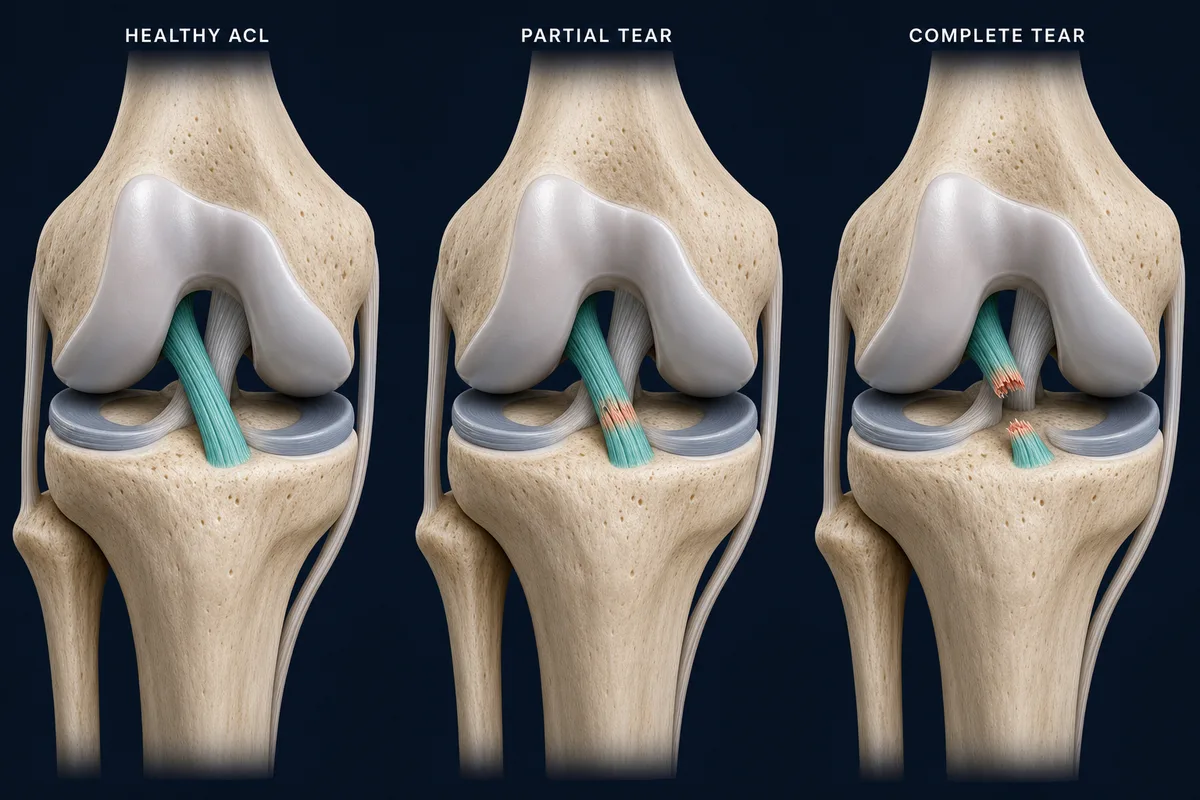
The ACL runs through the centre of the knee. A partial tear disrupts some fibres; a complete tear interrupts the ligament's continuity.
Overview
An ACL tear damages the ligament that helps control forward movement and rotation of the shinbone. Many ACL injuries happen during a planted-foot pivot, awkward landing or sudden change of direction rather than from a direct collision.
A pop, swelling and instability may raise concern, but none of them confirms an ACL tear on its own. Meniscus injuries, kneecap instability and other knee injuries can create similar symptoms.
What Happens to the Knee
The ACL crosses through the centre of the knee. It can be stretched, partially torn or completely torn. The menisci, cartilage, MCL or other structures may be injured at the same time.
Common Clues
- A pivot, cut, awkward landing or sudden stop
- A pop or tearing sensation at the time of injury
- Swelling that develops relatively quickly
- Difficulty continuing the activity
- A feeling that the knee shifts or gives way, especially during turning
- Loss of comfortable bending or straightening
Pain may be deep or difficult to pinpoint. Some people can walk after an ACL tear, so the ability to bear weight does not rule it out.
How It Is Diagnosed
A clinician combines the mechanism, swelling, range of motion and stability tests such as the Lachman test. MRI can confirm the ligament injury and show associated meniscus or cartilage damage, but the scan is interpreted alongside the examination.
Treatment
Rehabilitation matters whether treatment is surgical or non-surgical. Early priorities commonly include settling swelling, restoring knee extension, rebuilding quadriceps control and walking more normally.
Not every ACL tear requires reconstruction. The decision depends on repeated instability, associated damage, age, skeletal maturity, work and sport demands, goals and willingness to complete rehabilitation. People returning to high-demand pivoting sports may be more likely to consider reconstruction than those whose knee is stable during their chosen activities.
When reconstruction has already been selected for an acute isolated tear, AAOS guidance favours doing it within three months because the risk of additional meniscus and cartilage injury begins to rise. This does not mean every ACL tear should be operated on.
When to Get Assessed
Arrange an assessment after a traumatic pivot with rapid swelling, loss of motion or instability. Seek urgent care if the knee is deformed, circulation or sensation changes, you cannot bear weight after major trauma, or the knee is locked and cannot straighten.
Related Reading
References
- American Academy of Orthopaedic Surgeons. “Management of Anterior Cruciate Ligament Injuries.” 2022. https://www.aaos.org/quality/quality-programs/lower-extremity-programs/anterior-cruciate-ligament-injuries/
- Diermeier T, et al. “Treatment after anterior cruciate ligament injury: Panther Symposium ACL Treatment Consensus Group.” https://pmc.ncbi.nlm.nih.gov/articles/PMC7524809/
This information is for education only and is not a medical diagnosis. InjuryAtlas does not replace an assessment by a qualified health professional. If you have severe pain, visible deformity, numbness, loss of function, or symptoms that are getting worse, seek medical care promptly.