Overview
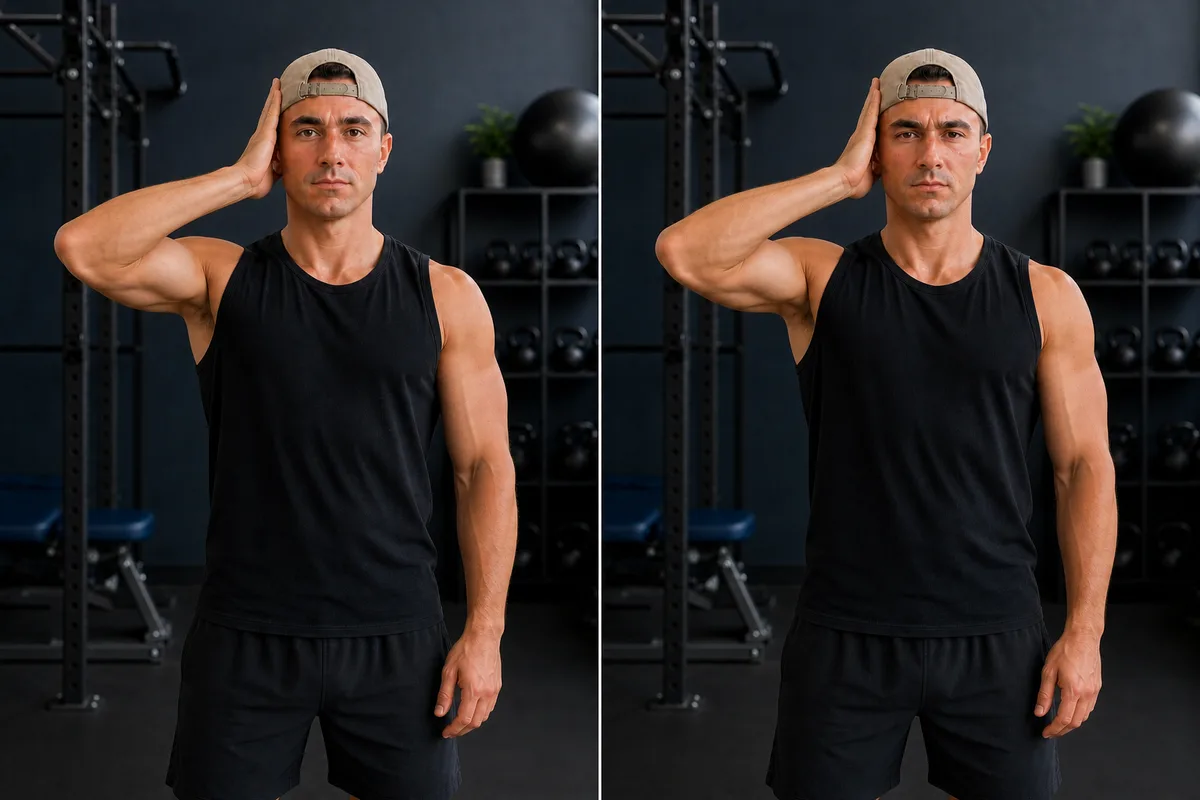
Neck isometrics strengthen the neck by pushing the head against gentle resistance without moving — your hand, a wall, or a partner. Because the neck does not move, they are a low-irritation way to start loading the neck after pain, stiffness or whiplash.
The effort should be gradual and comfortable — roughly 20–30% of your maximum — never a hard push into pain.
How to Do It
- Sit or stand tall with your shoulders relaxed.
- Place your palm against the side of your head, just above the ear.
- Push your head gently into your hand while resisting with your hand so the head does not move.
- Hold for 5–10 seconds, breathing normally.
- Relax, then repeat on the other side.
- Repeat the same gentle hold pressing the head forward into both hands and backward into a wall or hands.
What You Should Feel
Gentle muscle effort around the neck without pain, dizziness or arm symptoms. There should be no visible head movement.
Common Mistakes
- Pushing hard enough to cause pain or strain
- Holding the breath
- Letting the head actually move during the push
- Shrugging the shoulders up to the ears
Make It Easier
- Use a lighter effort and shorter hold (3–5 seconds)
- Support the head by lying down with a hand resisting gently
- Start with only one direction (side or forward) that feels best
Progression
- Hold longer (up to 15 seconds)
- Add more directions as comfort allows
- Progress to chin tucks and active neck mobility once isometrics are easy
- Under guidance, progress to resisted movement for sport-specific neck strength
Common Questions
Are neck isometrics safe for whiplash?
Gentle isometric work is a common early step in whiplash rehabilitation because it loads the neck without movement. Start light and progress under guidance — if symptoms increase or spread into the arm, stop and get reassessed.
How hard should I push?
The neck should feel the muscles switch on without significant discomfort — think about 20–30% of your maximum effort. More is not better with isometrics.
References
- "The Treatment of Neck Pain-Associated Disorders and Whiplash-Associated Disorders: A Clinical Practice Guideline." 2016. https://pubmed.ncbi.nlm.nih.gov/27836071/
- NHS Inform. "Exercises for neck muscle and joint problems." https://www.nhsinform.scot/illnesses-and-conditions/muscle-bone-and-joints/neck-and-back-problems-and-conditions/exercises-for-neck-problems/
This information is for education only and is not a medical diagnosis. InjuryAtlas does not replace an assessment by a qualified health professional. If you have severe pain, visible deformity, numbness, loss of function, or symptoms that are getting worse, seek medical care promptly.