Exercises · IA-NEC-EXE-004

Neck Side Bending

Learn gentle neck side bending to practise comfortable cervical mobility without lifting or turning the shoulders.

Browse Neck
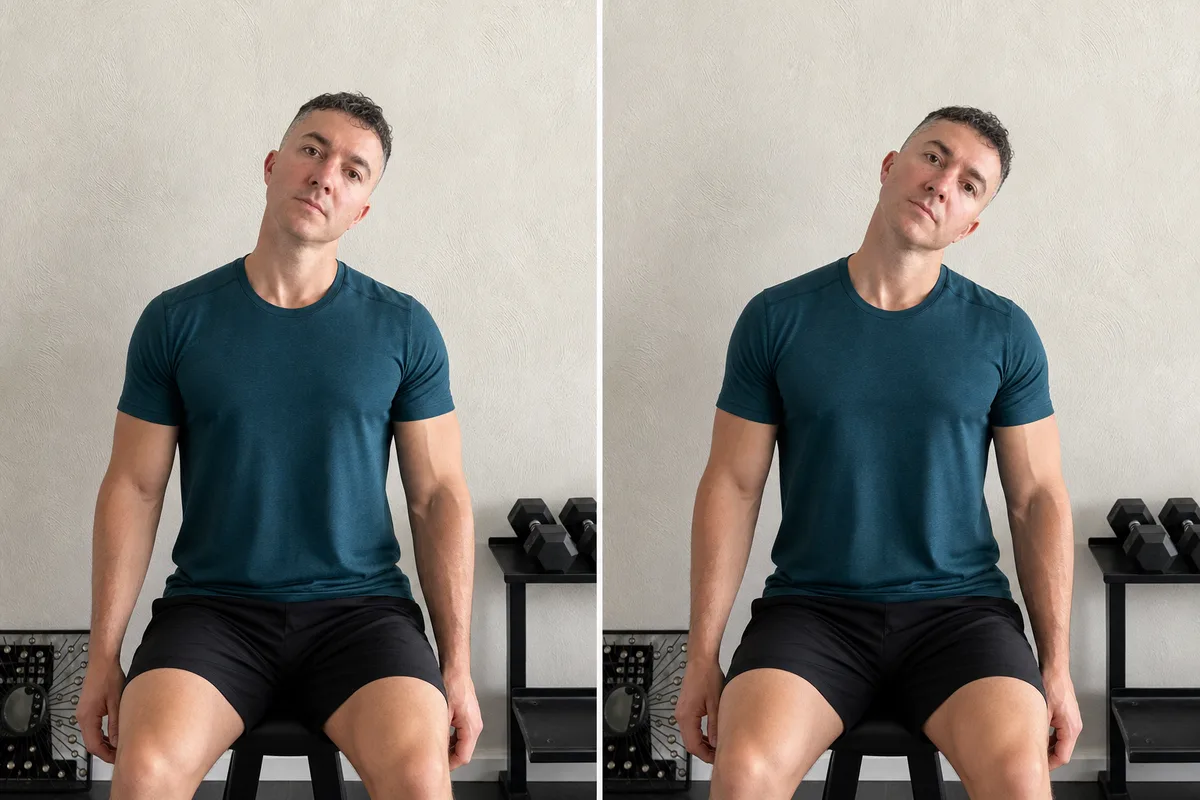
Start and finish demonstration of Neck Side Bending
Start and finishUse the written steps below for the full technique and safety guidance.

At a glance

Exercise profile

Target muscles
Upper trapezius, Scalene muscles, Sternocleidomastoid
Exercise type
Mobility
Equipment
Chair or standing space
Mechanics
Single-joint
Movement pattern
Neck side bending (bilateral practice)
Experience level
beginner
Secondary muscles
Levator scapulae, Splenius capitis

Side-to-side neck mobility

What this exercise works

The side-neck muscles guide the head toward one shoulder while the opposite side lengthens and the upper trunk remains steady.

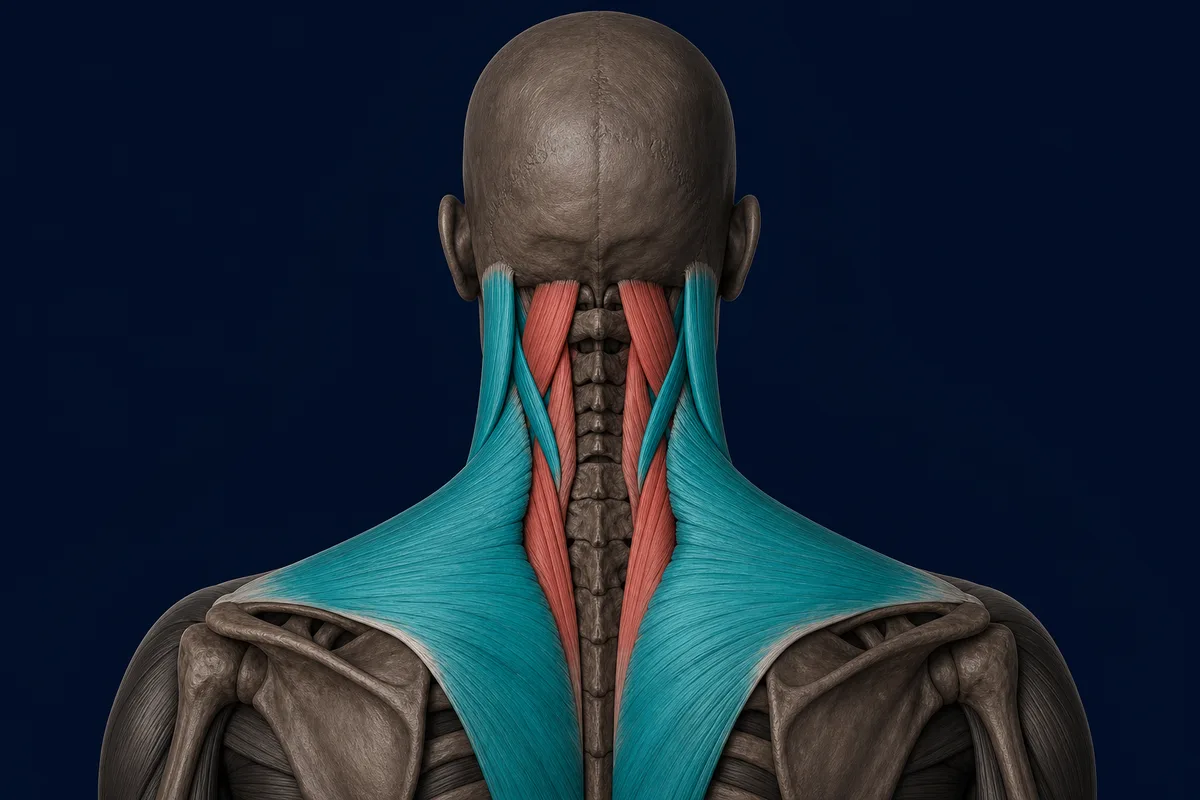
Anatomy highlighting the structures involved in Neck Side Bending
Teal — primary muscles doing most of the workRed — secondary muscles assistingGrey — stabilizers and surrounding anatomy

Primary emphasis

  • Upper trapezius
  • Scalene muscles
  • Sternocleidomastoid

Secondary muscles

  • Levator scapulae
  • Splenius capitis

Stabilizers

  • Deep neck flexors
  • Thoracic postural muscles

Movement and joint actions

  • Cervical side bending
  • Controlled return to neutral

Muscle contribution changes with position, range, resistance and individual technique.

Why it can help

Potential benefits and carryover

Benefits depend on technique, dosage, consistency and whether the exercise suits the person. Sport carryover means supporting the physical demands of the activity—not guaranteeing performance or preventing injury.

Everyday benefits

  • Practises gentle ear-to-shoulder movement
  • Provides a simple break from fixed desk postures
  • Helps compare comfortable motion between sides
  • Encourages the shoulders to remain relaxed during neck movement

Training carryover

  • Supports comfortable head position during upper-body exercise
  • Pairs with thoracic and shoulder mobility work
  • Can be used in a low-intensity warm-up routine

Sport carryover

  • Supports neck-mobility demands in cycling and swimming
  • Practises controlled side-to-side motion relevant to field awareness

Technique

Neck Side Bending tips

Use these cues to keep the movement controlled and focused on its intended purpose.

  1. Keep the nose facing forward throughout the movement.
  2. Bring the ear toward the shoulder without lifting the shoulder upward.
  3. Move through a comfortable range without pulling on the head.
  4. Stop if symptoms spread into the arm or dizziness develops.

Overview

Neck side bending practises gently bringing one ear toward the same-side shoulder while the nose continues to face forward.

How to Do It

  1. Sit tall with the shoulders relaxed and hands resting comfortably.
  2. Keep the nose pointing forward.
  3. Slowly tilt the right ear toward the right shoulder without lifting the shoulder.
  4. Pause for up to 5 seconds, return to centre and repeat left.
  5. Begin with 3–5 repetitions per side.

What You Should Feel

Expect a gentle stretch along the opposite side of the neck. Stop for dizziness, new tingling or weakness, severe headache, or sharp increasing pain.

Common Mistakes

  • Turning the head instead of tilting it
  • Shrugging the shoulder upward
  • Pulling the head with a hand
  • Pushing into symptoms that spread down the arm

Progression

Build comfortable range and repetitions slowly. A hand-assisted stretch adds force and is not necessary for the basic mobility version.

References

  • NHS. "Flexibility Exercises: Neck Stretch." https://www.nhs.uk/live-well/exercise/flexibility-exercises/
  • East Lancashire Hospitals NHS Trust. "Neck Pain: Neck Side Flexion." https://elht.nhs.uk/services/integrated-msk-pain-and-rheumatology-service/patient-information/spinal-pain/neck-pain
This is general education, not a diagnosis. Seek urgent care after major trauma or for new weakness, coordination problems, severe headache or neurological symptoms.
Educational information only

This information does not diagnose an injury or replace care from a qualified healthcare professional.