Overview
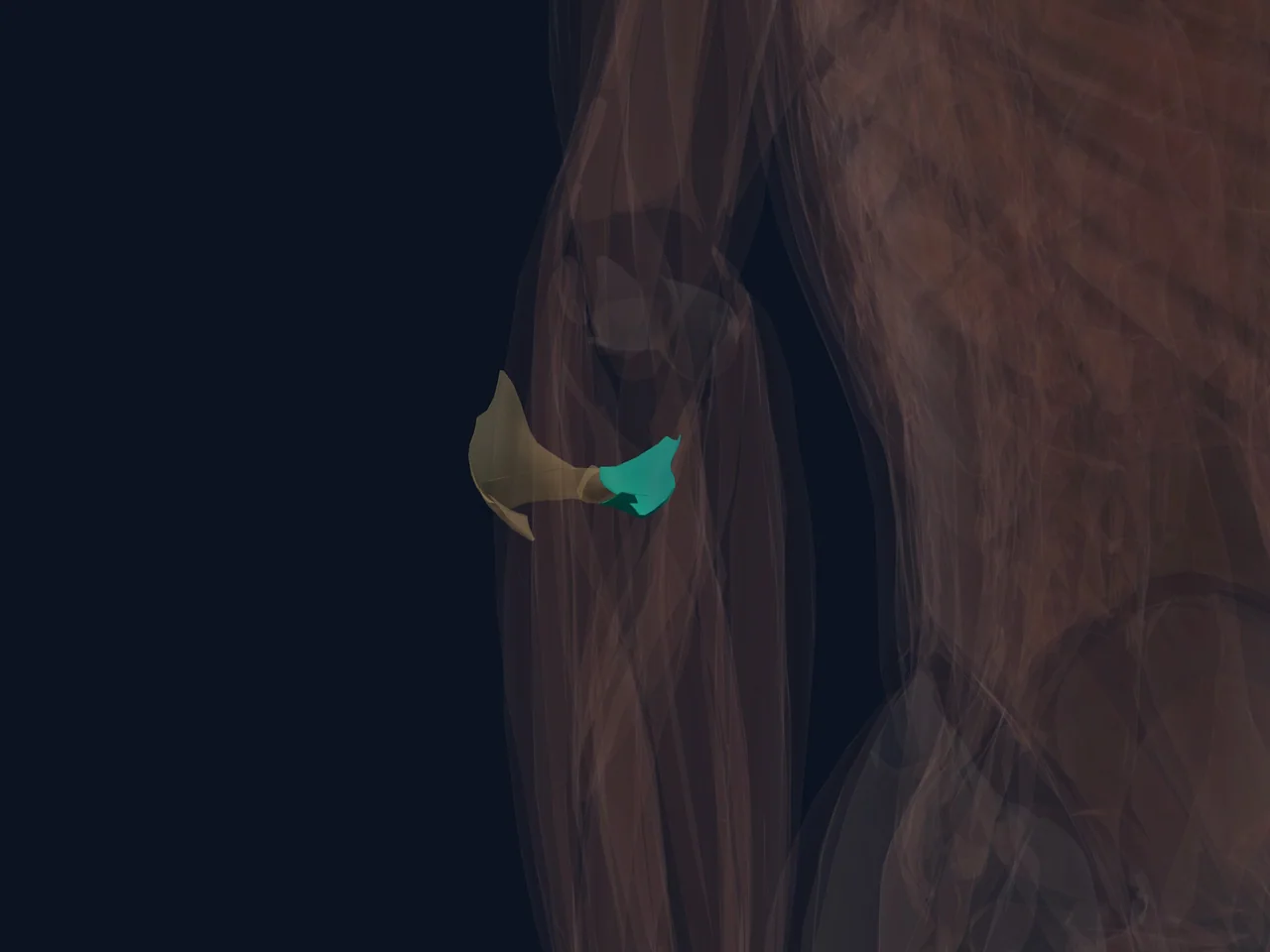
The ulnar collateral ligament (UCL) runs along the inner side of the elbow. Its anterior, posterior and transverse bands connect the medial epicondyle of the humerus to the proximal ulna.
The anterior band is the main ligament resisting valgus stress, which tries to open the inside of the elbow. This force becomes especially high during throwing.
Function
- Supports the inner elbow during throwing and overhead activity
- Helps guide stable flexion and extension
- Works with the flexor-pronator muscles to control valgus load
Common Problems
UCL sprains range from microscopic overload to partial or complete tears. Throwers may develop pain gradually; a sudden tear may produce a pop and immediate loss of throwing velocity or control. Inner-elbow pain can also come from the flexor tendon, ulnar nerve or joint, so location does not prove a UCL injury.
When to Get It Assessed
Throwing-related pain that persists despite load reduction, a sudden pop, visible swelling or a sense of instability should be assessed.
References
- StatPearls. “Anatomy, Shoulder and Upper Limb, Elbow Collateral Ligaments.” https://www.ncbi.nlm.nih.gov/books/NBK560907/