Hands-on treatment can reduce pain, improve confidence with movement and make a rough week easier. It usually works best as a bridge into active rehabilitation, not as the whole plan. This is a ranking of the treatment approach, not a judgement of individual clinicians.
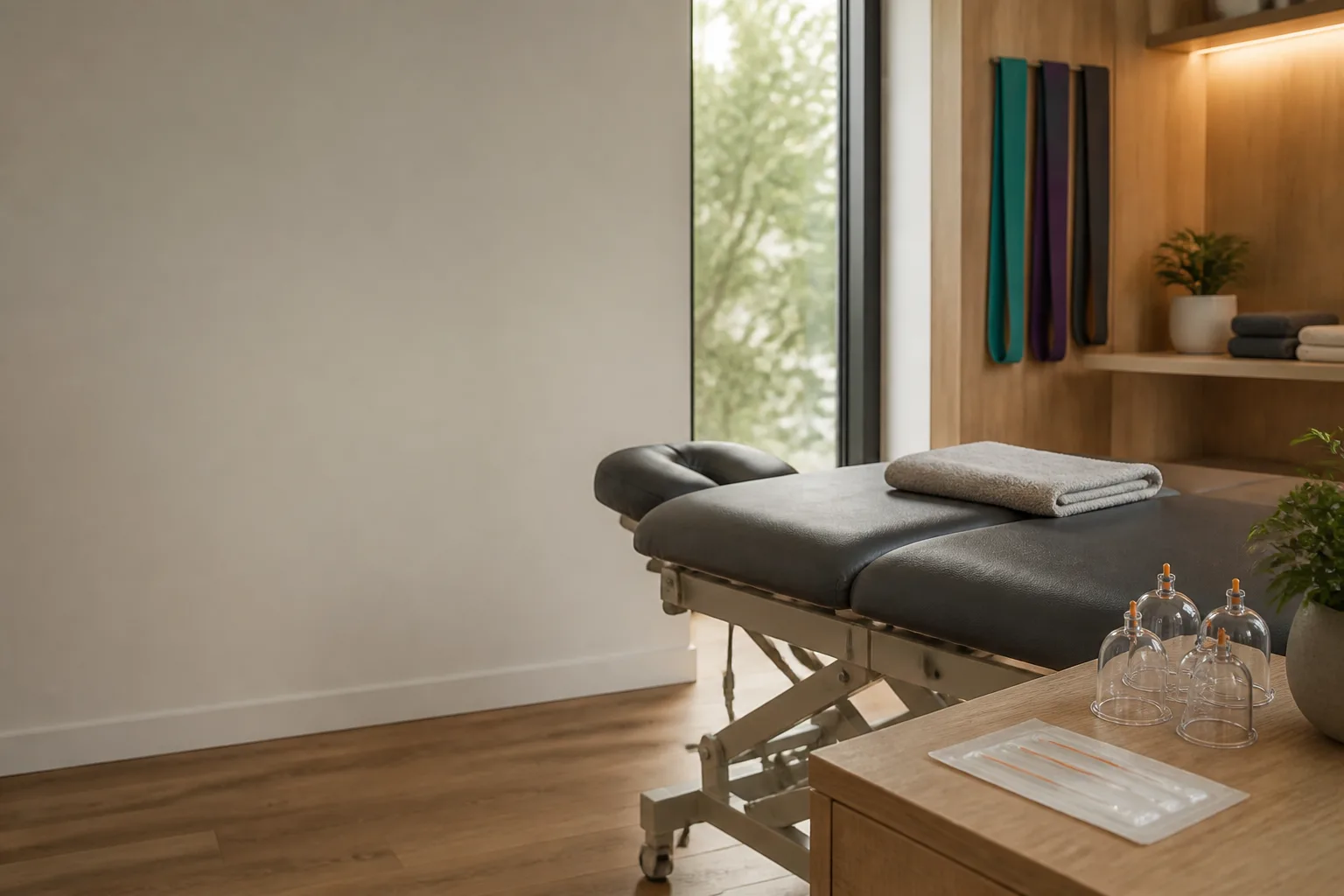
The simple ranking
- Physiotherapy with exercise and a clear plan: best overall
- Massage therapy: best for short-term relief and relaxation
- Acupuncture: a reasonable option for some persistent pain
- Spinal manipulation or mobilization: useful for some, not essential
- Dry needling: an optional short-term add-on
- Active Release Technique® (ART): may help, but evidence is limited
- Dry cupping: comfort only; keep expectations low
The rule that makes these treatments useful
The good version of any treatment should leave you better able to sleep, move, train or do your normal life. If a provider says you are permanently “out of alignment”, must keep attending forever, or needs to fix tissue they say is stuck or damaged without a plan for you to build capacity, that is a reason to be cautious.
1. Physiotherapy with exercise and a clear plan
What it does technically
Assessment, education, graded exposure and progressive exercise to restore strength, movement tolerance, coordination and function. A physiotherapist may also use manual therapy, but the lasting part is the plan you can carry out yourself.
In plain English
It helps you work out what you can safely do now, then gives you a route back to the things you want to do.
Actual benefits
- Best fit for most injuries, recurring pain and return-to-sport goals
- Builds strength and confidence rather than only chasing a temporary symptom change
- Can adapt the plan as symptoms and goals change
What it does not do
It cannot guarantee a diagnosis from one visit, make progress perfectly linear or replace medical assessment when there are serious warning signs.
When it is worth it
Choose a clinician who explains the plan, gives you a manageable home programme and measures progress by function, not just how you feel on the table. Canadian physiotherapy practice includes individualized exercise, education and manual approaches. Canadian Physiotherapy Association
2. Massage therapy
What it does technically
Manual touch and pressure can temporarily change pain sensitivity, muscle tone, relaxation and perceived stiffness. The effects are more about your nervous system and comfort than physically “flushing toxins” or breaking tissue apart.
In plain English
Massage can help you feel looser and calmer for a while, which may make moving or sleeping easier.
Actual benefits
- Short-term relief for some people with back pain or general muscle soreness
- Can support relaxation and make an active plan more tolerable
- A good choice when the main goal is comfort, not a cure
What it does not do
It does not repair a torn muscle, remove scar tissue or replace strengthening. For persistent neck pain, evidence suggests little to no difference from a sham treatment at around 12 weeks. Cochrane review
When it is worth it
Use it as a comfort tool alongside exercise, not as a weekly requirement with no end point. Typical Canadian cost: roughly $80–$150 per session before insurance coverage.
3. Acupuncture
What it does technically
Very thin needles are placed in selected tissues. Proposed effects include local sensory input and changes in pain modulation; research results vary by condition and comparison treatment.
In plain English
It may turn pain volume down enough for some people to move and sleep more comfortably.
Actual benefits
- May modestly reduce pain and slightly improve function in chronic low-back pain compared with no treatment
- Some people prefer it to medication or find it useful as an add-on
What it does not do
It does not prove that energy is blocked, repair damaged tissue or remove the need to gradually load an injury. Benefits are not the same for every pain condition. Cochrane review
When it is worth it
Reasonable to trial for persistent pain if you are comfortable with needles, the practitioner is appropriately trained and it is paired with active care. Typical Canadian cost: roughly $70–$130 per session.
4. Spinal manipulation or mobilization
What it does technically
Hands-on joint movement: mobilization is slower and controlled; manipulation is a fast, small movement that may produce a pop. The pop is gas moving in the joint, not a bone going back into place.
In plain English
It can make some people feel less sore or more mobile in the short term, especially with back pain.
Actual benefits
- May slightly reduce pain and moderately improve function versus sham treatment for chronic low-back pain
- Can be a useful short-term addition to exercise and education
What it does not do
It does not realign your spine, cure arthritis or make you dependent on adjustments. A chiropractor is a professional title; the evidence here is about the treatment technique, which can also be used by qualified physiotherapists. Cochrane review
When it is worth it
Consider it if it gives short-term relief and the provider also helps you stay active. Be more cautious with forceful neck techniques and discuss your individual risk factors first.
5. Dry needling
What it does technically
A clinician inserts a thin filiform needle into painful muscle and connective tissue areas, often described as trigger points. It is not the same framework as traditional acupuncture, although both use similar needles.
In plain English
It may briefly reduce muscle pain or make movement feel easier, but it is not necessary for most recoveries.
Actual benefits
- May provide short-term pain and function benefits for some musculoskeletal problems
- Can be a useful add-on when it helps someone re-engage with movement
What it does not do
It does not release a knot permanently, fix posture or replace exercise. Results vary and research quality is inconsistent. Umbrella review
When it is worth it
Try it only as one part of a wider plan, with a clear reason and a way to judge whether it is helping after a few sessions. Avoid it when needle risks or anxiety outweigh the potential short-term benefit.
6. Active Release Technique® (ART)
What it does technically
ART is a branded form of soft-tissue manual therapy. A clinician applies pressure while you move a body part through a range of motion.
In plain English
It is a hands-on technique that may make a tight or sore area feel better temporarily while you move it.
Actual benefits
- Small studies suggest possible improvements in pain and range of motion
- Some people enjoy it as a short-term bridge back into exercise
What it does not do
It does not break up scar tissue, unstick fascia or remove the need to strengthen and gradually return to activity. Research has not established the best dose or long-term effects. Systematic review
When it is worth it
Fine as an optional add-on if it is not expensive and your provider connects it to active rehab. Do not pay for it as a stand-alone cure.
7. Dry cupping
What it does technically
Suction pulls skin and superficial tissue upward. The circular marks are small bruises or capillary changes from suction, not evidence that toxins have left the body.
In plain English
It may feel soothing or give a short-term pain change, but it is not fixing tissue underneath.
Actual benefits
- Some people report brief pain relief or relaxation
- It can be harmless when done gently on intact skin by a trained provider
What it does not do
It does not detox, improve circulation in a way that repairs injury, remove adhesions or speed recovery on its own. Research findings are mixed and functional improvement is inconsistent. Systematic review
When it is worth it
Only as an inexpensive comfort add-on if you enjoy it and understand the limits. Avoid wet or blood-letting cupping outside appropriate regulated care.
A simple way to choose
If your goal is to recover from an injury or return to the gym or sport, start with a provider who gives you assessment + education + progressive exercise. Add massage, acupuncture, manipulation, dry needling or ART only when it makes the active part easier.
When hands-on care is not the answer
Seek medical assessment rather than another treatment session for a new deformity, major swelling, fever/redness, numbness, progressive weakness, inability to bear weight, severe pain after trauma or worsening neurological symptoms.
This guide is educational and is not medical advice. What is appropriate depends on the diagnosis, individual health history, medication use, skin integrity and surgery-specific restrictions.