Recovery tools should help you move, get stronger or feel comfortable enough to do both. They are not magic fixes. Start with the top tier; the lower tiers can still be useful, just not essential.
The short answer
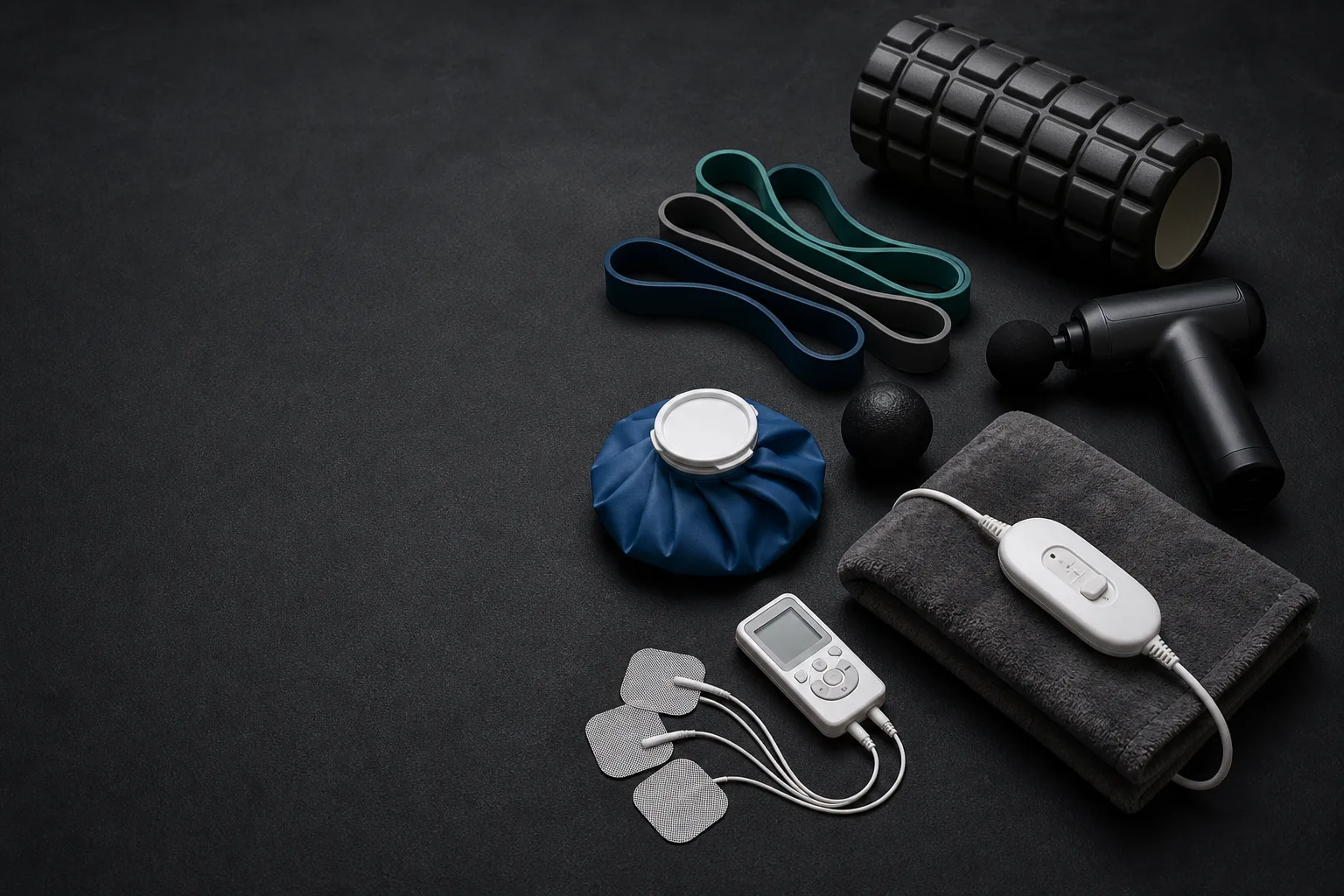
Buy bands and a way to add load first. Add comfort tools only if you will actually use them. The ranking below weighs usefulness, value, evidence and safety.
- Best use of your moneyResistance bandsDumbbells or kettlebellExercise matStable step or bench
- Very useful additionsCold packHeating padFoam rollerSupportive pillow or wedgeQualified massage
- Helpful extrasLacrosse ballMassage gunCompression sleeve or bootsMobility strap
- Comfort if it helps youTENS / DR-HO-style unitDry-cupping setKinesiology tape
- Usually save your moneyRed-light devicesEMS machines sold as passive recovery
- Avoid the claims
Anything promising to dissolve scar tissue, realign joints or cure an injury without rehabilitation
Want a more personal starting point? See the interactive guide below.
S tier: Tools that help you build capacity
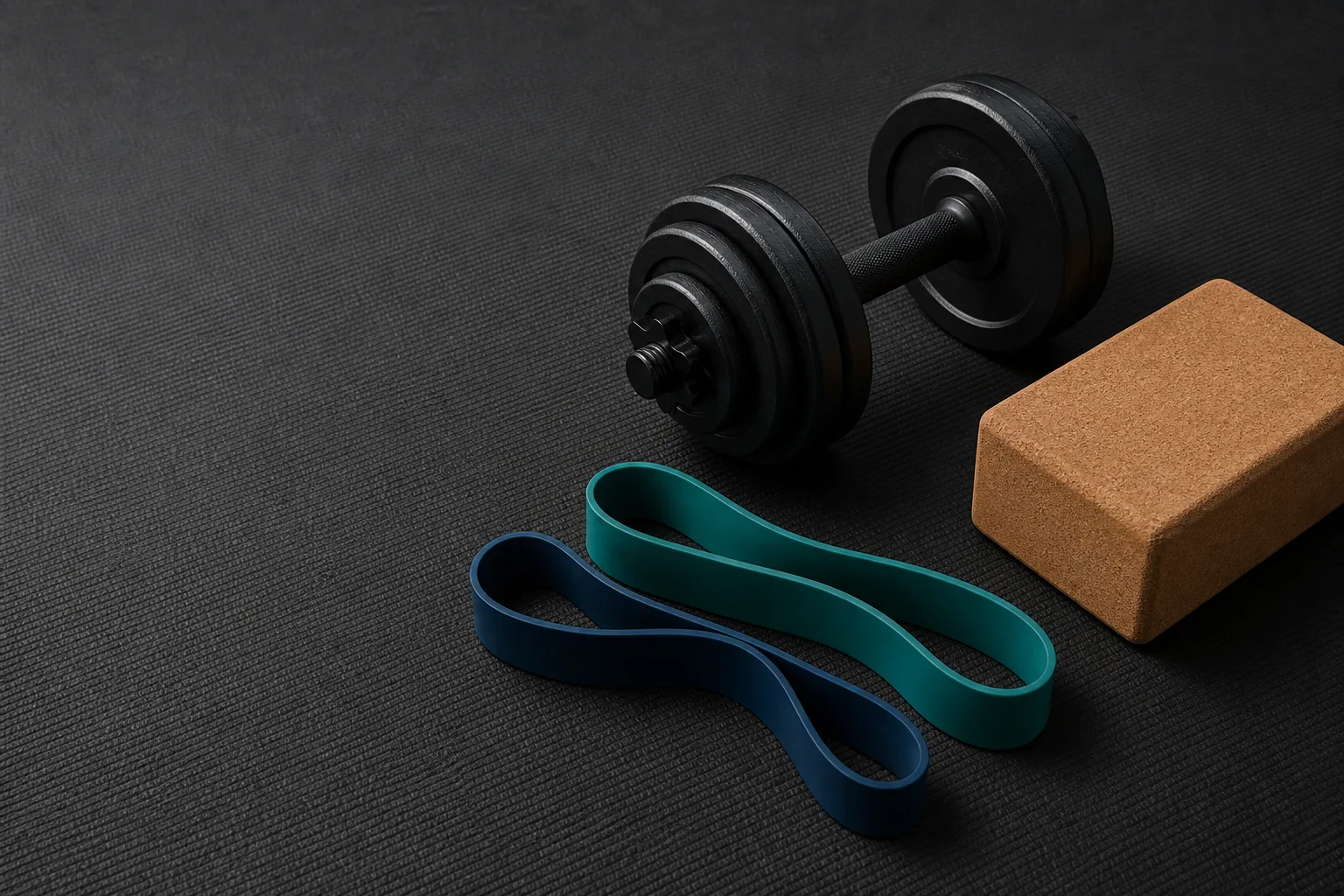
Resistance bands: $15–$60 CAD
- What it helps: Early strengthening for shoulders, hips, ankles and more.
- How to use: Pick a tension you can control slowly. Add reps or resistance gradually.
- Why S tier: Cheap, portable and useful from early rehab through regular training.
- Watch out for: Check bands and anchors for wear; do not compensate by twisting or shrugging.
Dumbbells or a kettlebell: $30–$250+ CAD
- What it helps: Building strength for daily life, work and sport.
- How to use: Start with a controlled squat, row, hinge or carry; progress one variable at a time.
- Why S tier: Progressive strength is the most useful long-term recovery tool.
- Watch out for: Do not jump load because one session felt easy.
Exercise mat and stable step: $20–$100 CAD
- What it helps: Comfortable floor work, sit-to-stands, step-ups and calf raises.
- How to use: Use a firm, non-slip surface and a stable step height you can control.
- Why S tier: Simple equipment makes the exercises you need easier to repeat.
- Watch out for: Never use a wobbly chair, box or step.
A tier: High-value comfort and movement tools
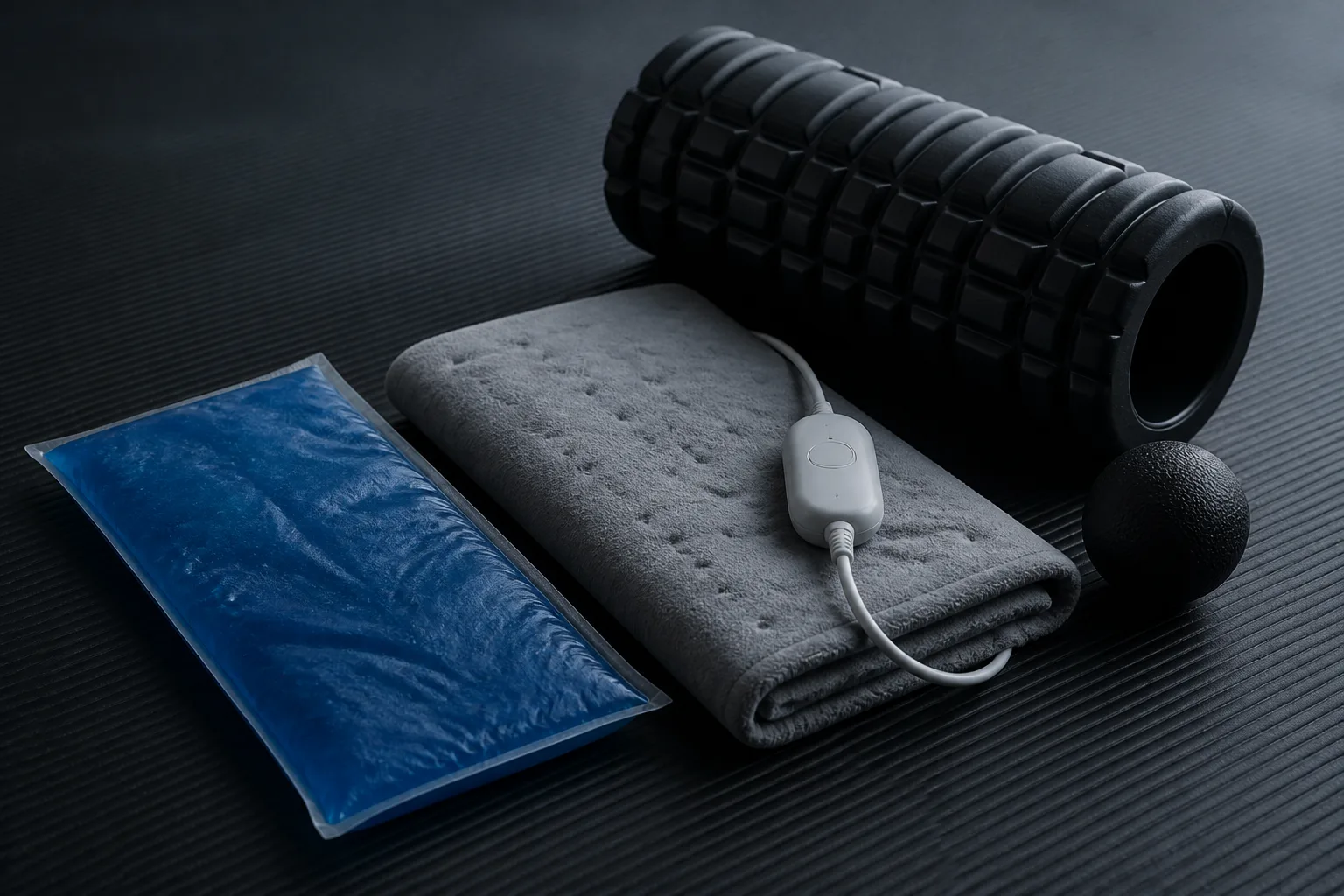
Reusable cold pack: $10–$35 CAD
- What it helps: Short-term comfort after a sore flare or hard session.
- How to use: Wrap it in a thin towel and use a short, comfortable application.
- Why A tier: Cheap and useful for symptoms, but it does not speed tissue repair. Guideline
- Watch out for: Stop if skin burns, goes numb or turns very pale.
Heating pad: $25–$80 CAD
- What it helps: Muscle guarding, stiffness and persistent aches when warmth feels good.
- How to use: Use mild heat while awake, then follow it with gentle movement.
- Why A tier: A reliable comfort tool that can make movement easier.
- Watch out for: Do not sleep with it, use it on numb skin or apply it to a new swollen injury.
Foam roller: $20–$60 CAD
- What it helps: A short-term reduction in the feeling of stiffness before movement.
- How to use: Roll a muscle area gently for 30–90 seconds, then do your warm-up or exercise.
- Why A tier: Inexpensive and often helpful, especially when it gets you moving.
- Watch out for: It does not “break up” fascia or replace strengthening.
Supportive pillow or wedge: $30–$120 CAD
- What it helps: More comfortable sleep positions for shoulders, hips, knees or back.
- How to use: Support the painful area or place it between the knees when side-sleeping.
- Why A tier: Sleep comfort can make recovery days much easier.
- Watch out for: A pillow should improve comfort, not lock you into one position all day.
B tier: Helpful, but not essential
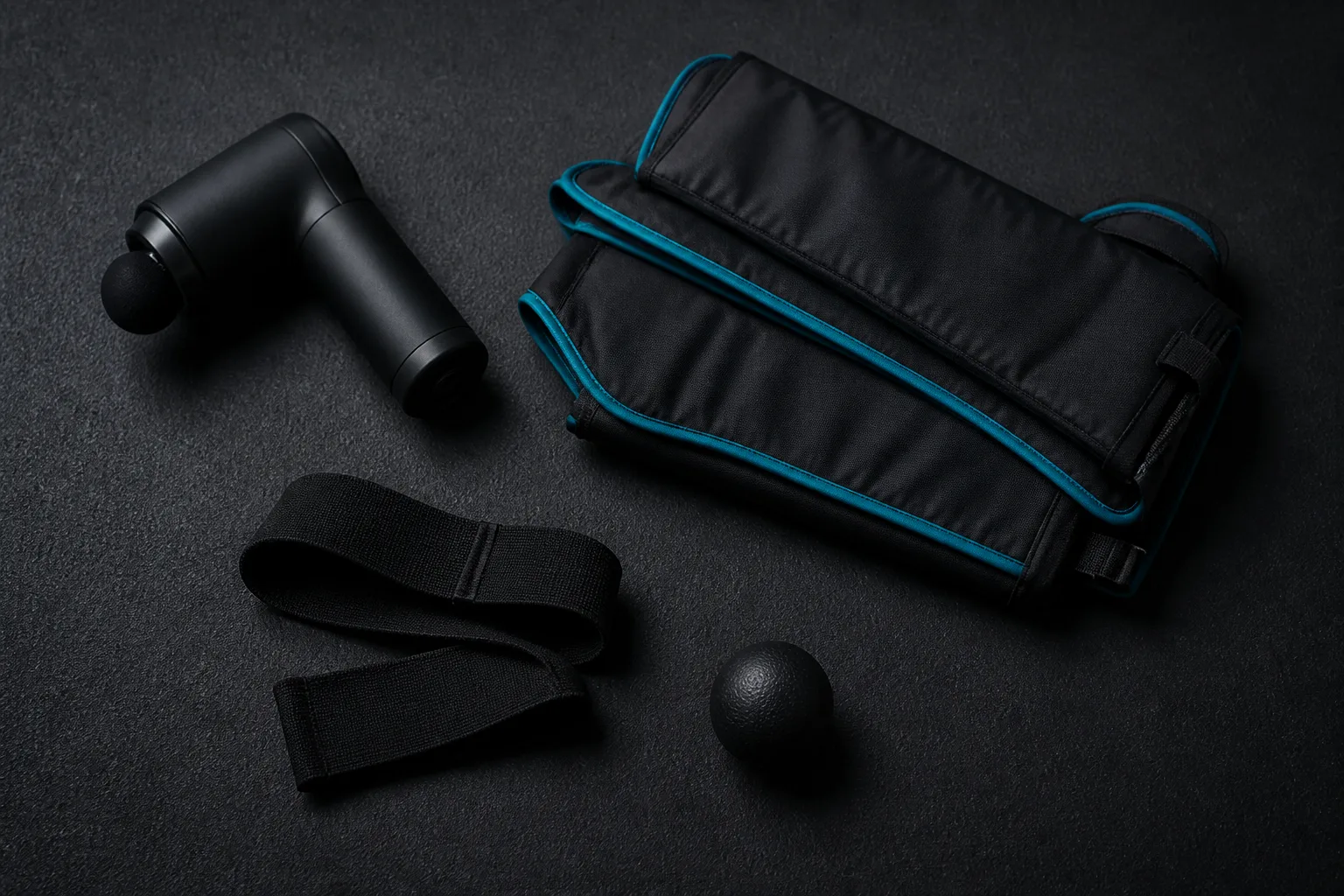
Lacrosse ball: $5–$15 CAD
- What it helps: Targeted, temporary relief around tight-feeling muscles.
- How to use: Start against a wall so you can control pressure.
- Why B tier: Very cheap and convenient, but it is a comfort tool, not a structural correction.
- Watch out for: Avoid joints, nerves, fresh injuries and the front or side of the neck.
Massage gun: $70–$400+ CAD
- What it helps: Short-term stiffness relief and a warm-up range-of-motion boost.
- How to use: Use low to moderate intensity briefly over muscle bellies.
- Why B tier: It can feel good, but it does not replace active recovery. Systematic review
- Watch out for: Never use it on bone, joints, a swollen area, an acute strain or the neck.
Compression sleeve or boots: $25–$1,200+ CAD
- What it helps: A feeling of reduced heaviness after training; sometimes prescribed after procedures.
- How to use: Follow the product or clinician instructions.
- Why B tier: Nice to have for some people, not needed for normal recovery.
- Watch out for: Get medical advice first with unexplained swelling, clotting concerns, vascular disease or heart failure.
Mobility strap: $10–$30 CAD
- What it helps: Controlled stretching and comfortable range-of-motion work.
- How to use: Use light tension and breathe; stop before sharp pain.
- Why B tier: Handy and affordable, but a towel often does the same job.
- Watch out for: Do not force a stretch into joint pain or tingling.
C tier: Symptom tools with limits
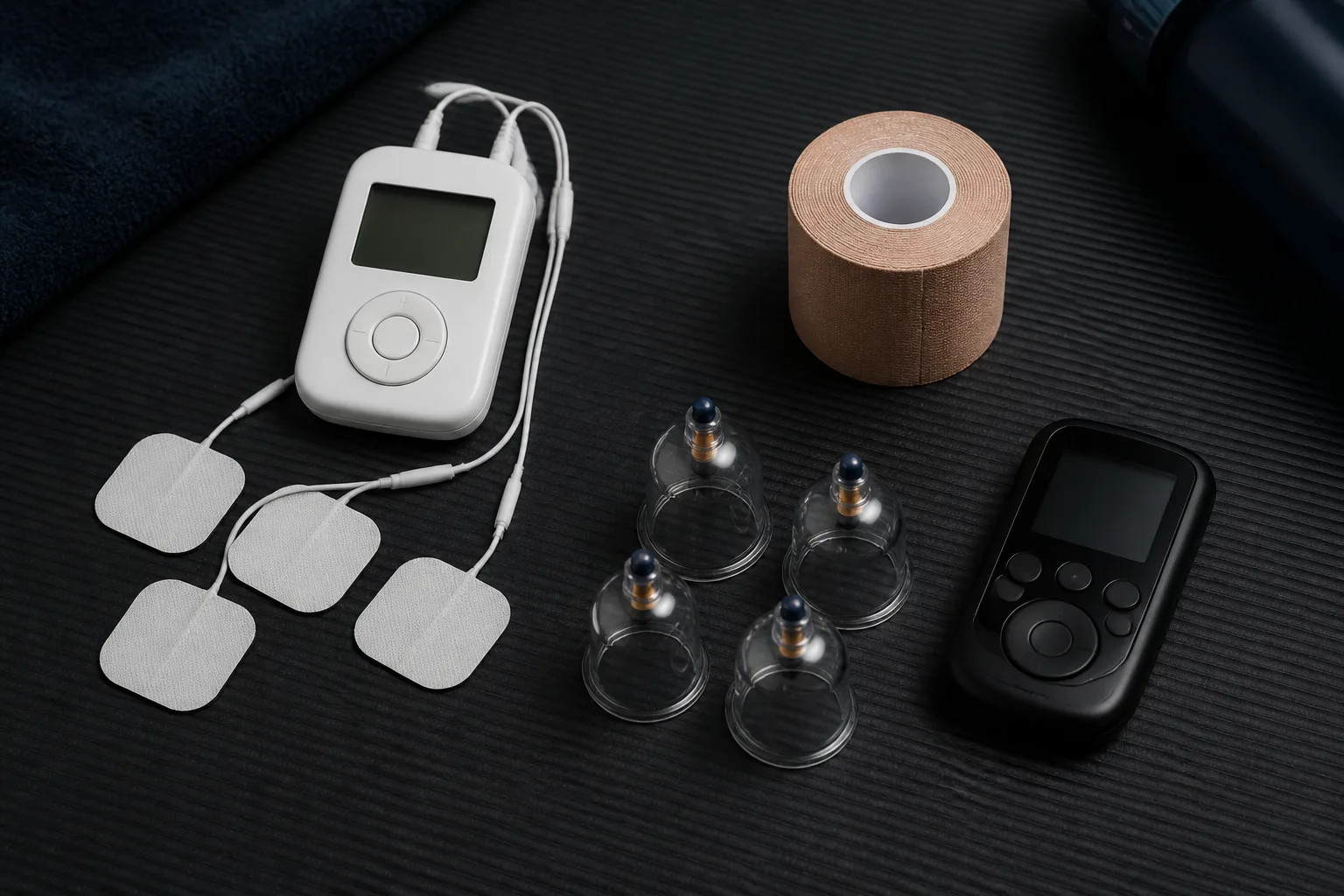
TENS / DR-HO-style unit: $40–$200 CAD
- What it helps: A short pain-relief window for walking, sleep or exercise.
- How to use: Place pads on intact skin around the painful area; use a strong but comfortable setting.
- Why C tier: It may help symptoms, but it does not heal a tendon or build strength.
- Watch out for: Get clearance with a pacemaker or implanted device, impaired sensation, broken skin or pregnancy-specific concerns.
Dry cupping: $20–$60 CAD
- What it helps: Temporary pain relief for some people.
- How to use: Use clean cups, gentle suction and short sessions on intact skin.
- Why C tier: Evidence for immediate symptom relief is mixed and function does not reliably improve. Systematic review
- Watch out for: Marks are from suction, not “toxins”; never use wet or blood-letting cupping at home.
Kinesiology tape: $10–$30 CAD
- What it helps: Short-term comfort, confidence or movement cueing.
- How to use: Apply without stretching the skin; remove slowly.
- Why C tier: Some people like it, but it does not realign joints or replace rehab.
- Watch out for: Stop for itching, blisters or irritation.
D tier: Tools worth being a little sceptical about
Red-light and infrared devices
- What it helps: Possible symptom relief for some people.
- How to use: Only follow the product’s safety guidance.
- Why D tier: Doses, products and research quality vary too much to place it above the basics.
- Watch out for: Do not spend hundreds before you own the tools that help you train.
Passive EMS devices
- What it helps: Electrical stimulation has specific clinical uses.
- How to use: Use only as directed by a clinician when it has been prescribed.
- Why D tier: Passive consumer use is not a replacement for a progressive strength programme.
- Watch out for: Avoid marketing that promises effortless strength or injury repair.
F tier: Claims to avoid
“Scar-tissue breakers”, joint realignment gadgets and detox claims
- What it helps: Nothing proven beyond a possible placebo or short-term comfort effect.
- How to use: Save your money instead.
- Why F tier: These claims exceed the evidence.
- Watch out for: No tool can diagnose tissue, dissolve scar tissue through the skin or permanently put a joint “back in place”.
A sensible starter kit
For most people, $75–$200 CAD is enough:
- Loop and long resistance bands
- One adjustable dumbbell or kettlebell
- Exercise mat or stable step
- Cold pack or heating pad
- Lacrosse ball or basic foam roller
Interactive guide
Interactive guide
Pick the issue you are dealing with
This gives you a practical starting kit—not a diagnosis or a substitute for individual advice.Knee pain with stairs or squats
A simple way to build quad and hip strength without jumping straight to heavy load.
Lets you practise controlled sit-to-stands and step-ups at a manageable height.
Optional short-term comfort after a flare; use it to help you settle, then keep moving.
Outer hip pain
Useful for gradual glute work and more comfortable single-leg control.
Can make side-sleeping more comfortable by reducing pressure between the knees.
Optional before gentle movement if warmth feels good.
Avoid a lacrosse ball or massage gun directly on a very tender outer hip.
Irritable shoulder
Good for comfortable rotation, pulling and gradual shoulder-strength work.
Choose the one that helps you settle enough to move; neither repairs the issue by itself.
Optional for nearby muscle only—never directly over a sore joint or the front of the neck.
Tight or achy lower back
Makes simple trunk-control work, mobility and comfortable floor exercises easier to repeat.
Useful for gradual hinges, carries and trunk strength that transfers to daily life.
Optional warm-up comfort tools; use them on muscle, then follow with movement.
A good short-term option if warmth makes it easier to get going.
Hamstring strain or tightness
Lets you start with gentle hamstring loading before heavier hinges or curls.
Useful later for controlled hinges as confidence and strength return.
Optional early comfort after a flare; do not use it as a replacement for gradual loading.
Skip aggressive massage-gun use directly over a fresh or bruised strain.
Calf or ankle issue
Useful for calf, foot and ankle work when bodyweight raises are not yet comfortable.
Helps progress calf raises through a controlled range when ready.
Can be a useful brief warm-up for the calf or sole of the foot—keep pressure tolerable.
Optional for a sore flare, while you rebuild walking tolerance and strength.
Tennis elbow or wrist irritation
Lets you build controlled wrist and grip strength without needing a full gym.
A portable option for gradual wrist, forearm and shoulder work.
Use gentle pressure on the forearm muscle—not directly on the tender tendon or bony point.
Optional short-term symptom support if it helps you keep using the arm comfortably.
Neck feels stiff or sore
May help short-term comfort before gentle neck and upper-back movement.
Useful later for upper-back and shoulder-blade strength; do not force the neck itself.
Worth considering if your sleeping position repeatedly leaves you stiff.
Do not use a massage gun on the front or side of the neck.
When equipment is not the answer
Seek assessment rather than buying another gadget for a new deformity, inability to bear weight, major swelling, fever/redness, numbness, progressive weakness or symptoms after significant trauma.
This guide is educational and is not medical advice. Individual restrictions after surgery, vascular conditions, nerve symptoms and skin problems can change which tools are appropriate.