The simplest difference is this:
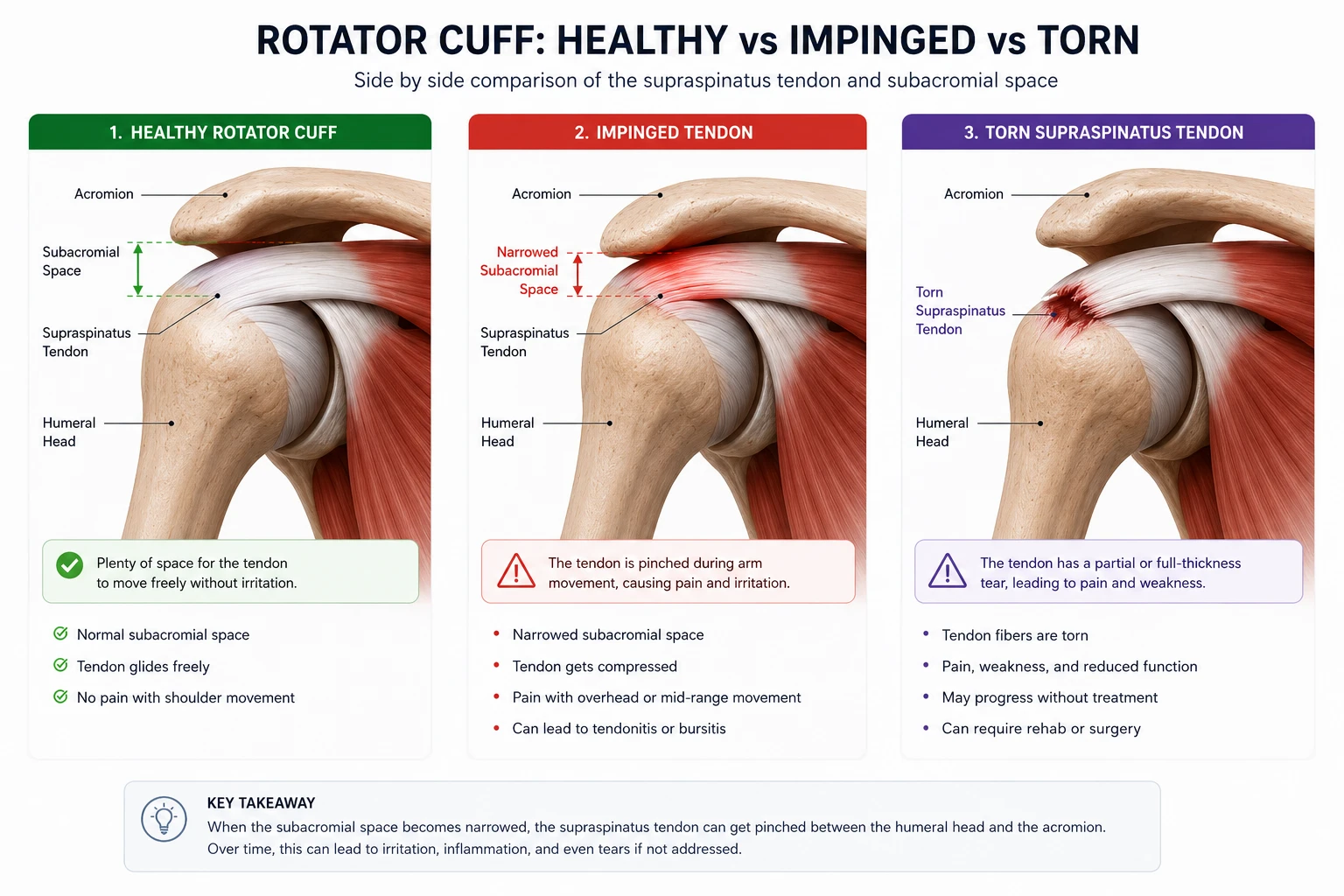
A rotator-cuff tear involves physical damage to one or more tendons. Shoulder impingement describes pain and irritation involving the rotator cuff or bursa as the arm moves.
They are not always completely separate problems. Tendinopathy, bursitis, impingement-type symptoms, and a partial tendon tear can occur together. No single symptom or home test can reliably confirm the diagnosis.
Quick comparison
| Feature | Rotator-cuff tear | Shoulder impingement |
|---|---|---|
| What it is | Partial or complete tendon damage | Pain and irritation involving tissues beneath the top of the shoulder |
| Common onset | Sudden injury or gradual degeneration | Often develops gradually with repeated overhead activity |
| Weakness | May remain even when pain is minimized | Often limited mainly because movement hurts |
| Painful arc | Can occur | Commonly reported |
| Night pain | Common | Can also occur |
| First treatment | Often starts with rehabilitation; a large traumatic tear may need surgical consultation | Usually starts with activity modification and progressive rehabilitation |
What is a rotator-cuff tear?
A tear occurs when part or all of a rotator-cuff tendon is disrupted. A partial tear affects only part of the tendon. A full-thickness tear extends through the tendon and may pull away from the upper-arm bone.
Tears can happen suddenly after a fall or forceful lift, or develop gradually as tendon tissue changes over time. Not every tear causes severe symptoms. Some people have tears on imaging without knowing they are there, so scans must be interpreted alongside strength, movement, pain, and the way the problem began.
What is shoulder impingement?
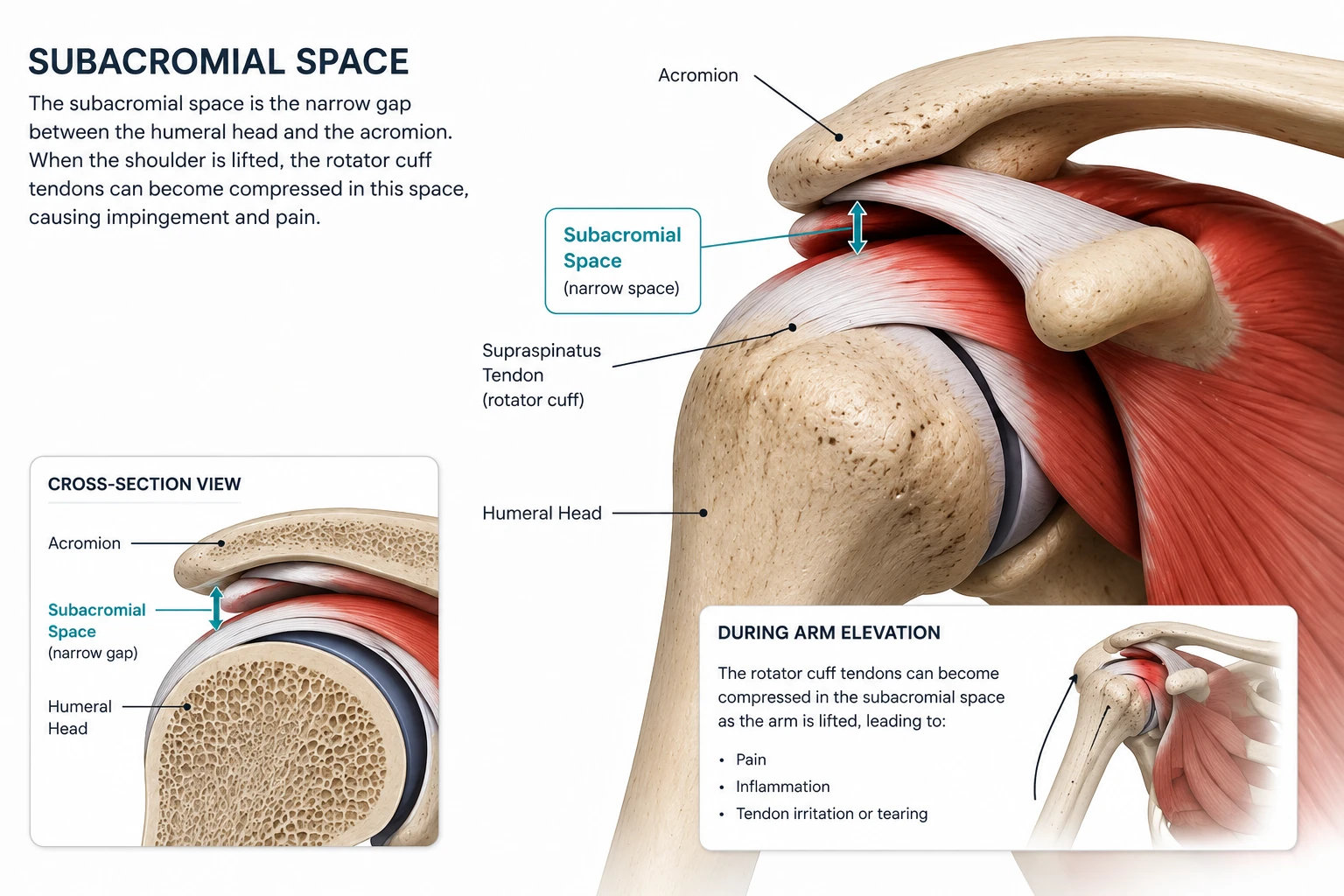
Shoulder impingement is a commonly used term for pain involving the rotator cuff and subacromial bursa during arm movement. The bursa is a small fluid-filled sac that helps the tendon glide beneath the acromion, the bony top of the shoulder.
When the arm rises, the available space changes. If the tissues are sensitive, swollen, overloaded, or poorly controlled, this can hurt, often through the middle part of an overhead reach.
The term subacromial pain syndrome is also used because the problem is not always one structure being mechanically "pinched." Several tissues and movement factors may contribute.
What each one usually feels like
Symptoms overlap, but certain patterns can make one problem more likely.
Signs that may suggest impingement-type pain
- Pain that developed gradually
- Pain during repeated overhead work, pressing, swimming, throwing, or reaching
- Pain near the front or outer shoulder
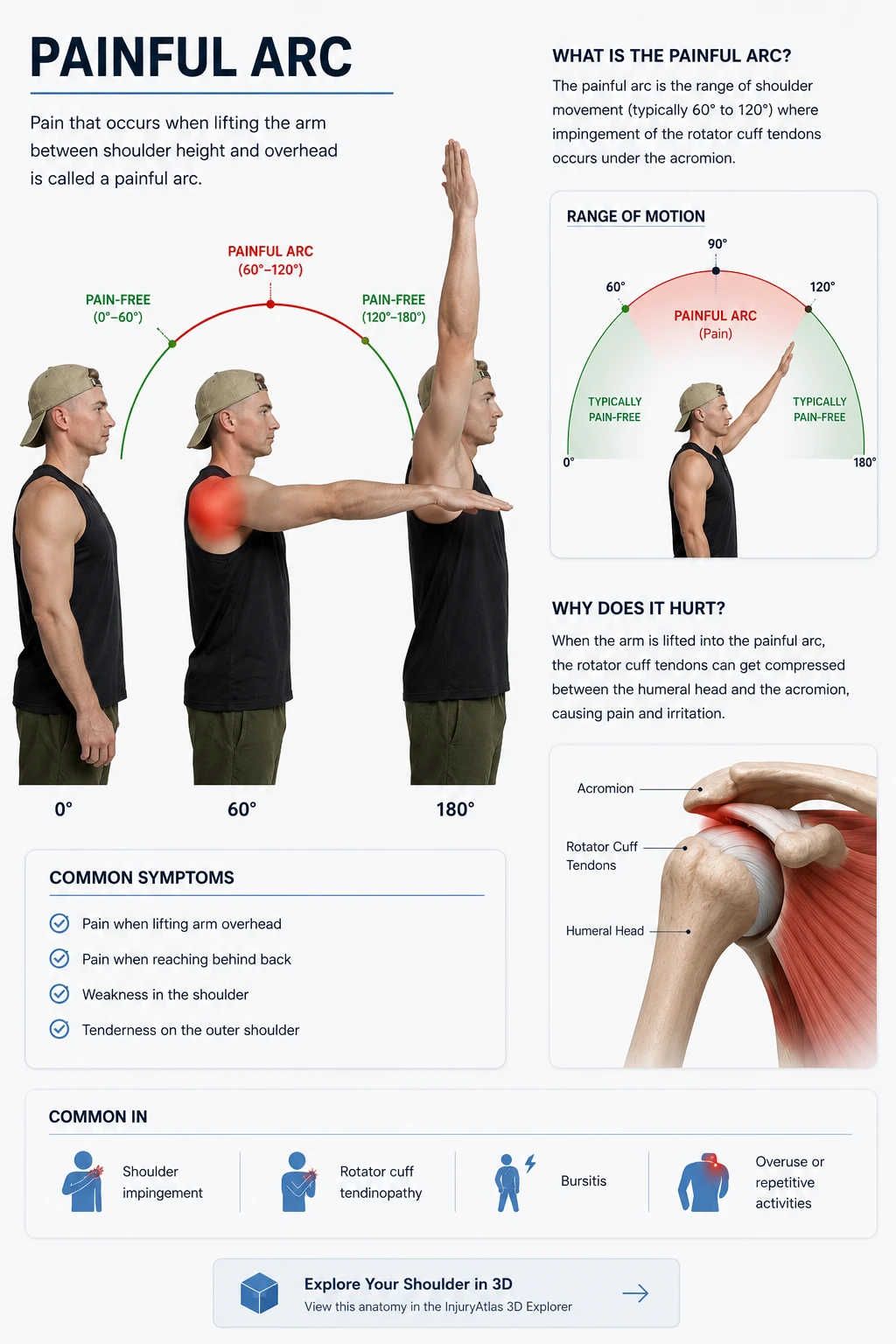
- Pain through part of an overhead movement
- Discomfort when reaching behind your back
- Strength that improves when the pain or arm position changes
The painful arc often occurs through the middle portion of raising or lowering the arm. It is a useful clue, but it cannot diagnose impingement by itself.
Signs that may suggest a rotator-cuff tear
- Pain after a fall, sudden pull, or forceful lift
- A pop followed by weakness
- Difficulty lifting the arm away from the body
- Weakness when rotating the arm outward
- Trouble controlling the arm as it lowers
- Night pain, especially when lying on the affected side
A large acute tear may cause obvious weakness. A smaller or gradual tear can feel more like ordinary shoulder pain and may be difficult to identify without an examination.
How clinicians tell them apart
A clinician combines several pieces of information rather than relying on one test.
How the pain started
A sudden injury followed by immediate weakness raises more concern for an acute tear. Gradual pain during repeated overhead activity fits an overload-related problem more closely, although it does not rule out a tear.
Movement and strength
The clinician compares how far you can move the arm yourself with how far it moves with assistance. They also test elevation, external rotation, internal rotation, and strength in different positions.
Weakness that remains when pain is minimized may raise concern for a tear. A painful arc with relatively preserved strength may fit impingement-type pain more closely.
A group of shoulder tests
Tests such as the painful arc, resisted external rotation, full-can test, lift-off variations, and Hawkins–Kennedy test provide clues. No single test is perfectly accurate, so clinicians interpret the pattern as a whole.
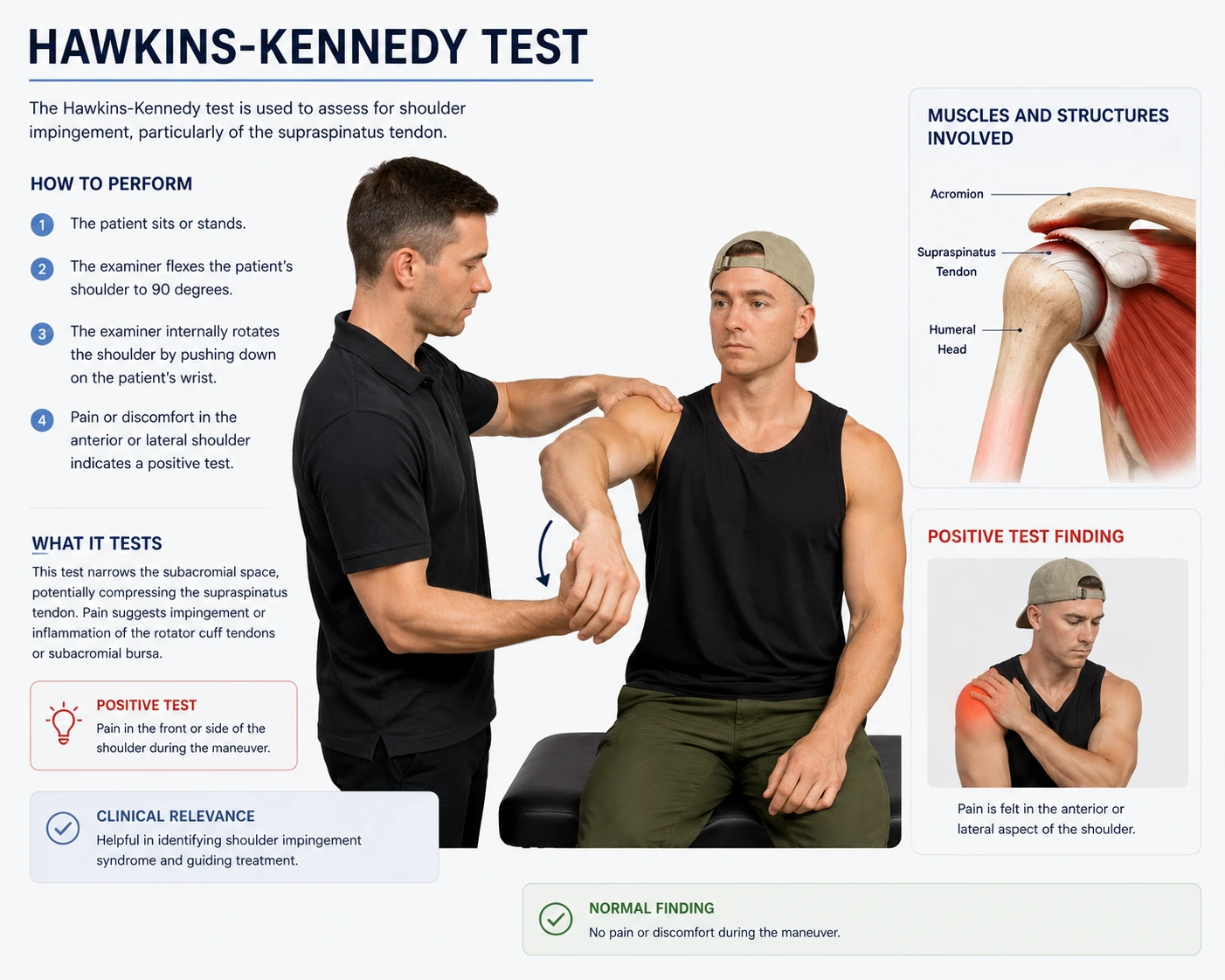
In practice, a clinician combines several of these tests with your history and range of motion rather than leaning on just one. No single test tells the whole story by itself.
Imaging
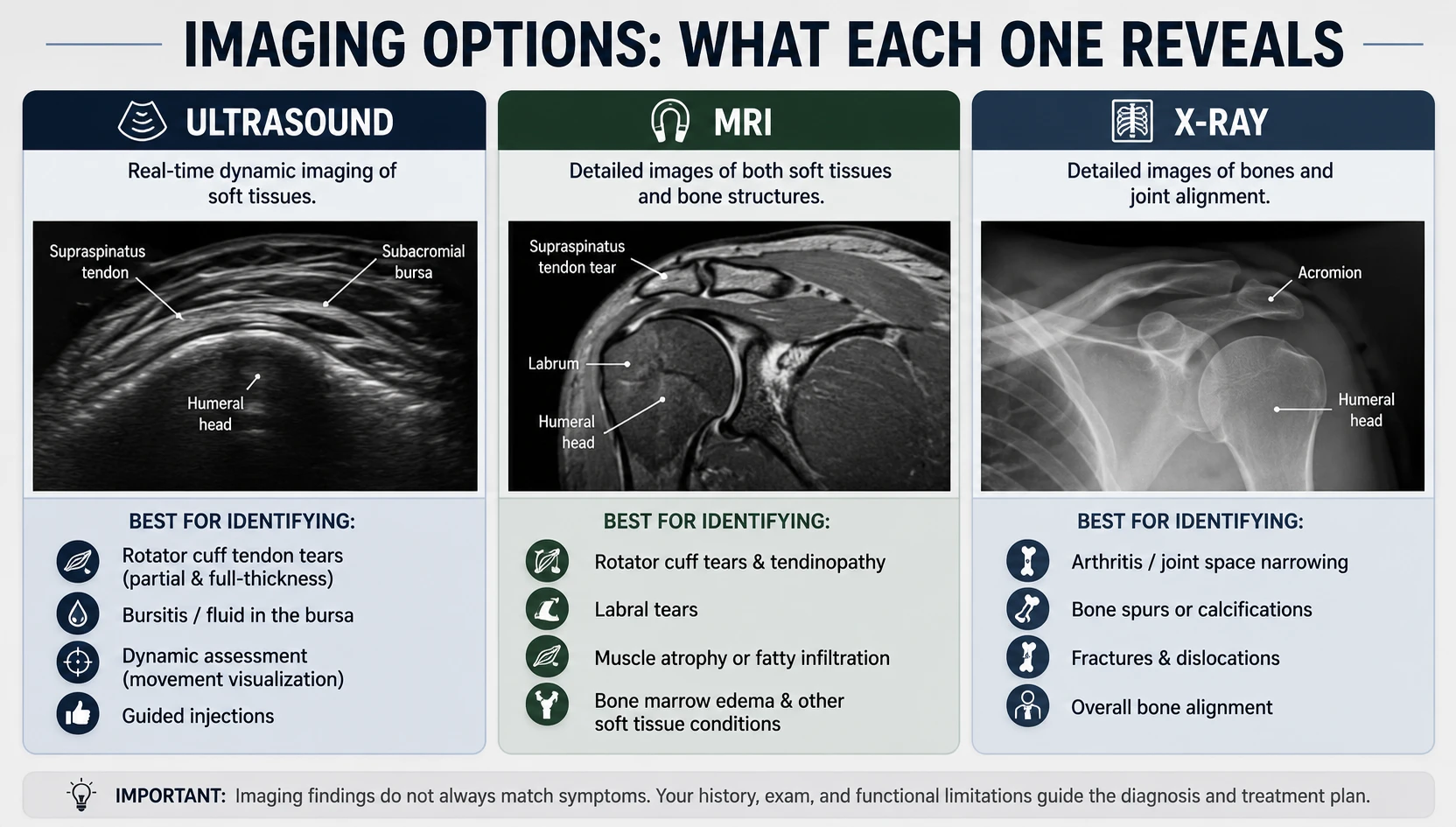
Ultrasound can show rotator-cuff tendons dynamically and may identify partial or full-thickness tears. MRI provides a detailed view of the cuff, bursa, muscles, and other soft tissues. X-rays do not show the cuff directly, but can reveal arthritis, calcification, and other bone or joint changes.
Imaging is not required for every case. Many shoulder problems can initially be managed based on the history and physical examination.
Can impingement turn into a tear?
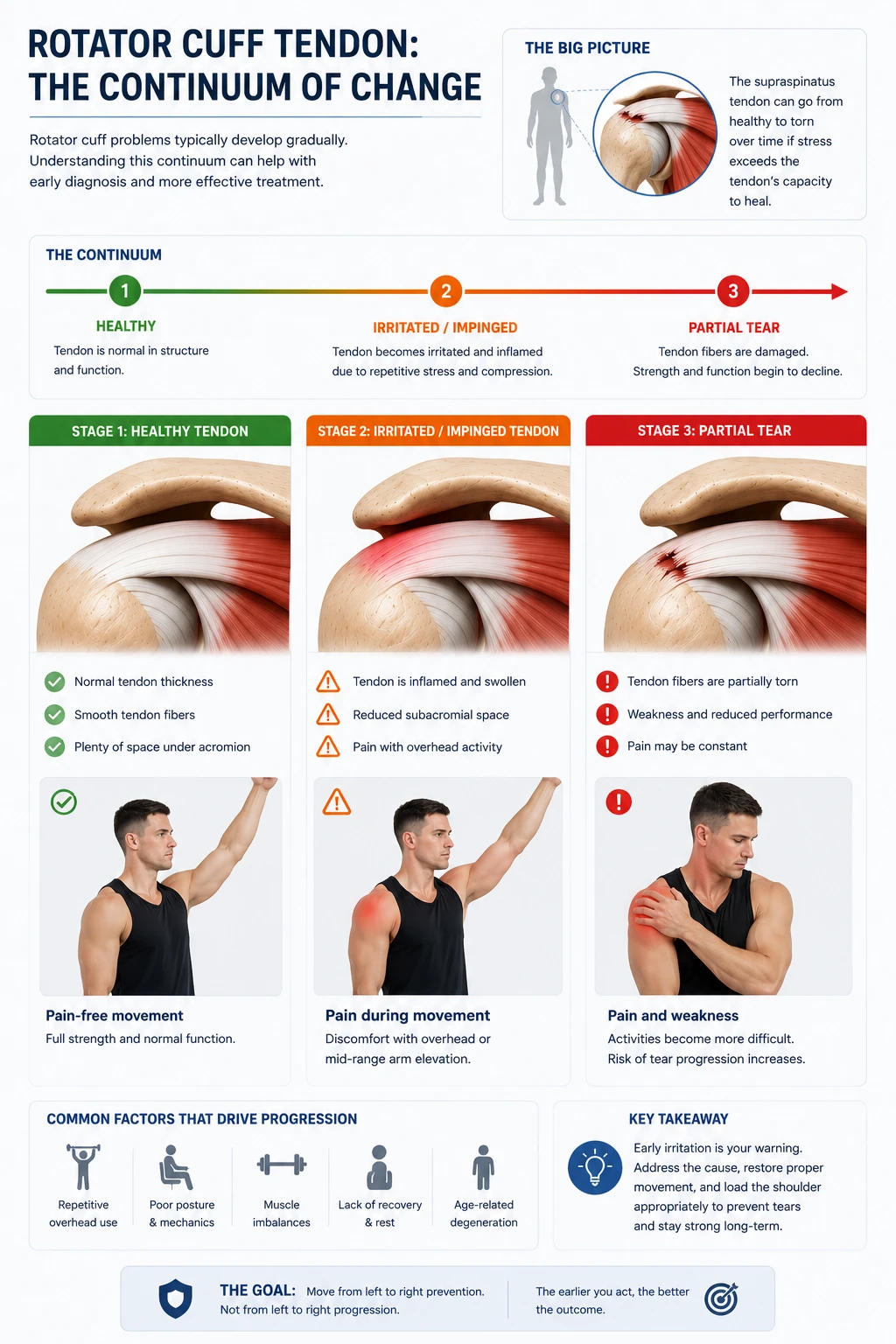
Persistent tendon overload may contribute to degeneration over time, but impingement does not follow a guaranteed step-by-step path into a tear. Many people improve with temporary activity modification, progressive cuff and shoulder-blade strengthening, and a gradual return to overhead movement.
Repeatedly forcing painful movement without allowing the shoulder to recover can keep the tissues irritated.
Can a tear cause impingement-type symptoms?
Yes. A tear can change how the shoulder produces force and controls the upper-arm bone. That can make overhead movement painful and create symptoms that resemble impingement. This is another reason symptoms alone cannot always separate the two.
Treatment: where they overlap
Initial treatment often looks similar because both problems may respond to improved movement, graded loading, and better shoulder strength.
Treatment may include:
- Temporarily reducing movements that repeatedly aggravate the shoulder
- Keeping the shoulder moving within a comfortable range
- Rotator-cuff isometrics
- Band external and internal rotation
- Shoulder-blade strengthening and rows
- Controlled arm raises
- A gradual return to overhead loading
Medication, ice or heat, and clinician-directed injections may reduce symptoms in selected cases, but they do not replace rebuilding the shoulder's capacity.
When treatment may differ
Many small or gradual tears are treated without surgery at first. The focus is restoring function, improving strength, and reducing pain.
A large traumatic tear may need a more urgent orthopaedic assessment when an injury causes immediate weakness or an inability to lift the arm.
Impingement-type pain usually begins with conservative care and progressive exercise. The goal is not simply to "create more space," but to improve the shoulder's strength, movement, and tolerance.
Recovery time
Recovery depends on how long symptoms have been present, whether a tear exists, the size and type of tear, strength and mobility, work or sport demands, general health, and whether surgery is needed.
Mild overload-related symptoms may improve over several weeks. Persistent shoulder pain often takes several months of progressive rehabilitation. Recovery from rotator-cuff surgery is also measured in months, not weeks.
When to see a doctor
Arrange an assessment if pain began after a fall or sudden injury, you heard a pop and immediately lost strength, you cannot raise the arm, weakness is worsening, pain is severe at night or at rest, symptoms travel from the neck, or several weeks of sensible self-care have not helped.
Seek urgent care after a significant injury if the shoulder is visibly deformed, you cannot move the arm, or there are signs of impaired circulation or sensation.
Frequently asked questions
Which is worse?
A large traumatic tear is generally more serious than uncomplicated impingement-type pain. But a small tear may cause few symptoms, while severe subacromial pain can be highly limiting. Strength and function matter more than the label alone.
Can you have both at the same time?
Yes. A tear, bursitis, tendon irritation, and impingement-type symptoms can overlap.
Does weakness always mean the cuff is torn?
No. Pain itself can reduce strength, and neck or nerve problems can also cause weakness. Persistent or pronounced weakness should still be assessed.
Do I need an MRI?
Not always. Imaging is more likely after a significant injury, when substantial weakness is present, when surgery is being considered, or when symptoms do not improve as expected.
Can impingement improve without surgery?
Many cases improve with activity modification and progressive exercise.
Can a rotator-cuff tear heal on its own?
A full-thickness tear may not structurally reconnect on its own. Even so, many people improve pain and function without surgery by strengthening the remaining shoulder muscles and modifying aggravating activity.
Key takeaways
- A rotator-cuff tear is structural tendon damage.
- Impingement describes pain and irritation involving the cuff or bursa during movement.
- Overhead pain and night pain can happen with either problem.
- Sudden weakness after an injury is more concerning for a tear.
- No single symptom or home test can confirm the diagnosis.
- Many cases initially improve with progressive rehabilitation.
See it in 3D
Reading about where the supraspinatus tendon runs or where the subacromial space narrows only goes so far. Explore the actual shoulder structures involved in both conditions, rotate them, and see exactly where the pinching and tearing happen.
Explore the Right Shoulder in the 3D Anatomy Explorer →
Continue learning
- 5 Best Rotator Cuff Exercises
- Rotator Cuff Tear: Full Guide
- Shoulder Impingement Syndrome: Full Guide
- Supraspinatus Muscle Anatomy
- Rotator Cuff Tear Rehab Guide
- Preventing Rotator Cuff Injuries
Educational information only
This article does not diagnose an injury or replace care from a qualified healthcare professional.
Sources: Phillips, "Tests for diagnosing subacromial impingement syndrome and rotator cuff tears," Shoulder & Elbow, 2014, PMC. Symptom, cause, and treatment detail drawn from this site's own clinically-reviewed Rotator Cuff Tear and Shoulder Impingement Syndrome pages, which cite OrthoInfo, StatPearls, Mayo Clinic, and JOSPT.