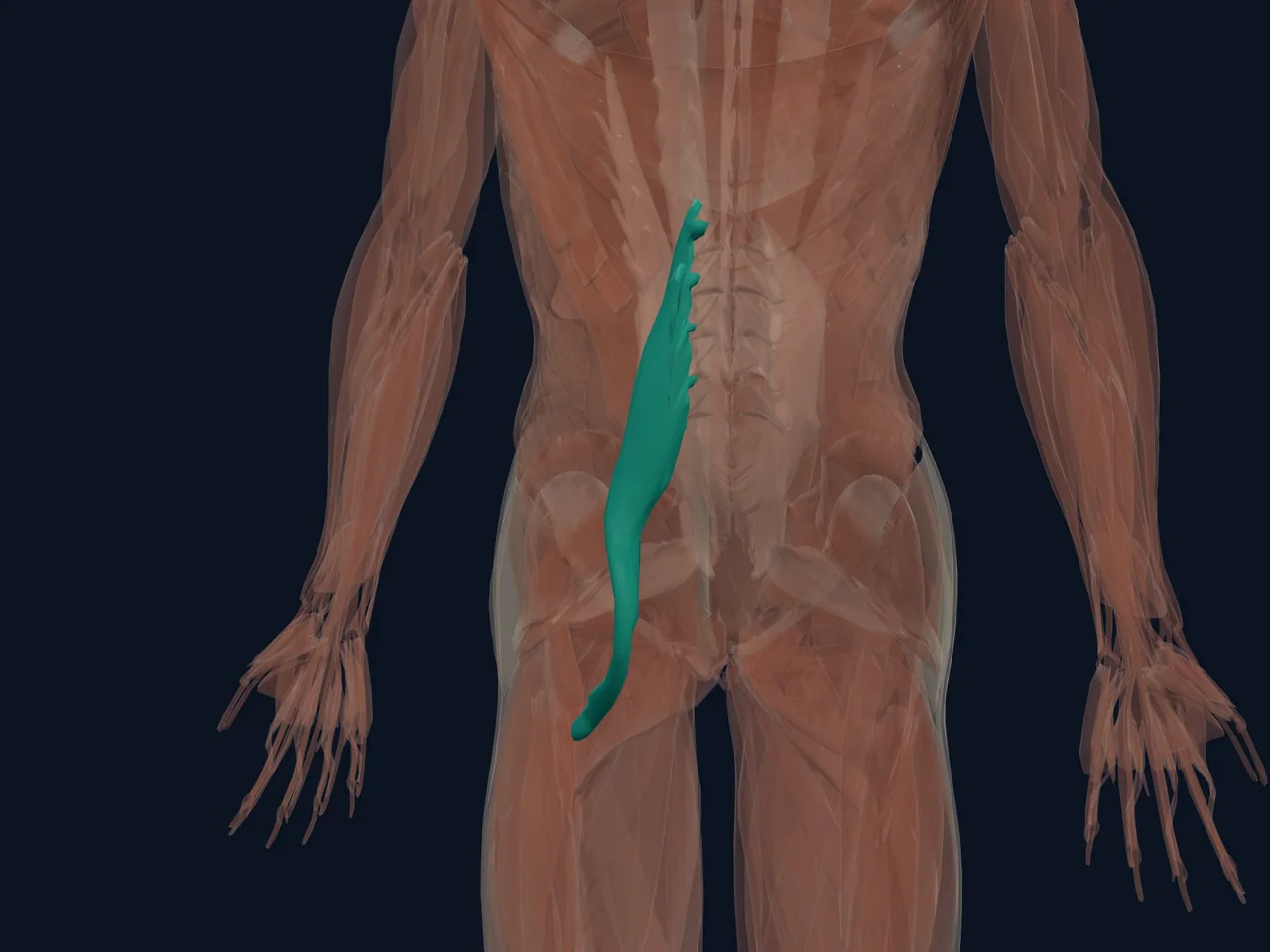
Overview
The psoas major is a deep muscle that begins along the lumbar spine, passes through the pelvis and joins the iliacus before attaching to the upper femur. Together, the psoas and iliacus are commonly called the iliopsoas.
Location and Connections
- Attaches to the bodies, discs and transverse processes of the lumbar vertebrae
- Runs in front of the hip joint
- Joins the iliacus and attaches to the lesser trochanter of the femur
- Lies close to lumbar nerve roots and major abdominal and pelvic structures
What It Does
The psoas major helps flex the hip, bringing the thigh toward the trunk. When the leg is fixed, it can influence the trunk and lumbar spine. Walking, running, climbing stairs and rising from a low seat all use it.
Common Problems
Psoas or iliopsoas irritation can produce deep groin or front-of-hip symptoms, especially with repeated hip flexion. Lower-back pain by itself does not prove the psoas is “tight,” shortened or the cause.
Clinical Relevance
Treatment decisions should be based on the movements that reproduce symptoms and the person’s activity demands. Progressive hip and trunk loading is often more useful than repeatedly stretching the area without a clear reason.
Related Anatomy
References
- StatPearls. "Anatomy, Bony Pelvis and Lower Limb, Iliopsoas Muscle." https://www.ncbi.nlm.nih.gov/books/NBK535418/
- StatPearls. "Anatomy, Abdomen and Pelvis, Posterior Abdominal Wall." https://www.ncbi.nlm.nih.gov/books/NBK557605/