Overview
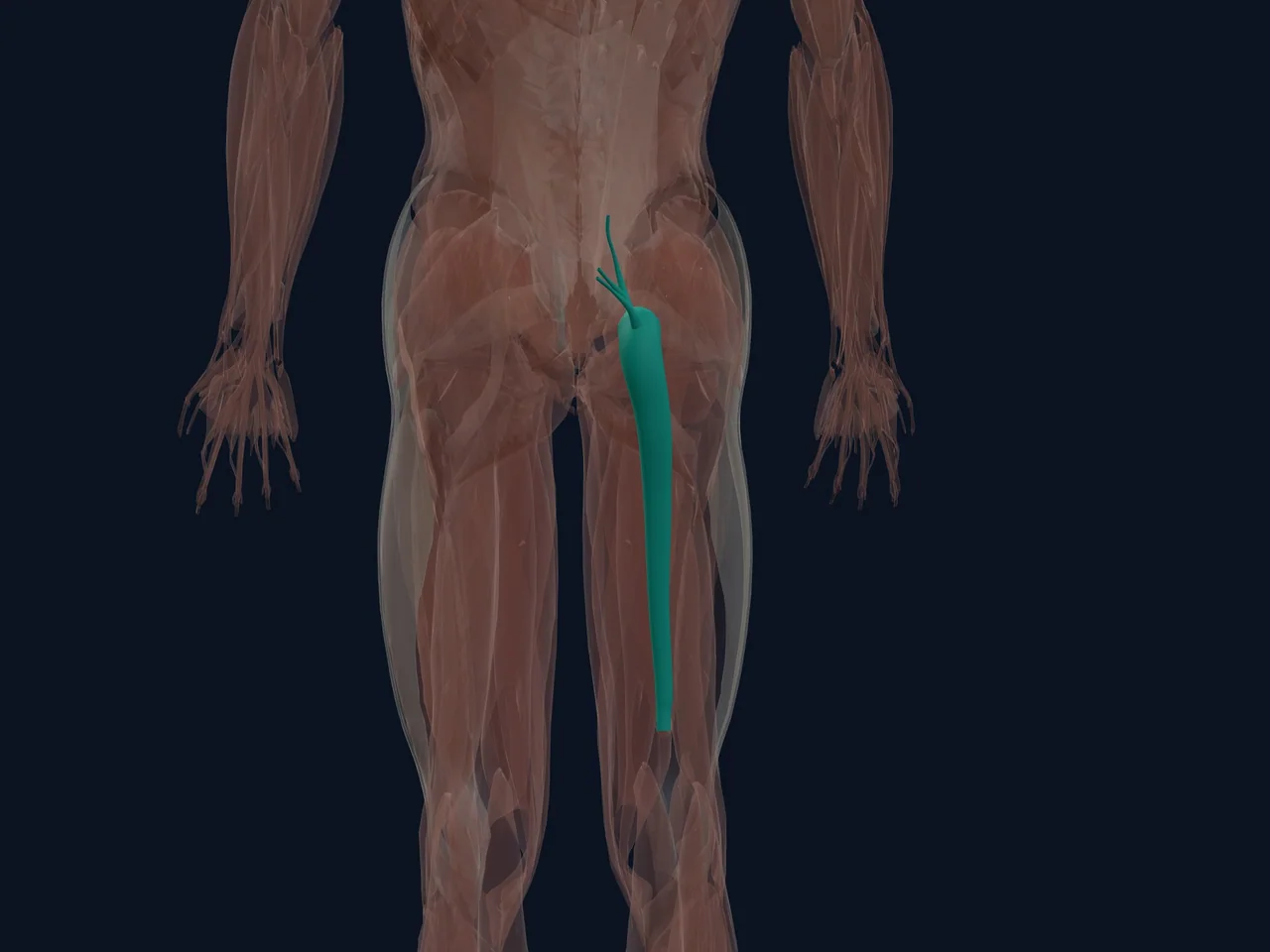
The sciatic nerve is the largest nerve in the body. It forms in the lower back from nerve roots that exit the lumbar and sacral spine, then runs through the buttock and down the back of the thigh before branching toward the lower leg and foot.
Sciatica is the name for pain that follows the sciatic nerve's path — usually from the buttock down the back of the leg — often with tingling or numbness. The most common cause is irritation of a nerve root in the lower back, frequently by a disc.
Location and Course
- Forms from nerve roots at roughly L4 to S3 in the lower back
- Passes through the buttock and down the back of the thigh
- Splits into branches that supply the lower leg and foot
- Carries both sensation and movement signals
What It Does
The sciatic nerve carries feeling from much of the leg and foot and controls muscles of the thigh, lower leg and foot. When a nerve root is irritated, symptoms can be felt anywhere along that path — which is why the pain can be in the leg even though the source is in the back.
Common Problems
- Nerve root irritation from a lumbar disc herniation
- Leg pain, tingling or numbness in a nerve pattern
- Muscle weakness in more significant cases
Not every leg or buttock ache is sciatica, and pain location alone does not identify the source. Most people with sciatica from a disc herniation improve with conservative care over weeks to months.
Clinical Relevance
Leg pain with progressive weakness, numbness, or changes in bladder or bowel function needs prompt assessment. Sudden saddle numbness, difficulty urinating or weakness in both legs needs urgent care.
Related Anatomy
References
- StatPearls. "Sciatic Nerve." https://www.statpearls.com/articlelibrary/viewarticle/28770
- IASP. "Surgical or non-surgical management for sciatica." https://www.iasp-pain.org/publications/relief-news/article/management-for-sciatica/