Exercises · IA-BAC-EXE-005

Chest-Supported Row

Learn the chest-supported dumbbell row for upper-back strength with reduced demand on the lower back.

Browse Lower Back
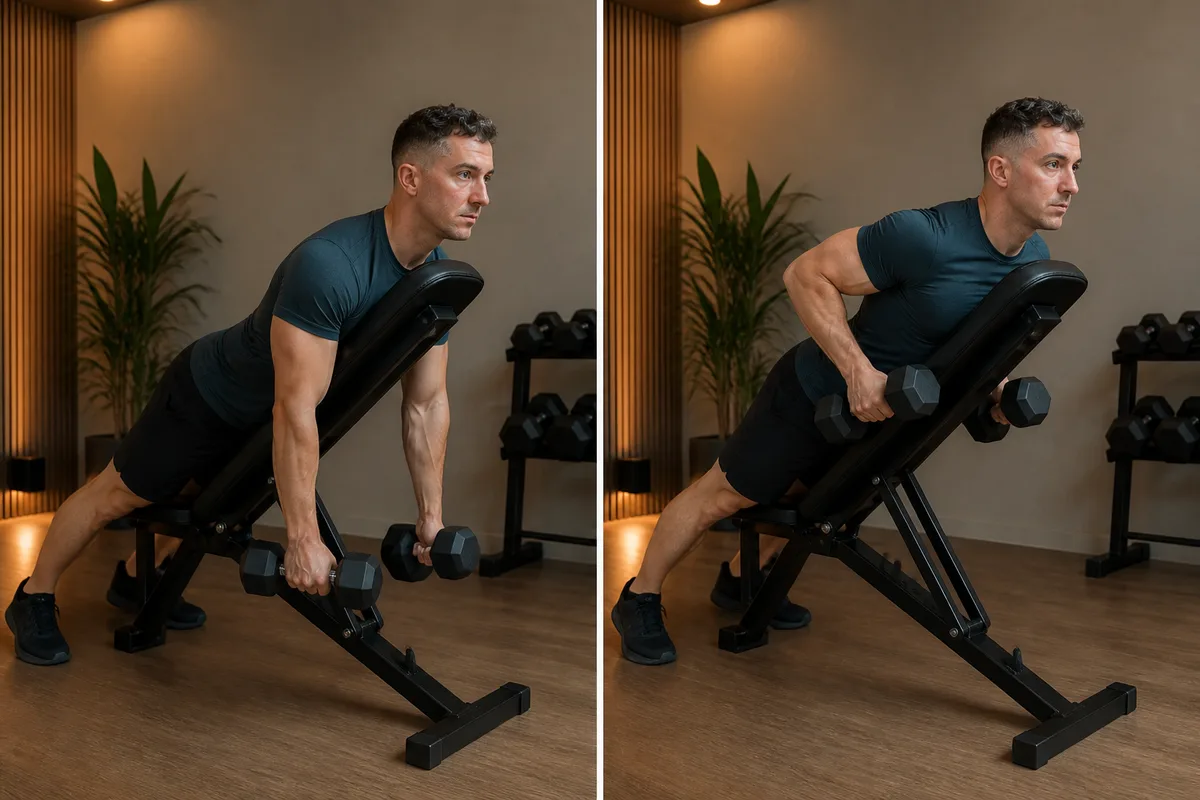
Start and finish demonstration of Chest-Supported Row
Start and finishUse the written steps below for the full technique and safety guidance.

At a glance

Exercise profile

Target muscles
Latissimus dorsi, Middle trapezius, Rhomboids, Posterior deltoid
Exercise type
Strength
Equipment
Incline bench, Two dumbbells
Mechanics
Compound
Movement pattern
Pull (bilateral)
Experience level
beginner
Secondary muscles
Biceps brachii, Brachialis, Brachioradialis

Upper-back pulling strength

What this exercise works

The upper-back and shoulder muscles draw the arms and shoulder blades backward while the elbow flexors assist the pull.

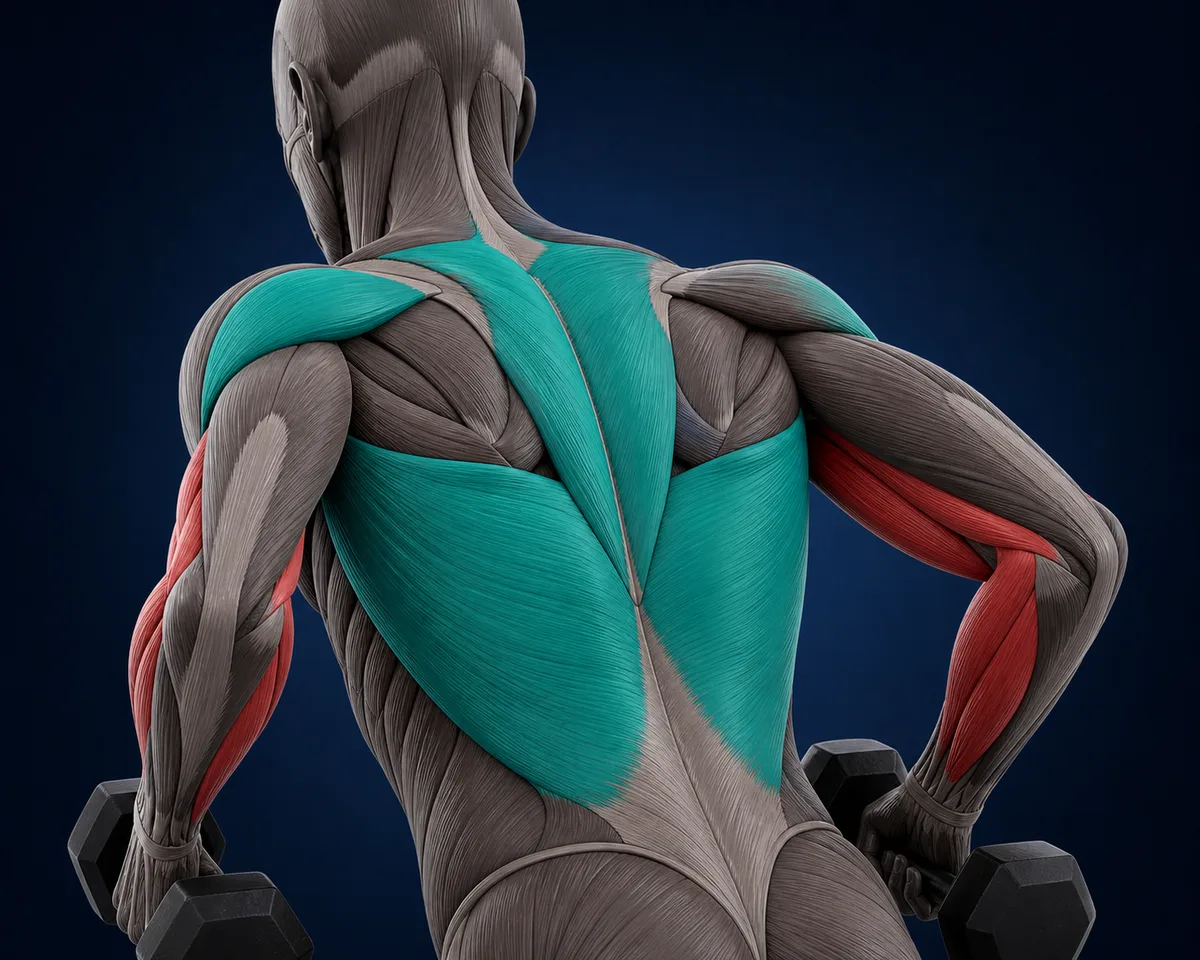
Anatomy highlighting the structures involved in Chest-Supported Row
Teal — primary muscles doing most of the workRed — secondary muscles assistingGrey — stabilizers and surrounding anatomy

Primary emphasis

  • Latissimus dorsi
  • Middle trapezius
  • Rhomboids
  • Posterior deltoid

Secondary muscles

  • Biceps brachii
  • Brachialis
  • Brachioradialis

Stabilizers

  • Rotator cuff
  • Lower trapezius
  • Forearm and grip muscles

Movement and joint actions

  • Shoulder extension
  • Scapular retraction
  • Elbow flexion

Muscle contribution changes with position, range, resistance and individual technique.

Why it can help

Potential benefits and carryover

Benefits depend on technique, dosage, consistency and whether the exercise suits the person. Sport carryover means supporting the physical demands of the activity—not guaranteeing performance or preventing injury.

Everyday benefits

  • Builds upper-back and pulling strength
  • Trains shoulder-blade control with the torso supported
  • Reduces the trunk demand of an unsupported bent-over row
  • Develops strength for lifting, pulling and later rowing progressions

Training carryover

  • Supports dumbbell, cable and barbell rowing progressions
  • Builds a strength base for pull-ups and pulldowns
  • Develops upper-back control used during deadlifts and loaded carries

Sport carryover

  • Supports the pulling demands of rowing, climbing and paddling
  • Develops shoulder-blade control relevant to swimming and racquet sports

Technique

Chest-Supported Row tips

Use these cues to keep the movement controlled and focused on its intended purpose.

  1. Keep the chest supported throughout the set instead of lifting away from the bench.
  2. Draw the elbows back without forcing them beyond a comfortable shoulder range.
  3. Keep the shoulders away from the ears and pause briefly at the top.
  4. Choose a load that lets you lower the weights without dropping or swinging them.

Overview

The chest-supported row strengthens the upper-back and pulling muscles while the bench supports the torso and reduces the need to hold a bent-over position.

How to Do It

  1. Set an incline bench to about 30–45 degrees and lie chest-down with feet grounded.
  2. Let two light dumbbells hang with palms facing inward.
  3. Pull the elbows back close to the ribs until the weights reach the lower chest.
  4. Pause without shrugging, then lower slowly.
  5. Begin with 2 sets of 8–12 repetitions.

What You Should Feel

Expect effort between the shoulder blades and along the sides of the back. Stop for sharp shoulder, chest or back pain.

Common Mistakes

  • Lifting the chest away from the bench
  • Shrugging toward the ears
  • Pulling farther than shoulder comfort allows
  • Choosing weights that require momentum

Progression

Add repetitions and control before increasing weight. Progress to unsupported rows only when trunk endurance is appropriate.

References

  • American College of Sports Medicine. "Progression Models in Resistance Training for Healthy Adults." 2009. https://doi.org/10.1249/MSS.0b013e3181915670
This is general education. Follow clinician restrictions after surgery or an acute injury.
Educational information only

This information does not diagnose an injury or replace care from a qualified healthcare professional.