If your goal is building muscle, some exercises give you more return than others.
The best muscle-building exercises match the muscle's main job, challenge it through a useful range, provide enough stability to train hard and make progressive overload straightforward. That is the standard used for every pick in this guide.
Your joints, equipment and training experience still matter. An exercise cannot build much muscle if its setup constantly hurts or another body part always ends the set first. But once those basic requirements are met, anatomy gives us a clear way to choose the strongest overall exercise for each major body part.
The List in 30 Seconds
- Chest: incline dumbbell press
- Lats: lat pulldown
- Upper back: chest-supported row
- Side delts: cable lateral raise
- Biceps: incline dumbbell curl
- Triceps: skull crusher with the arms angled slightly back
- Quadriceps: front squat
- Hamstrings: Romanian deadlift, plus a leg curl for complete coverage
- Glutes: hip thrust
- Calves: standing calf raise through a controlled deep stretch
- Abs: weighted cable crunch
- Spinal erectors: 45-degree back extension
You will notice a few machines and cables beside the barbells. Muscles do not award bonus points because an exercise looks difficult to set up.
How the Picks Were Chosen
Each exercise had to do four things well:
- Match the muscle's anatomy. The movement should closely reflect one or more of the muscle's main actions.
- Challenge a useful range. Ideally, the muscle works hard while lengthened as well as through the rest of the rep.
- Provide enough stability. Balance, grip or low-back fatigue should not always end the set before the target muscle does.
- Allow clear progression. You should be able to add reps, load or control without reinventing the exercise every week.
Research helps, but it cannot declare a universal winner for every muscle. Exercise studies often compare only two options, use small groups and measure one part of a muscle. Anatomy gives us a map. Your own training tells us which route you can actually keep using.
Chest: Incline Dumbbell Press
The pectoralis major has a broad, fan-shaped arrangement. Its upper fibres run from the clavicle toward the upper arm, while the larger sternal portion runs across the chest. Pressing up and inward on a modest incline gives both regions useful work while placing a little more emphasis on the upper chest.
Why it gets the pick: dumbbells let each arm find a comfortable path, provide a deep controlled stretch and make small load increases easy. Keep the bench at a modest incline—roughly 20 to 35 degrees. Turn it into a near-upright chair and your front delts will happily steal the shift.
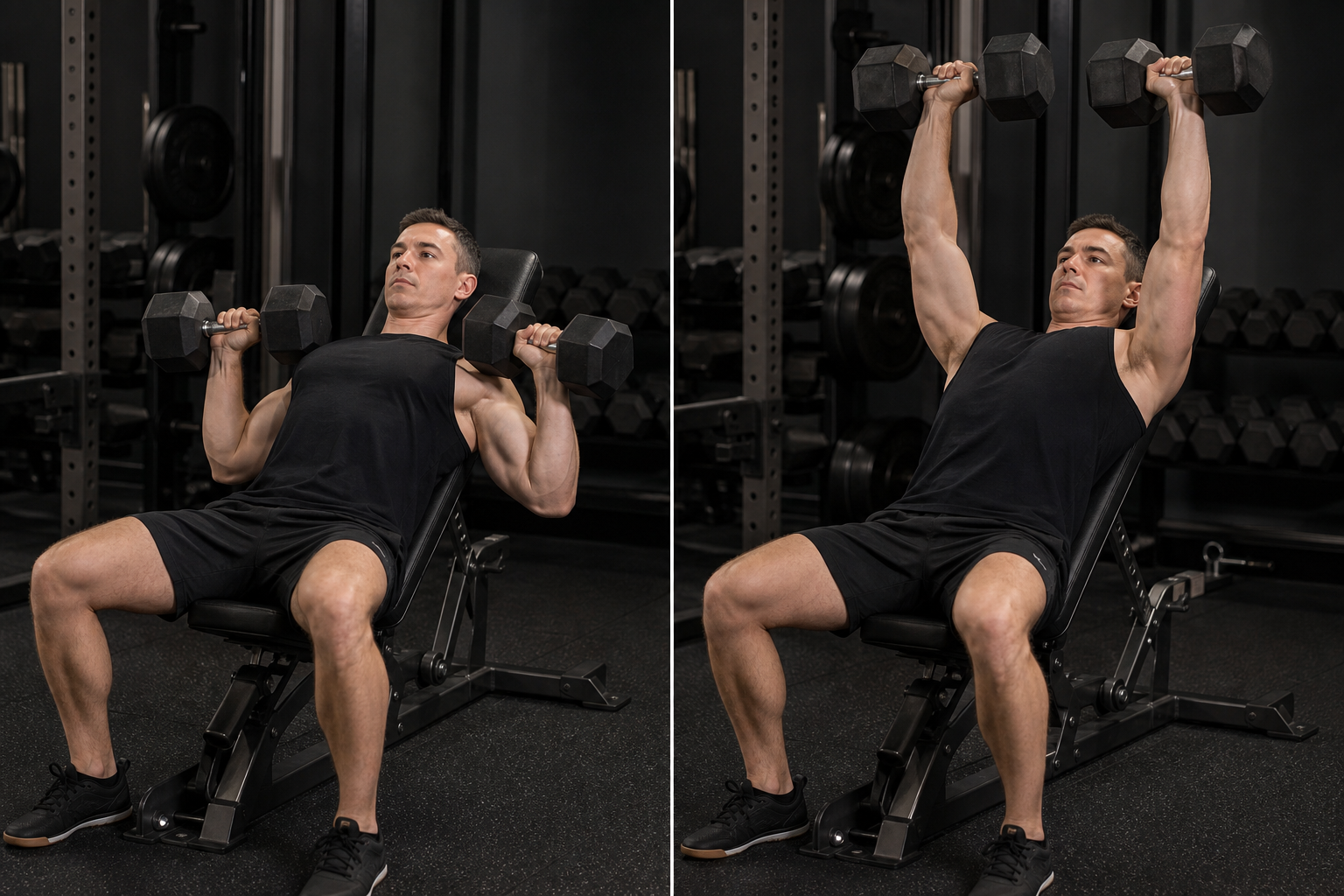
Make it work: lower the dumbbells beside the upper chest, keep your forearms close to vertical and press without aggressively shrugging your shoulders forward.
Also excellent: a flat barbell press is easier to standardize and load heavily. A machine pec fly is useful when you want chest work with less triceps involvement.
See the incline dumbbell press guide.
A controlled training study found that incline and horizontal bench pressing produced different regional adaptations rather than one angle winning everywhere. That is exactly why the modest incline is a strong compromise—not proof that every chest session belongs at 45 degrees.
Lats: Lat Pulldown
The latissimus dorsi helps pull the upper arm down and back toward the torso. A pulldown starts with the arms overhead, placing the lats in a relatively lengthened position, then lets you train shoulder adduction and extension against a stable load.
Why it gets the pick: it is stable, scalable and easier to progress than a pull-up for many lifters. You can focus on moving the upper arm instead of wondering whether today's body weight has become unexpectedly ambitious.
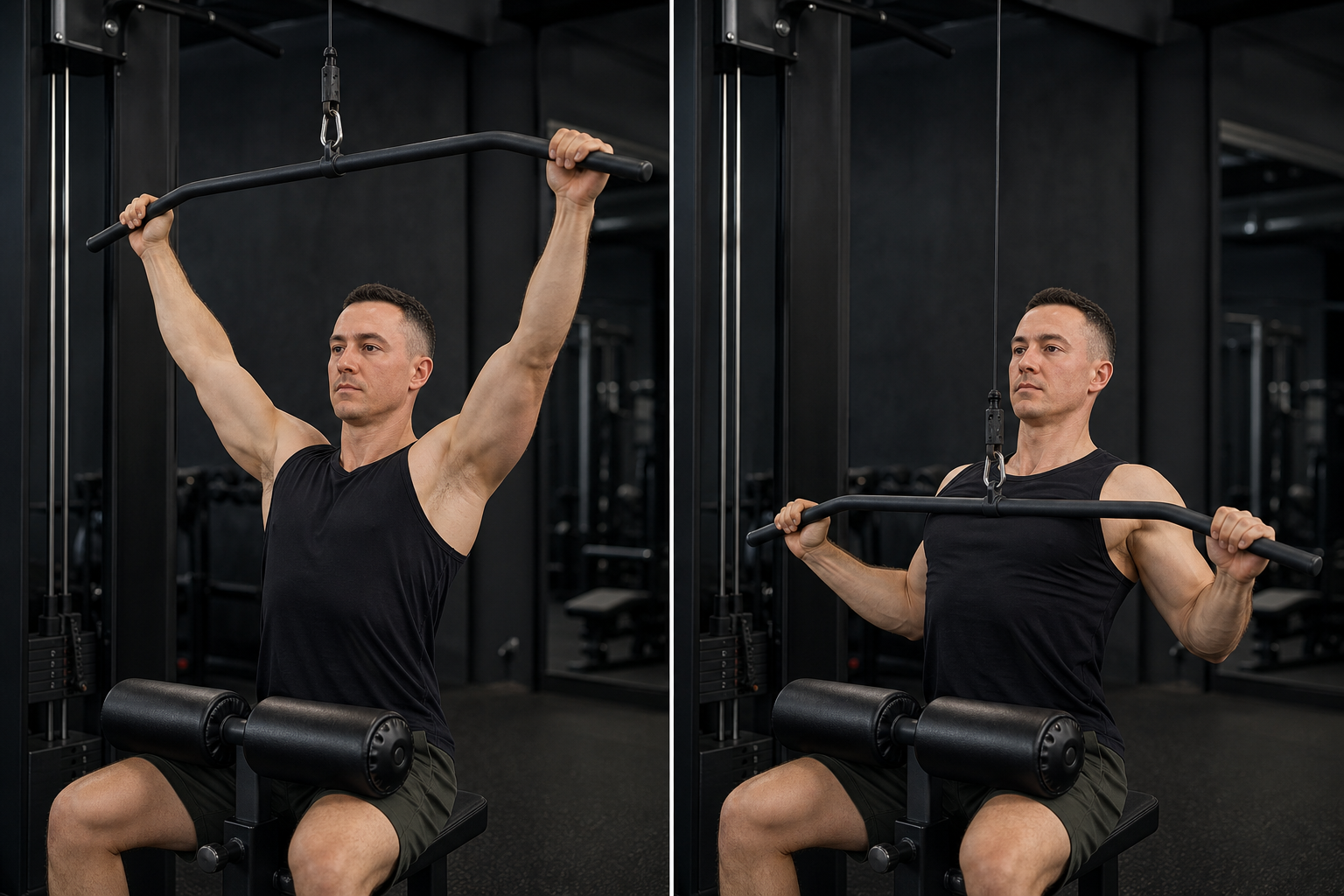
Make it work: let your shoulder blades rise naturally at the top, keep your ribs controlled and drive your elbows down. Pull the bar toward the upper chest without turning the rep into a reclining row.
Also excellent: pull-ups give you the same broad movement pattern with more whole-body demand. Use the version you can progress with clean reps.
Grip width matters less than gym mythology suggests. Studies comparing pulldown grips have generally found modest or inconsistent activation differences, so choose a comfortable grip that lets your elbows travel through a strong range.
Upper Back: Chest-Supported Row
Your “upper back” is a team: middle and lower trapezius, rhomboids, rear deltoids and other muscles coordinate the shoulder blades while the arms pull. A row matches that job well. Supporting the chest removes much of the isometric work demanded from the low back.
Why it gets the pick: you can train scapular retraction and shoulder extension hard without your spinal erectors ending the set first. That makes it especially useful beside deadlifts, squats and other exercises already asking plenty from your trunk.
Make it work: allow the shoulder blades to move forward at the bottom, then pull the elbows back without lifting your chest away from the pad. A slightly wider elbow path usually shifts more work toward the upper back; a tucked path brings the lats further into the conversation.
Also excellent: the barbell row builds excellent trunk and pulling strength when you want those demands included.
See the chest-supported row guide.
Side Delts: Cable Lateral Raise
The side portion of the deltoid abducts the shoulder—bringing the arm away from the body. Presses train the front delts well, but they do not give the side delts the same focused job as a lateral raise.
Why it gets the pick: the cable provides consistent resistance, makes small load changes easy and lets you line the force up with the side delt without needing a heavy dumbbell. It is a clean isolation exercise for a muscle that is often undertrained.
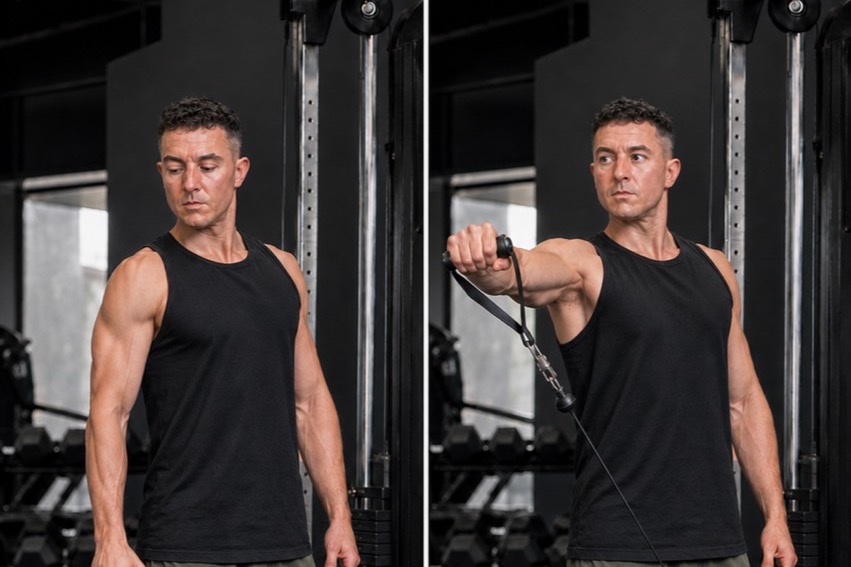
Make it work: stand side-on to the cable, keep the working arm slightly forward of your torso and lift until roughly shoulder height. Lead with the elbow rather than twisting the hand dramatically downward.
Also excellent: dumbbell lateral raises are simpler and work just fine. A recent training study found similar side-delt growth with cable and dumbbell lateral raises. The cable wins this list on setup and progression, not because dumbbells suddenly stopped working.
See the cable lateral raise guide.
The front and rear delts still deserve direct attention. Use an overhead press for the front portion and a reverse fly or chest-supported rear-delt row for the back.
Biceps: Incline Dumbbell Curl
The biceps crosses both the elbow and shoulder. Sitting on an incline places the upper arm behind the torso, lengthening the biceps at the shoulder before the curl begins.
Why it gets the pick: it combines a clear elbow-flexion movement with useful long-length loading and very little setup. Dumbbells also let each wrist rotate naturally as you curl.
Make it work: keep your shoulders against the bench, let the elbows approach straight at the bottom and curl without swinging the upper arms forward. If your shoulders chase the dumbbells up, the biceps are receiving enthusiastic assistance.
Also excellent: preacher curls create a very stable setup and may emphasize different regions of the elbow flexors. Recent comparisons suggest that shoulder position can influence regional adaptations, but no curl owns every part of the biceps.
See the incline dumbbell curl guide.
Triceps: Skull Crusher
The triceps extends the elbow. Its long head also crosses the shoulder, so moving the upper arm slightly back from vertical places that portion at a longer length than a press-down with the arm beside the body.
Why it gets the pick: a skull crusher can load elbow extension through a long range while keeping the setup simple. Let the bar travel just behind the forehead rather than aiming at your face with unsettling accuracy.
Make it work: keep the upper arms angled slightly back, bend mainly at the elbows and stop at a depth your elbows tolerate. An EZ bar or dumbbells can feel friendlier than a straight bar.
Also excellent: an overhead cable extension gives the long head an even more obvious lengthened position. In one 12-week trial, overhead cable extensions produced greater triceps growth than extensions with the arm beside the body.
Quadriceps: Front Squat
The quadriceps straighten the knee. Three of the four heads act only at the knee; the rectus femoris also crosses the hip. A deep squat asks the quads to produce force while the knees are bent and provides a clear path for progressive loading.
Why it gets the pick: the front-loaded bar encourages a more upright torso and plenty of knee flexion, making the quads work hard while the glutes and trunk still contribute. It is a compound lift, but its anatomy lines up beautifully with the job.
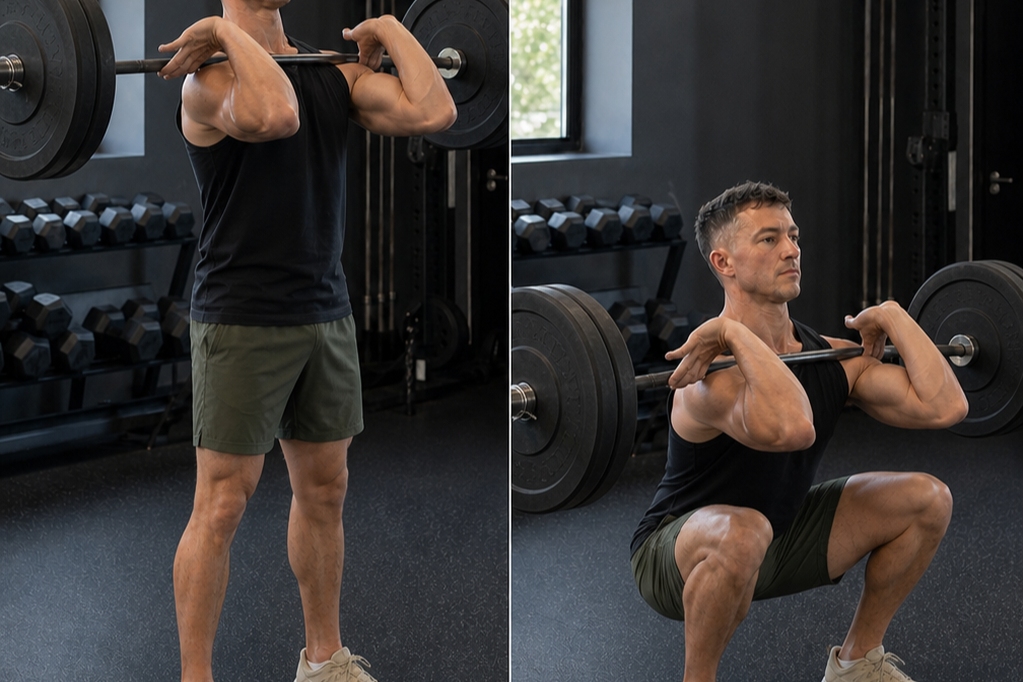
Make it work: keep the elbows high, allow the knees to travel naturally over the toes and descend as far as you can while maintaining balance and control. Your heels should stay planted; this is a squat, not an improvised calf raise.
Also excellent: a full-depth back squat is easier for many people to load heavily, while a Bulgarian split squat trains each leg with less total weight.
Training studies support using a meaningful range rather than deliberately cutting every rep high. In one comparison, full-depth squats produced broader lower-body muscle growth than half squats. That does not mean everyone needs the same depth; it means your controlled range should be more than a decorative knee bend.
Hamstrings: Romanian Deadlift—With One Important Catch
The hamstrings extend the hip and flex the knee. The Romanian deadlift trains the hip-extension half of that job exceptionally well by lengthening the hamstrings as the hips move back.
Why it gets the pick: it is easy to progress, teaches a powerful hinge and loads the hamstrings at long lengths. It also trains the glutes and spinal erectors, making it an efficient posterior-chain exercise.
Make it work: soften the knees, push the hips back and stop when you reach the deepest position you can control without rounding or chasing the floor. The bar stays close to your legs.
The catch: the short head of the biceps femoris does not cross the hip, so a hip hinge does not fully cover it. Add a seated or lying leg curl to train knee flexion directly. A 12-week study found greater hamstring growth with seated than prone leg curls, likely because the seated position lengthens several hamstring muscles at the hip.
See the Romanian deadlift guide.
Glutes: Hip Thrust
The gluteus maximus is a powerful hip extensor. A hip thrust gives it a stable, heavily loadable job with little balance demand and peak difficulty near the top of hip extension.
Why it gets the pick: it is easy to repeat, easy to progress and allows the glutes to be the clear limiting muscle. That makes it a very useful growth exercise, especially when your programme already includes squats or hinges.
Make it work: place the bench below the shoulder blades, keep your ribs from flaring and finish by extending the hips—not by arching the low back. Pause briefly at the top without forcing the pelvis farther than your hips can actually go.
Also excellent: squats train the glutes at longer lengths and build the thighs at the same time. In a direct comparison, hip thrusts and back squats produced similar glute growth, while squats produced more thigh growth. Pick the hip thrust for focused glute work; pick the squat when you want more lower-body overlap.
Calves: Standing Calf Raise
The gastrocnemius crosses both the knee and ankle. Keeping the knee mostly straight while the heel lowers off a step lengthens it across the ankle and gives it a large, simple movement to train.
Why it gets the pick: it is easy to load, requires little skill and lets you control the stretched bottom position. Research comparing calf-raise ranges found greater gastrocnemius growth when training emphasized the lengthened portion.
Make it work: lower slowly into a comfortable stretch, pause without bouncing and rise as high as you can while keeping pressure through the ball of the foot.
Also excellent: seated calf raises train the soleus with the knee bent. For complete calf development, use both straight- and bent-knee work.
Abs: Weighted Cable Crunch
The rectus abdominis flexes the trunk, bringing the rib cage and pelvis closer together. A cable crunch lets you train that action against a load you can increase over time.
Why it gets the pick: it treats the abs like a muscle rather than a timer. You can use a repeatable range, work close to muscular fatigue and progressively add load.
Make it work: keep the hips relatively still and curl the rib cage toward the pelvis. Do not simply hinge forward at the hips while the rope takes a sightseeing trip past your forehead.
Also excellent: the dead bug is a better starting point for learning trunk control, and the side plank trains lateral trunk stability. “Core” describes several muscles and jobs, so no single exercise covers all of it.
Spinal Erectors: 45-Degree Back Extension
The spinal erectors help extend the spine and resist it folding under load. A back extension also trains the glutes and hamstrings, depending on how you position the hips and spine.
Why it gets the pick: the machine supports the lower body and creates a predictable way to train the posterior trunk without the total fatigue of another heavy deadlift.
Make it work: set the pad below the hip crease, move through a comfortable range and finish in a straight line rather than hyperextending. Hold a plate or dumbbell when body weight becomes easy.
Also excellent: Romanian deadlifts and good mornings challenge the spinal erectors hard while training the hips, but they demand more technique and whole-body recovery.
See the 45-degree back extension guide.
What This List Cannot Decide for You
An exercise can look perfect on an anatomy chart and still be the wrong choice today.
Change the pick when:
- the movement consistently causes joint pain
- your equipment makes the setup awkward
- another muscle always fails first
- you cannot track or progress the exercise
- your sport or strength goal demands a more specific lift
- you simply dislike it enough that it never survives your programme
Exercise variation can influence where a muscle grows, but changing movements constantly can make progression harder to measure. A systematic review of exercise variation supports using planned variation rather than random novelty.
Choose one dependable main exercise for each muscle group, keep it long enough to improve and use alternatives to cover different functions or work around discomfort.
A Simple Way to Use the List
You do not need all 12 exercises in one workout. Split them across the week:
Upper Body
- incline dumbbell press
- lat pulldown
- chest-supported row
- cable lateral raise
- incline dumbbell curl
- skull crusher
Lower Body and Trunk
- front squat
- Romanian deadlift
- hip thrust
- leg curl
- standing calf raise
- cable crunch or dead bug
Start with two or three working sets per exercise, train with controlled technique and add reps or load as the same range becomes easier. Muscle can grow across a wide range of loads when sets are sufficiently challenging, so the “perfect” exercise matters less than performing a good one consistently and progressing it.
The Bottom Line
Anatomy helps you choose exercises that make sense. It does not remove individual differences or turn training into a solved spreadsheet.
Use these picks as the foundation of a muscle-building programme:
- choose movements that match the muscle's job
- train through a useful, controlled range
- favour enough stability to push the target muscle
- keep the exercises long enough to progress
- add alternatives when a muscle has more than one major function
The best exercise is not the one with the loudest fan club. It is the one that fits the anatomy and keeps earning its place in your programme.
References
- Chaves SFN, et al. “Effects of Horizontal and Incline Bench Press on Neuromuscular Adaptations in Untrained Young Men.” International Journal of Exercise Science. 2020. https://pubmed.ncbi.nlm.nih.gov/32922646/
- Andersen V, et al. “Effects of grip width on muscle strength and activation in the lat pull-down.” Journal of Strength and Conditioning Research. 2014. https://pubmed.ncbi.nlm.nih.gov/20543740/
- Larsen S, et al. “Cable and Dumbbell Lateral Raises Are Similarly Effective for Lateral Deltoid Muscle Hypertrophy.” Sport Sciences for Health. 2025. https://pmc.ncbi.nlm.nih.gov/articles/PMC12277279/
- Maeo S, et al. “Greater Hamstrings Muscle Hypertrophy but Similar Damage Protection after Training at Long versus Short Muscle Lengths.” Medicine & Science in Sports & Exercise. 2021. https://pubmed.ncbi.nlm.nih.gov/33009197/
- Maeo S, et al. “Triceps brachii hypertrophy is substantially greater after elbow extension training performed in the overhead versus neutral arm position.” European Journal of Sport Science. 2023. https://pubmed.ncbi.nlm.nih.gov/35819335/
- Kubo K, et al. “Effects of squat training with different depths on lower limb muscle volumes.” European Journal of Applied Physiology. 2019. https://pubmed.ncbi.nlm.nih.gov/31230110/
- Kassiano W, et al. “Greater Gastrocnemius Muscle Hypertrophy After Partial Range of Motion Training Performed at Long Muscle Lengths.” Journal of Strength and Conditioning Research. 2023. https://pubmed.ncbi.nlm.nih.gov/37015016/
- Plotkin DL, et al. “Hip thrust and back squat training elicit similar gluteus muscle hypertrophy and transfer similarly to the deadlift.” Frontiers in Physiology. 2023. https://pubmed.ncbi.nlm.nih.gov/37877099/
- Kassiano W, et al. “Does Varying Resistance Exercises Promote Superior Muscle Hypertrophy and Strength Gains? A Systematic Review.” Journal of Strength and Conditioning Research. 2022. https://pubmed.ncbi.nlm.nih.gov/35438660/
- Schoenfeld BJ, et al. “Strength and Hypertrophy Adaptations Between Low- vs. High-Load Resistance Training: A Systematic Review and Meta-analysis.” Journal of Strength and Conditioning Research. 2017. https://pubmed.ncbi.nlm.nih.gov/28834797/
This guide is educational and is not medical advice. Exercise selection should fit your experience, goals and current health. Stop and seek assessment for a sudden injury, major weakness, significant swelling or persistent pain that is getting worse.