Overview
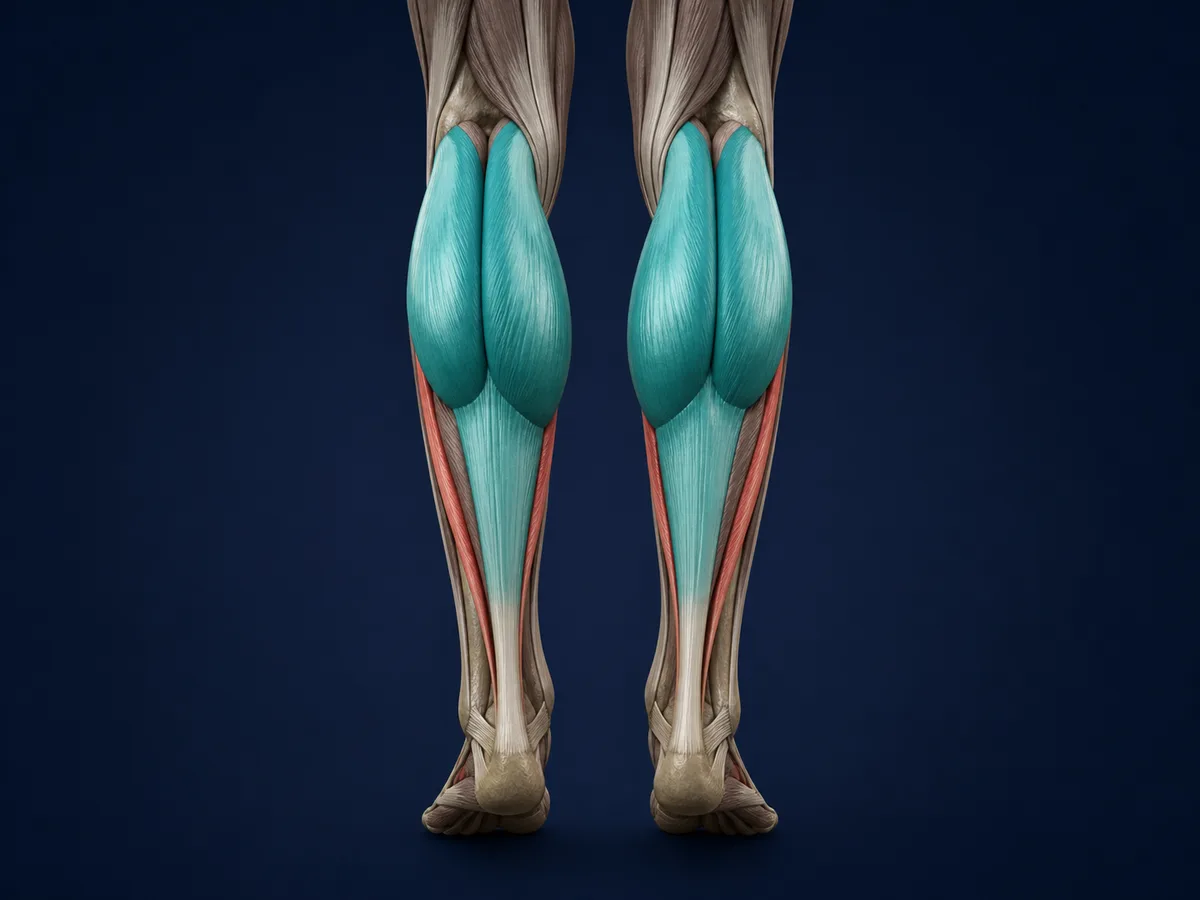
The calf raise strengthens the muscles at the back of the lower leg that push you through every step, stair and run. Strong calves support the whole lower-limb chain, which matters for knee comfort and for staying active.
Primary Purpose
- Strengthen the calf muscles
- Improve push-off power for walking and running
- Support ankle and lower-limb stability
Equipment Required
- A wall, counter or rail for support
- A stable step or stair edge for progression
Step-by-Step Instructions
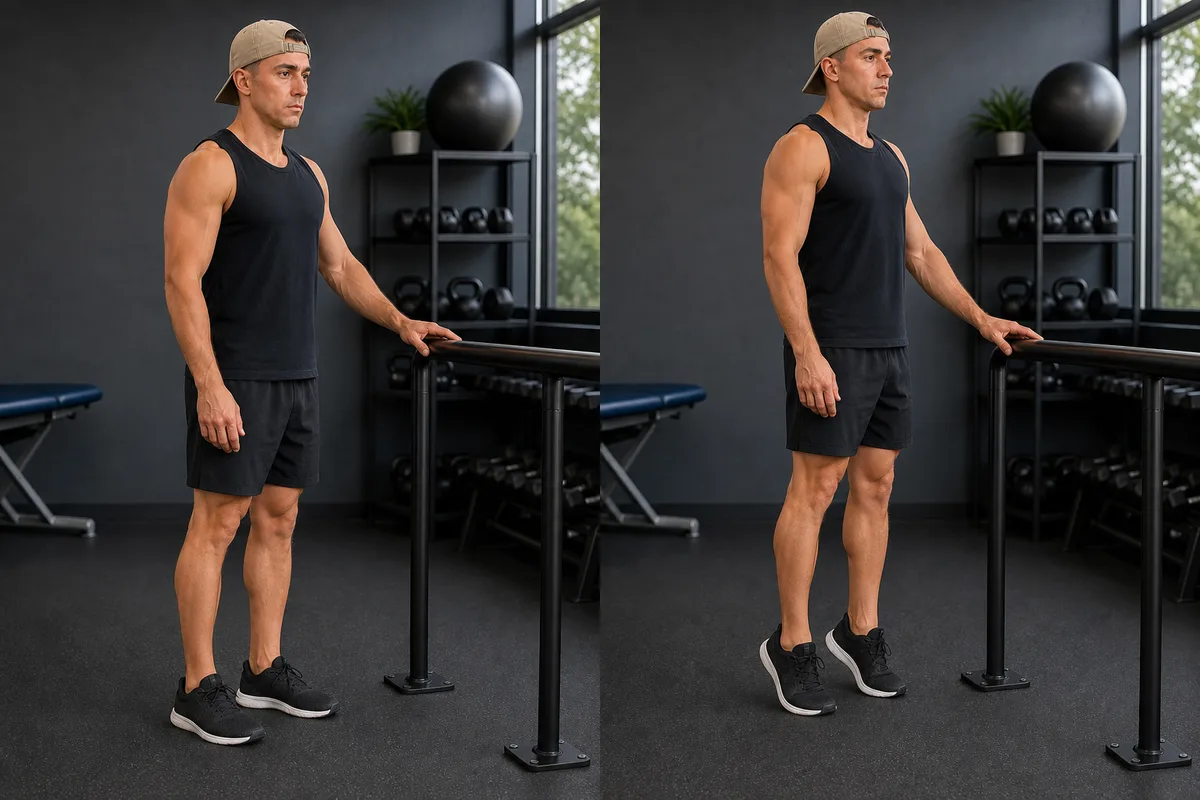
- Stand tall with feet hip-width apart, hands lightly on a support.
- Rise up onto the balls of both feet as high as comfortable.
- Pause briefly at the top, then lower the heels under control.
- Complete 10–15 repetitions, then rest.
- To progress, do the movement one leg at a time.
What You Should Feel
Effort in the calf, around the back of the lower leg. It should be a steady burn, not cramp or sharp pain. Stop if you feel sudden calf pain or tearing.
Common Mistakes
- Leaning heavily on the support
- Rushing the lowering phase
- Lifting through the toes instead of the ball of the foot
- Doing too many repetitions early on
Easier Alternatives
- Do seated calf raises (bent knee) for a gentler version
- Use two hands on the support
- Reduce the number of repetitions
Progressions
- Slow the lowering phase to three seconds
- Perform the raise on one leg
- Use a step edge for a deeper range
- Hold a light weight
Who Should Avoid This
Do not do calf raises after a recent calf injury, tear or surgery without clearance. Sudden calf pain or swelling after activity needs assessment — especially with a lump behind the knee or calf swelling, which can be a deep vein thrombosis.
Related Guidance
- General knee loading principles
- Single-leg balance — stability to match the strength
- Knee osteoarthritis
References
- Willy RW, et al. "Patellofemoral Pain: Clinical Practice Guidelines." Journal of Orthopaedic & Sports Physical Therapy. 2019;49(9):CPG1-CPG95. https://doi.org/10.2519/jospt.2019.0302
- Neal BS, et al. "Best practice guide for patellofemoral pain." British Journal of Sports Medicine. 2024;58(24):1486-1495. https://bjsm.bmj.com/content/58/24/1486
This information is for education only and is not a medical diagnosis. InjuryAtlas does not replace an assessment by a qualified health professional. If you have severe pain, visible deformity, numbness, loss of function, or symptoms that are getting worse, seek medical care promptly.