Muscle-growth potentialHow well this movement can be loaded and progressed for building muscle.
Exercises · IA-UAE-EXE-012
EZ-Bar Skull Crusher
Learn EZ-bar skull crusher form, triceps muscles worked, common mistakes and safer progressions.
At a glance
Exercise profile
- Target muscles
- triceps brachii
- Exercise type
- Strength
- Equipment
- EZ curl bar, plates and flat bench
- Mechanics
- Isolation
- Movement pattern
- Elbow extension (bilateral)
- Experience level
- intermediate
- Secondary muscles
- anconeus
What the science says
Related triceps evidence
What it found: In triceps push-down research, load and speed altered fatigue behaviour across the triceps heads during repeated work.
What that means here: It is not a skull-crusher study. The transfer is practical: controlled reps and a load you can lower safely matter more than forcing a heavy bar overhead.
Long-range triceps isolation
What this exercise works
The triceps straighten the elbows while the shoulders and forearms hold the bar stable above the body.
Primary emphasis
- triceps brachii
Secondary muscles
- anconeus
Stabilizers
- shoulder stabilizers
- forearm flexors
Movement and joint actions
- Elbow extension
Muscle contribution changes with position, range, resistance and individual technique.
Why it can help
Potential benefits and carryover
Benefits depend on technique, dosage, consistency and whether the exercise suits the person. Sport carryover means supporting the physical demands of the activity—not guaranteeing performance or preventing injury.
Everyday benefits
- Provides direct triceps volume through a long elbow-flexion range
- Keeps the torso supported so the elbows can do the work
- Pairs well with pressing movements when programmed conservatively
Training carryover
- Builds direct triceps strength for pressing and lockout work
- Adds triceps volume without more heavy shoulder pressing
Sport carryover
- Supports pushing and overhead arm strength
Technique
EZ-Bar Skull Crusher tips
Use these cues to keep the movement controlled and focused on its intended purpose.
- Use an EZ bar and a load you can lower slowly; do not chase weight.
- Keep the upper arms mostly steady, with a small natural shoulder movement if comfortable.
- Lower the bar toward the forehead or just behind the head only through a pain-free range.
- Use safety collars and leave repetitions in reserve while learning the movement.
Overview
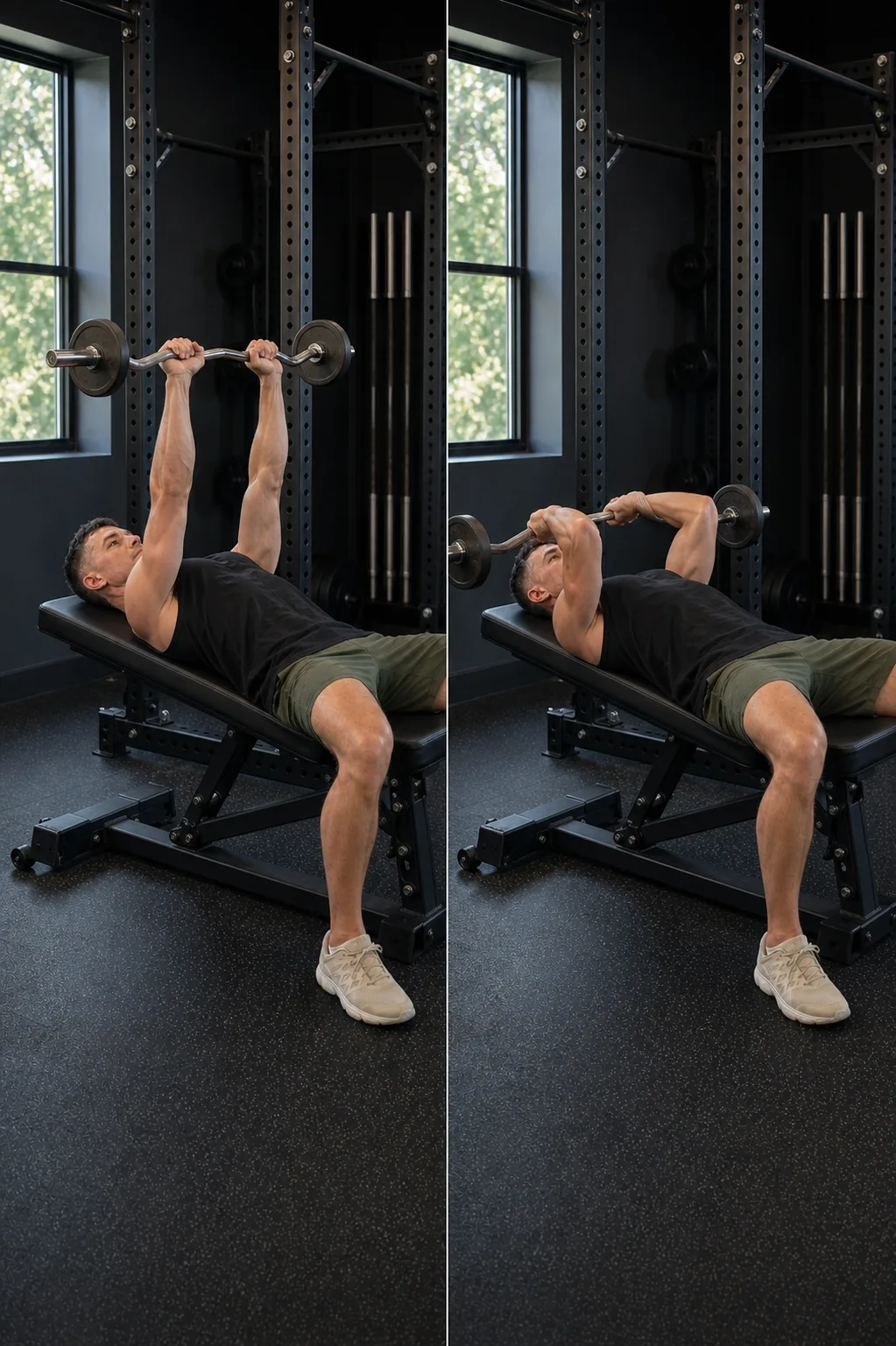
The EZ-bar skull crusher is a lying triceps-extension exercise. It can give the triceps a long, controlled range, but it deserves more care than a cable press-down because the load is above the face and some people find it demanding on the elbows.
How to Do It
- Lie on a flat bench with the bar held above the shoulders and the wrists stacked.
- Keep the upper arms steady as you bend the elbows and lower the bar under control.
- Stop at a comfortable depth near the forehead or slightly behind the head.
- Straighten the elbows to return to the start without flaring or forcing lockout.
What You Should Feel
Strong triceps effort, especially as the elbows bend. A stretch is normal; sharp pain in the elbow or an unstable shoulder position is not.
Common Mistakes
- Using a load that makes the upper arms swing wildly
- Dropping the bar instead of controlling the lowering phase
- Forcing an elbow position that hurts
- Performing near-failure sets without a safe setup
Progression
Begin with light plates and smooth sets of 8–15. A rope press-down is a simpler option if the elbows do not tolerate this variation.
Educational information only — not a diagnosis.
This information does not diagnose an injury or replace care from a qualified healthcare professional.