Overview
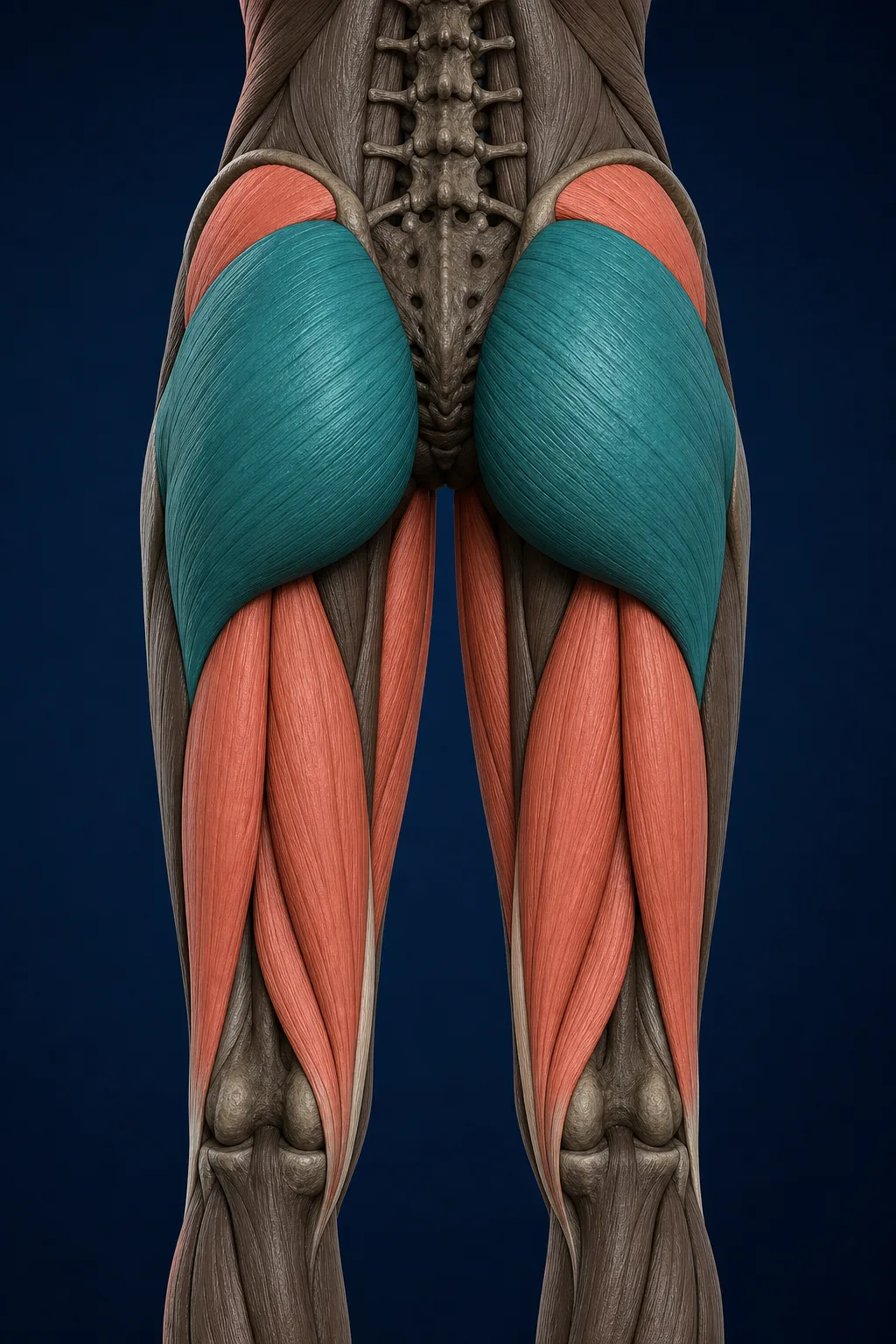
The hip thrust is a hip-extension exercise that targets the gluteus maximus — the largest muscle of the buttock. Research comparing common exercises found the barbell hip thrust produces high activation in the gluteus maximus, which makes it a popular choice for building hip strength, power and glute size.
It is a progression from the glute bridge: your upper back rests on a bench and the weight drives through the hips.
How to Do It
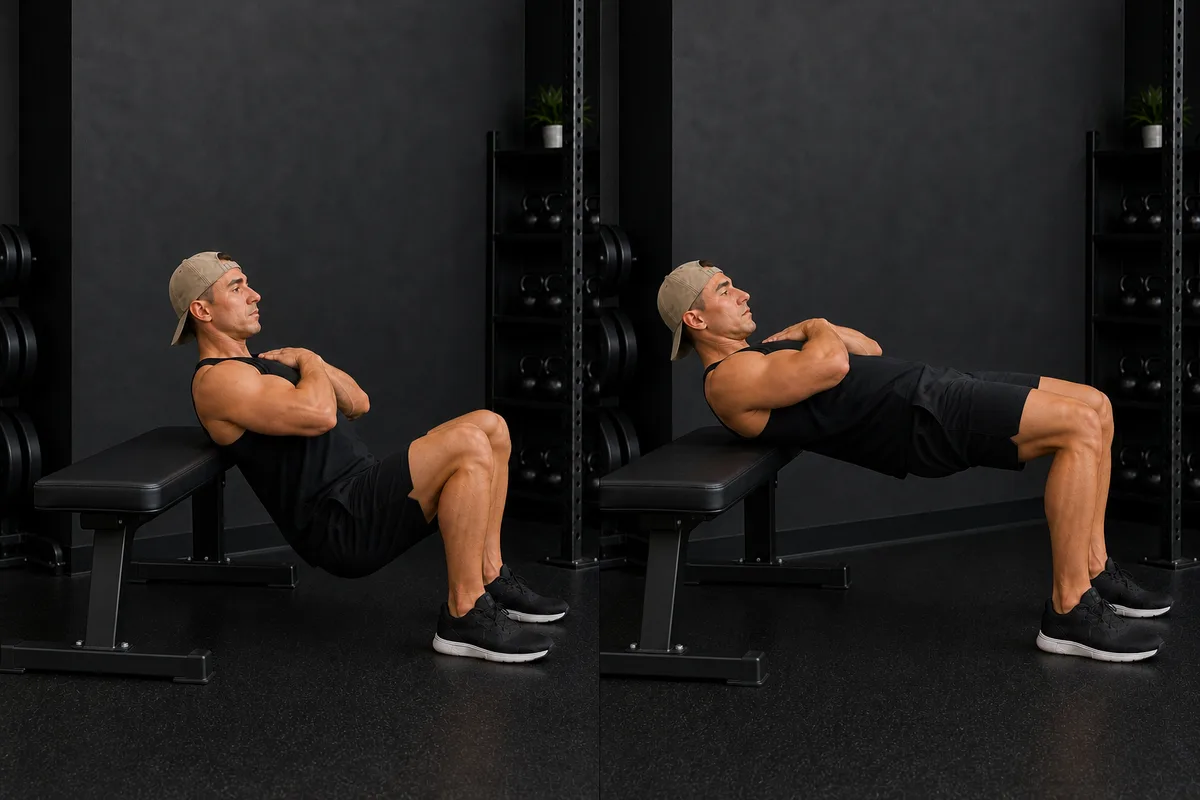
- Sit on the floor with your upper back against a bench and a loaded barbell (or a padded object) over your hips.
- Place your feet flat on the floor, hip-width apart, close enough that your shins are near vertical.
- Squeeze your glutes and drive your hips up until your body forms a straight line from knees to shoulders.
- Pause briefly at the top without over-arching your lower back.
- Lower slowly with control.
- Repeat for the desired number of repetitions.
What You Should Feel
Strong effort through the glutes at the top of the movement, with the hamstrings assisting. Avoid pushing through the lower back — the hips, not the spine, should do the work.
Common Mistakes
- Over-arching the lower back at the top instead of squeezing the glutes
- Placing the feet too far forward, which turns it into a hamstring exercise
- Driving through the heels with the hips shooting up unevenly
- Bouncing at the bottom
Make It Easier
- Start with a glute bridge on the floor
- Use bodyweight only, with the shoulders on the bench
- Add a resistance band over the hips before using a bar
Progression
- Add a barbell with a pad, increasing load gradually
- Slow the lowering phase to 3 seconds
- Progress to single-leg thrusts once the bilateral version is strong and pain-free
- Move to loaded variations when form stays consistent
Common Questions
Is the hip thrust better than a squat for the glutes?
Research shows the barbell hip thrust produces high gluteus maximus activation — at least comparable to the back squat — while placing less demand on the quads. Both are useful; the hip thrust is a targeted glute choice.
Can I do hip thrusts with hip pain?
It can be a helpful strengthening exercise once acute pain has settled, because it loads the glutes rather than the joint. If it reproduces sharp hip or groin pain, reduce the load or range and get it assessed.
References
- Contreras B, Vigotsky AD, Schoenfeld BJ, Beardsley C, Cronin J. "A Comparison of Gluteus Maximus, Biceps Femoris, and Vastus Lateralis Electromyographic Activity in the Back Squat and Barbell Hip Thrust Exercises." Journal of Applied Biomechanics. 2015;31(6):452-8. https://pubmed.ncbi.nlm.nih.gov/26214739/
- Journal of Orthopaedic & Sports Physical Therapy. "Hip Pain and Mobility Deficits—Hip Osteoarthritis: Revision 2025 Clinical Practice Guideline." https://www.jospt.org/doi/full/10.2519/jospt.2025.0301
This information is for education only and is not a medical diagnosis. InjuryAtlas does not replace an assessment by a qualified health professional. If you have severe pain, visible deformity, numbness, loss of function, or symptoms that are getting worse, seek medical care promptly.