Overview
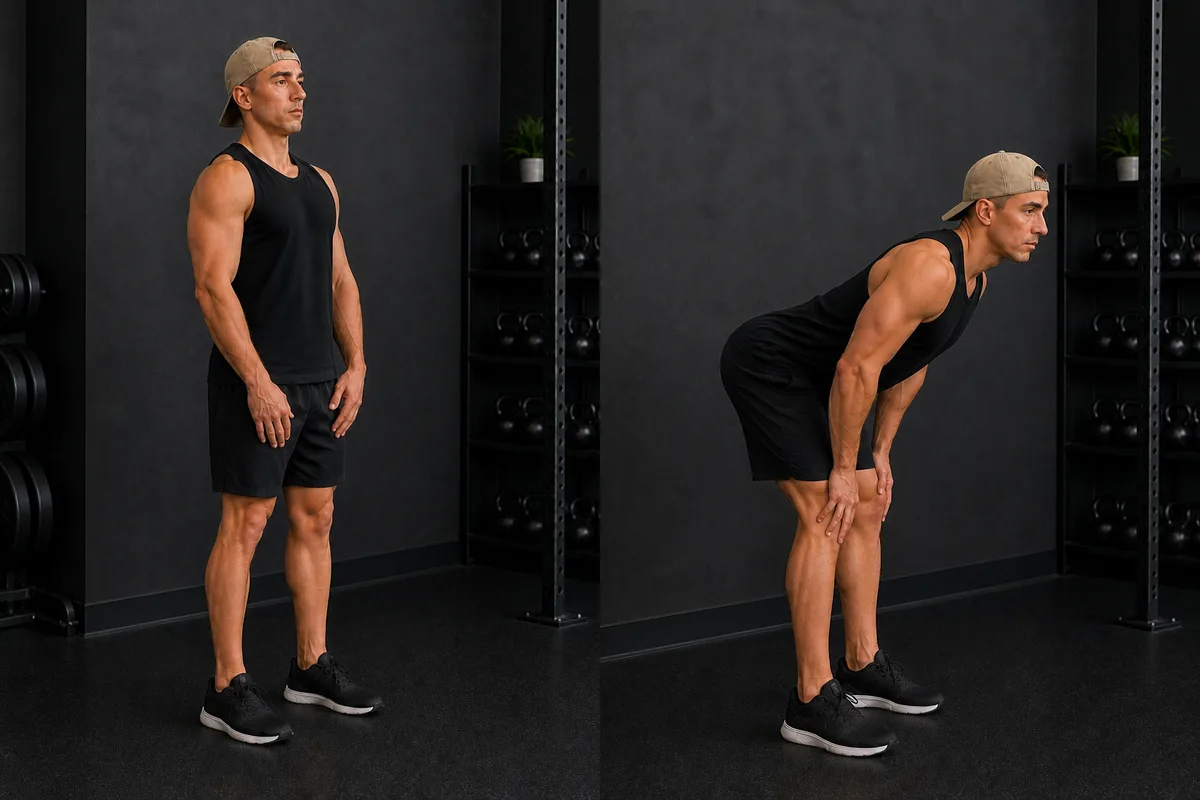
The hip hinge is the movement pattern of bending forward from the hips while keeping the back in a comfortable neutral line — the same pattern you use to pick something up, push a heavy door or lower weight in a deadlift.
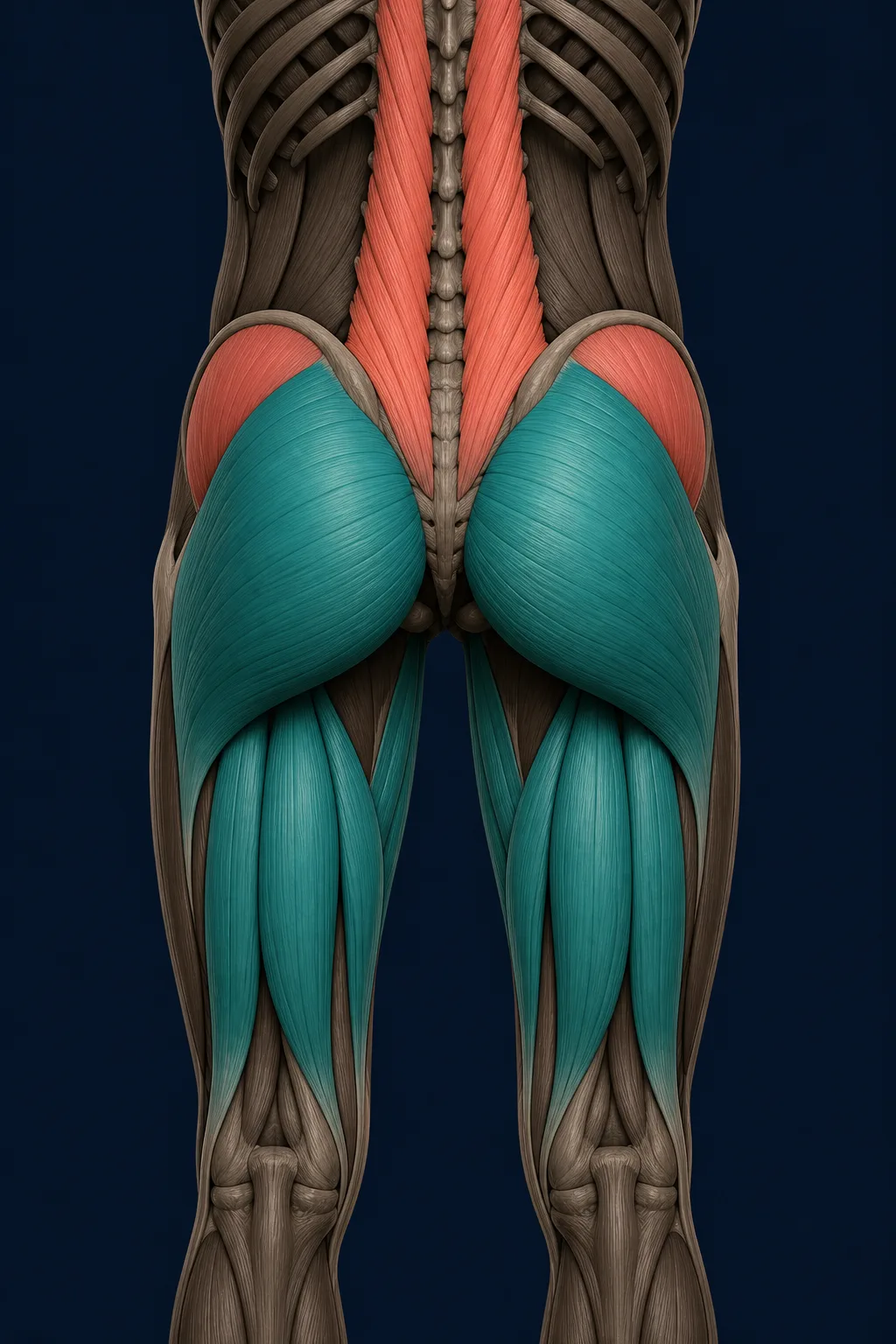
It is a fundamental exercise for building hip and glute strength, and for teaching the body to load the hips and legs instead of rounding the back under load.
How to Do It
- Stand with feet hip-width apart, knees soft.
- Place your hands on the front of your thighs to help guide the movement.
- Push your hips backward as if closing a car door with your buttocks, letting your torso tip forward.
- Keep your back in a comfortable neutral line — slide your hands down your thighs as you lower; they should not have to slide far.
- Stop when you feel a comfortable stretch along the back of the legs and your hands reach about knee height.
- Squeeze your glutes and drive your hips forward to return to standing.
- Repeat in slow, controlled repetitions.
What You Should Feel
- Effort in the glutes and back of the thighs
- The hips doing the bending, not the lower back rounding
- A mild stretch along the hamstrings at the bottom of the movement
- No sharp pain in the hip, groin or back
Common Mistakes
- Bending the knees into a squat instead of pushing the hips back
- Rounding the lower back to reach lower
- Letting the knees cave inward
- Moving too fast and losing control at the bottom
Progression
- Hold a light object (dumbbell, kettlebell or broomstick behind the back) once the pattern is controlled
- Increase repetitions and sets before increasing load
- Progress to a loaded deadlift-style movement when form stays consistent
- Move to the next step only when the current one is pain-free and controlled
Common Questions
Is the hip hinge the same as a squat?
No. A squat bends the knees and hips together to lower the body; a hinge keeps the knees relatively straight and pushes the hips back. Both are useful, and they train different muscles.
Can I do a hip hinge with hip pain?
It can be a helpful strengthening exercise for many hip problems once acute pain has settled, because it loads the glutes rather than the joint aggressively. If it reproduces sharp pain, reduce the range or get it assessed.
References
- Journal of Orthopaedic & Sports Physical Therapy. "Hip Pain and Mobility Deficits—Hip Osteoarthritis: Revision 2025 Clinical Practice Guideline." https://www.jospt.org/doi/full/10.2519/jospt.2025.0301
- Grimaldi A, Fearon A. "Gluteal Tendinopathy: Integrating Pathomechanics and Clinical Features in Its Management." Journal of Orthopaedic & Sports Physical Therapy. 2015. https://pubmed.ncbi.nlm.nih.gov/26381486/
This information is for education only and is not a medical diagnosis. InjuryAtlas does not replace an assessment by a qualified health professional. If you have severe pain, visible deformity, numbness, loss of function, or symptoms that are getting worse, seek medical care promptly.