Overview
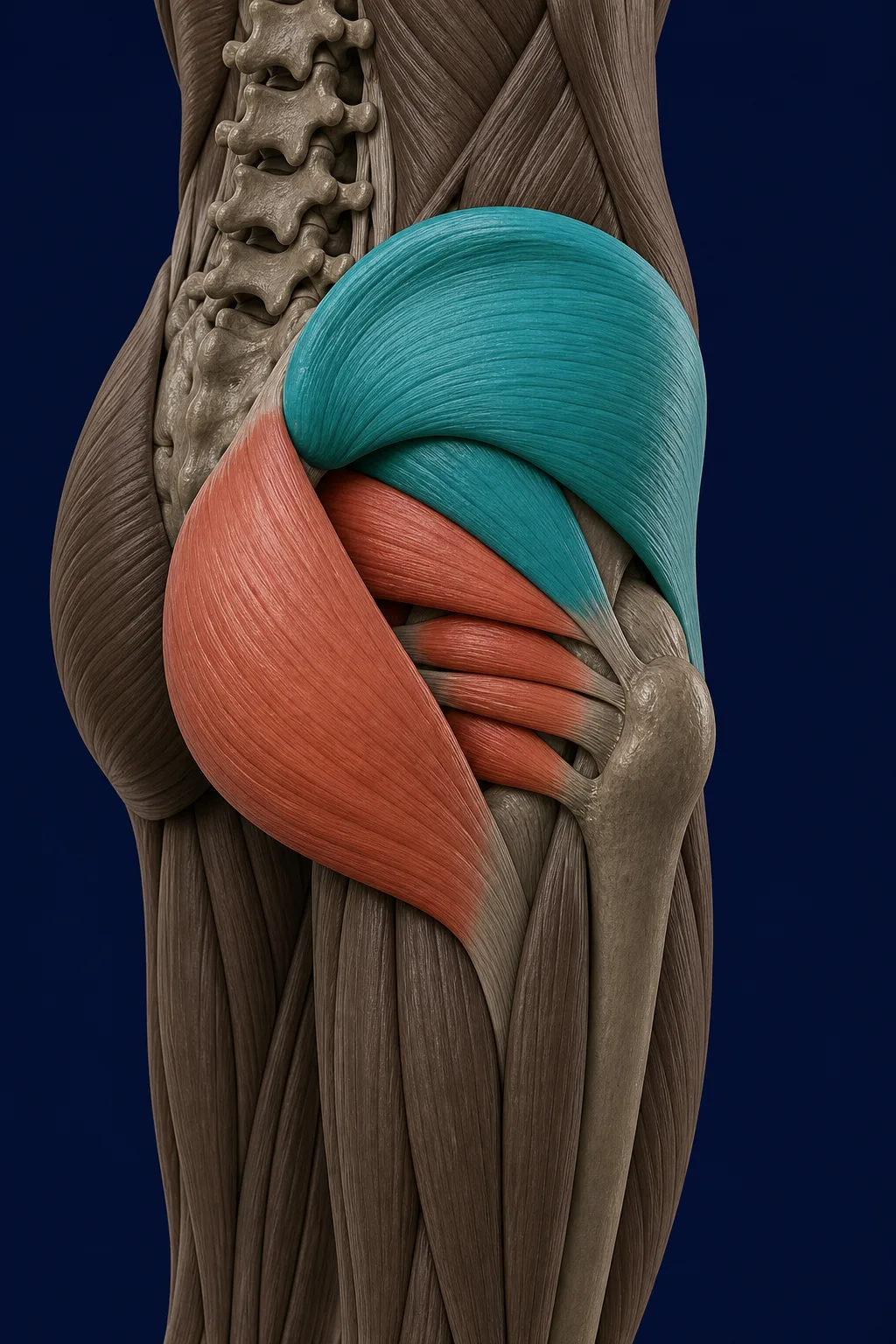
The clamshell is a beginner-friendly exercise for the gluteus medius — the muscle on the side of the hip that steadies your pelvis when you walk or stand on one leg. It is a common starting exercise for outer-hip pain, gluteal tendinopathy and general hip conditioning.
It is a low-load exercise, which makes it useful early in rehabilitation. It strengthens without placing heavy force through the hip joint itself.
How to Do It
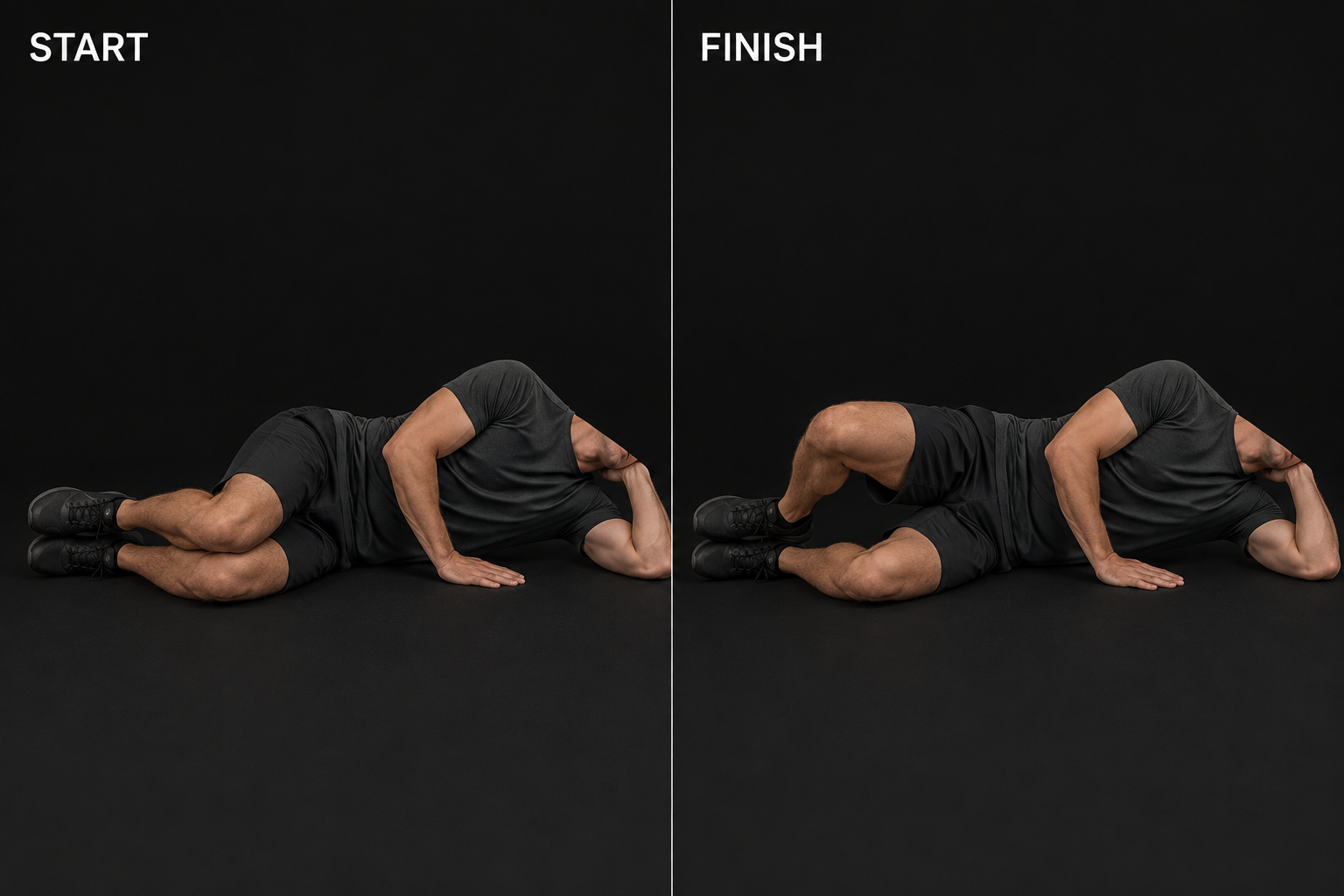
- Lie on your side with your hips and knees bent, knees stacked, and your head resting on your lower arm.
- Keep your feet together and your spine in a neutral line — do not roll backward.
- Keeping your feet touching, slowly open your top knee like a clam, lifting it toward the ceiling.
- Pause briefly at the top, then lower slowly and with control.
- Repeat for the desired number of repetitions, then switch sides.
What You Should Feel
- Effort in the muscle on the side of the hip, just above the bony bump
- The pelvis staying still — the movement comes from the hip, not from rolling the body
- No sharp pain over the outer hip; mild muscle effort is normal
Common Mistakes
- Rolling the pelvis backward as the knee opens — keep the hip bones stacked
- Lifting the foot off the floor or turning it up to the ceiling
- Using momentum and swinging the knee instead of moving slowly
- Arching the lower back to get the knee higher
Progression
- Hold the top position for a few seconds
- Add a resistance band just above the knees
- Progress to standing hip abduction or single-leg balance work once the clamshell is easy and pain-free
- Move to the next step only when the current one is controlled
Common Questions
Is the clamshell good for outer hip pain?
It is a useful early exercise for gluteal tendinopathy and greater trochanteric pain syndrome because it strengthens the gluteus medius at low load. Pair it with the guidance of a physiotherapist or the hip loading principles for the full picture.
How many should I do?
Start with 2 sets of 8–12 slow repetitions per side, two or three times per week, and adjust based on how the hip responds. Quality and control matter more than numbers.
References
- Grimaldi A, Fearon A. "Gluteal Tendinopathy: Integrating Pathomechanics and Clinical Features in Its Management." Journal of Orthopaedic & Sports Physical Therapy. 2015. https://pubmed.ncbi.nlm.nih.gov/26381486/
- Mellor R, et al. "Education plus exercise versus corticosteroid injection use versus a wait and see approach on global outcome and pain from gluteal tendinopathy." BMJ. 2018. https://www.bmj.com/content/361/bmj.k1662
This information is for education only and is not a medical diagnosis. InjuryAtlas does not replace an assessment by a qualified health professional. If you have severe pain, visible deformity, numbness, loss of function, or symptoms that are getting worse, seek medical care promptly.