Muscle-growth potentialHow well this movement can be loaded and progressed for building muscle.
Exercises · IA-UAE-EXE-009
Incline Dumbbell Curl
Learn incline dumbbell curl form, biceps muscles worked, benefits, errors to avoid and progression.
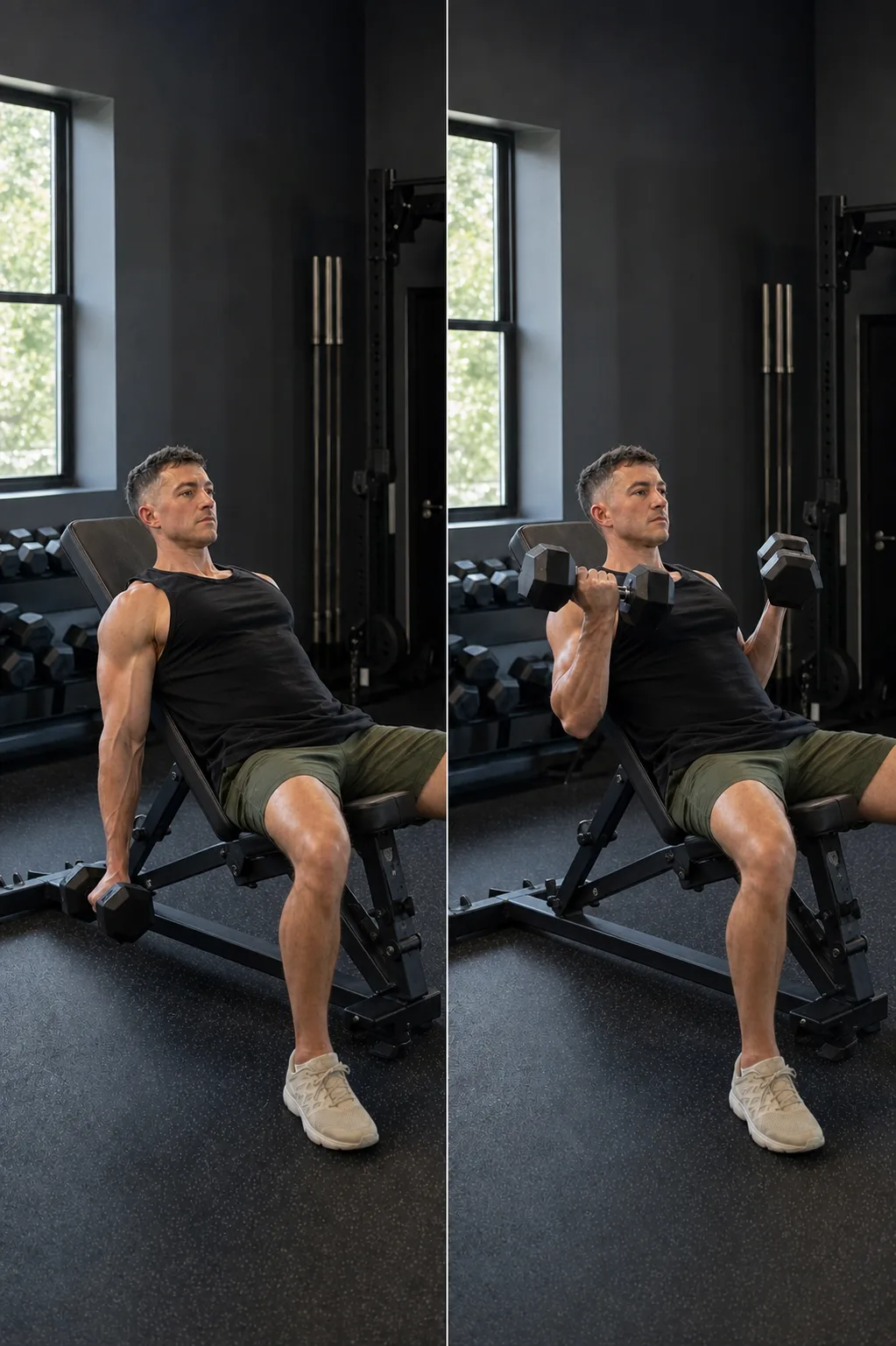
At a glance
Exercise profile
- Target muscles
- biceps brachii
- Exercise type
- Strength
- Equipment
- Adjustable bench and dumbbells
- Mechanics
- Isolation
- Movement pattern
- Elbow flexion (bilateral)
- Experience level
- intermediate
- Secondary muscles
- brachialis, brachioradialis
What the science says
Study in the incline dumbbell curl
What it found: A curl study found incline dumbbell curls and standard dumbbell curls produced considerable biceps activity through the movement range.
What that means here: It measured acute EMG, not long-term growth. The bench is useful here because it limits body swing and gives you a consistent starting position.
Lengthened-position biceps strength
What this exercise works
The biceps brachii bends the elbow and turns the palm upward while the brachialis and forearm muscles assist the curl.
Primary emphasis
- biceps brachii
Secondary muscles
- brachialis
- brachioradialis
Stabilizers
- forearm flexors
- rotator cuff
Movement and joint actions
- Elbow flexion
- Forearm supination
Muscle contribution changes with position, range, resistance and individual technique.
Why it can help
Potential benefits and carryover
Benefits depend on technique, dosage, consistency and whether the exercise suits the person. Sport carryover means supporting the physical demands of the activity—not guaranteeing performance or preventing injury.
Everyday benefits
- Trains the biceps from a long starting position
- Limits torso cheating by supporting the back
- Lets each arm work independently
Training carryover
- Builds direct biceps strength for rows and pulldowns
- Adds controlled elbow-flexor volume after compound pulls
Sport carryover
- Supports pulling and grip-based sports
Technique
Incline Dumbbell Curl tips
Use these cues to keep the movement controlled and focused on its intended purpose.
- Set the bench to a moderate incline, around 45–60 degrees, to allow a comfortable stretch.
- Keep the upper arms relaxed slightly behind the torso.
- Curl without rolling the shoulders forward.
- Lower slowly; do not force a painful stretch at the bottom.
Overview
The incline dumbbell curl places the upper arm slightly behind the body, giving the biceps a longer starting position. The bench reduces swinging, so light-to-moderate loads work well.
How to Do It
- Set an adjustable bench to about 45–60 degrees and sit back with dumbbells at your sides.
- Keep the upper arms still and curl the weights toward the shoulders.
- Turn the palms up as you curl if that is comfortable.
- Lower slowly until the elbows are straight without forcing the shoulder forward.
Common Mistakes
- Setting the bench too upright and losing the stretch
- Letting the elbows drift forward
- Swinging heavy dumbbells from the bottom
Educational information only — not a diagnosis.
This information does not diagnose an injury or replace care from a qualified healthcare professional.