Exercises · IA-UAE-EXE-001

Controlled Biceps Curl

Learn how to use a light, controlled biceps curl to rebuild elbow-flexion strength and progress resistance gradually.

Browse Arms
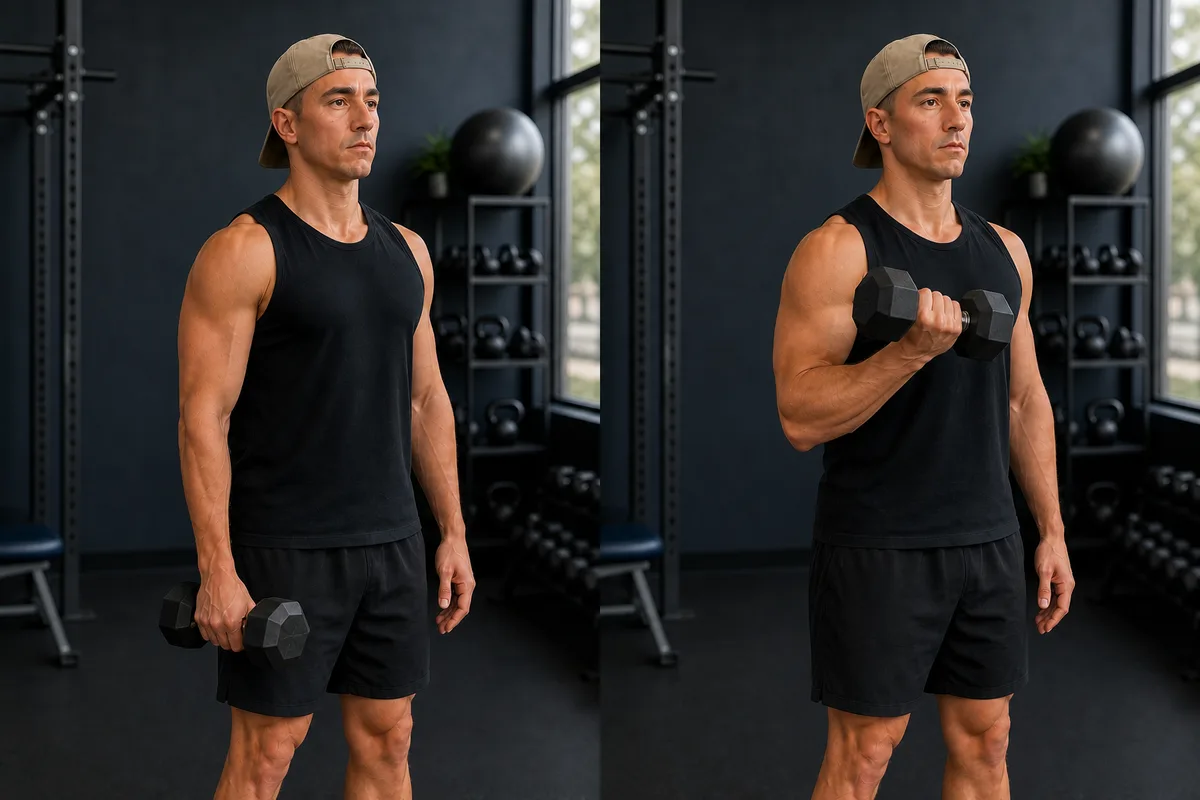
Start and finish demonstration of Controlled Biceps Curl
Start and finishUse the written steps below for the full technique and safety guidance.

At a glance

Exercise profile

Target muscles
Biceps brachii, Brachialis
Exercise type
Strength
Equipment
Light dumbbell or resistance band
Mechanics
Isolation
Movement pattern
Pull (unilateral)
Experience level
beginner
Secondary muscles
Brachioradialis

Elbow-flexor strength and graded tendon loading

What this exercise works

The biceps and brachialis bend the elbow while the forearm, shoulder and shoulder-blade muscles keep the load controlled.

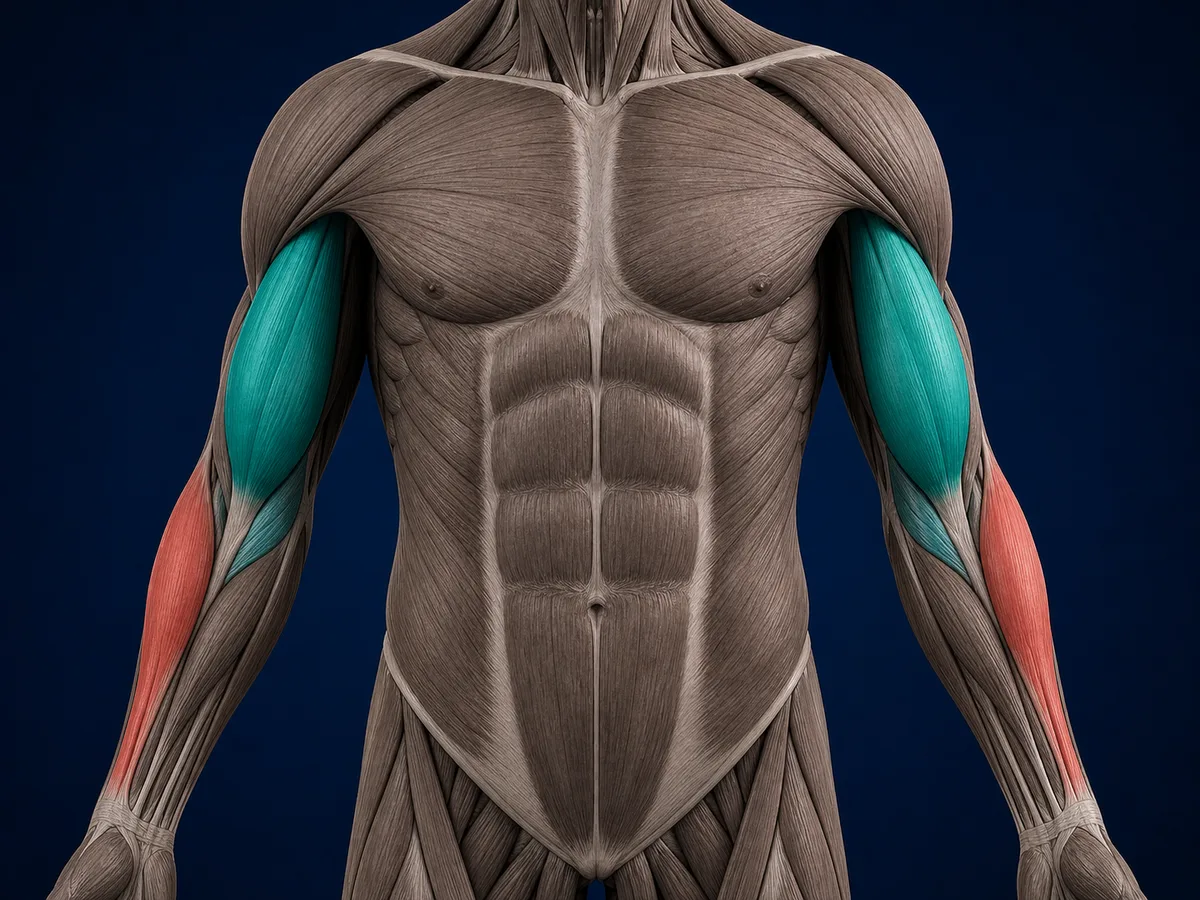
Anatomy highlighting the structures involved in Controlled Biceps Curl
Teal — primary muscles doing most of the workRed — secondary muscles assistingGrey — stabilizers and surrounding anatomy

Primary emphasis

  • Biceps brachii
  • Brachialis

Secondary muscles

  • Brachioradialis

Stabilizers

  • Rotator cuff
  • Wrist extensors and flexors
  • Scapular stabilizers

Movement and joint actions

  • Elbow flexion
  • Forearm supination with a palm-up grip
  • Controlled elbow extension

Muscle contribution changes with position, range, resistance and individual technique.

Why it can help

Potential benefits and carryover

Benefits depend on technique, dosage, consistency and whether the exercise suits the person. Sport carryover means supporting the physical demands of the activity—not guaranteeing performance or preventing injury.

Everyday benefits

  • Builds strength for lifting and carrying
  • Progressively loads the biceps muscle-tendon unit
  • Improves control through elbow bending and straightening
  • Develops forearm and grip support for pulling tasks
  • Allows resistance, range and tempo to be adjusted independently
  • Provides a foundation for heavier rows, carries and curls

Training carryover

  • Supports rows, pull-ups, pulldowns and loaded carries
  • Builds a base for heavier dumbbell and barbell curls
  • Develops controlled lowering strength for pulling exercises

Sport carryover

  • Supports pulling demands in climbing, rowing and paddling
  • Develops elbow-flexor capacity used in wrestling and grappling
  • Builds arm endurance relevant to racquet and stick sports

Technique

Controlled Biceps Curl tips

Use these cues to keep the movement controlled and focused on its intended purpose.

  1. Keep the upper arm beside the torso rather than swinging the elbow forward.
  2. Choose the grip—neutral or palm-up—that feels most comfortable.
  3. Lift smoothly and take slightly longer to lower the resistance.
  4. Stop the set before the shoulder shrugs or the torso begins generating momentum.

Overview

A controlled curl is a simple way to rebuild the biceps, brachialis and distal biceps tendon after a gradual overload problem. The useful version is lighter and slower than a strength test.

How to Do It

  1. Hold a light dumbbell or band with the arm relaxed by your side.
  2. Choose a neutral or palm-up grip—use the one that feels more comfortable.
  3. Bend the elbow smoothly over about two seconds.
  4. Pause briefly without shrugging.
  5. Lower over three seconds.
  6. Begin with 2 sets of 8–12 repetitions.

What You Should Feel

Expect effort through the front of the upper arm. The last few repetitions may feel challenging, but movement should remain smooth and pain should not climb throughout the set.

Common Mistakes

  • Choosing a weight that requires swinging
  • Testing a painful full range on every repetition
  • Increasing weight, volume and frequency together
  • Using this after a sudden pop, bruising or visible change without assessment

Progression

First add repetitions, then range, then a small amount of resistance. Only return to heavy or explosive pulling after the arm tolerates slower loading and the required task demands.

References

  • Rio E, et al. "Tendon neuroplastic training: changing the way we think about tendon rehabilitation." British Journal of Sports Medicine. 2016. https://bjsm.bmj.com/content/50/4/209
This is general education, not a diagnosis. A suspected distal biceps rupture needs prompt assessment rather than self-directed curls.
Educational information only

This information does not diagnose an injury or replace care from a qualified healthcare professional.