Exercises · IA-BAC-EXE-003

Dead Bug

Learn the dead bug, a beginner core-stability exercise that keeps the back still while the arms and legs move. Includes form cues, easier versions and progressions.

Browse Lower Back
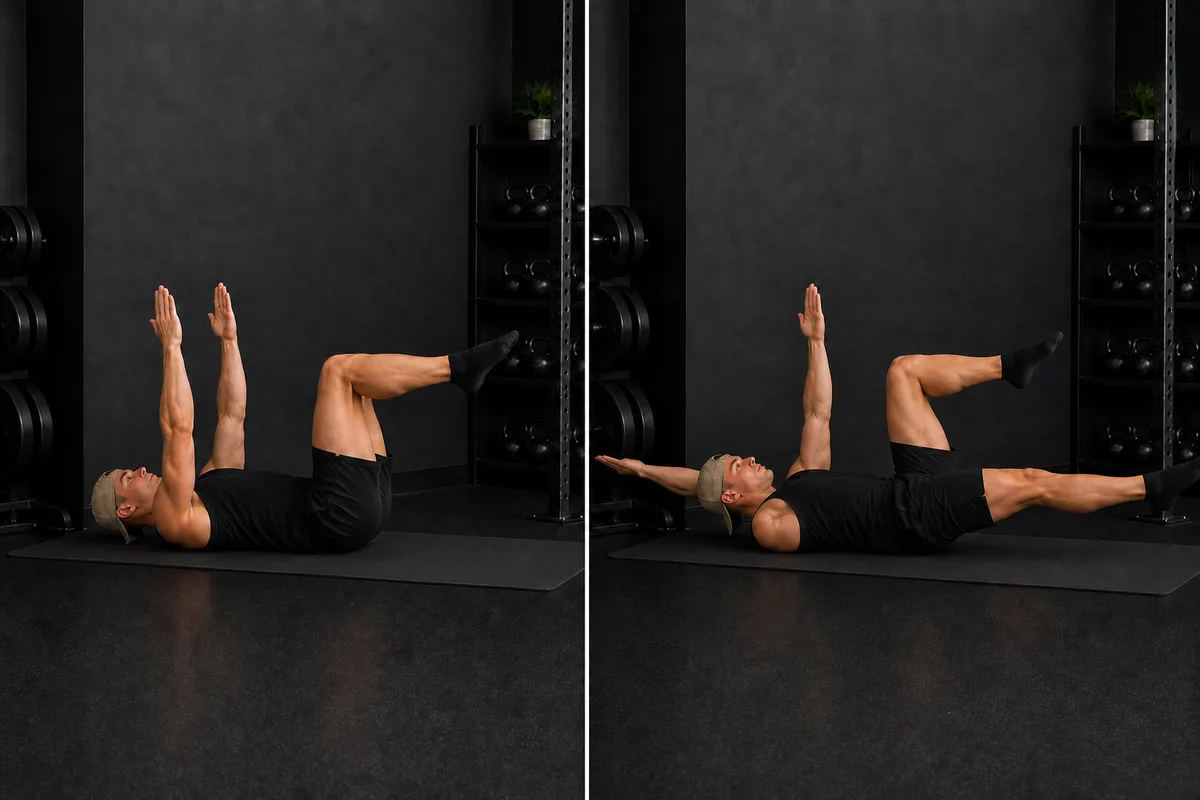
Start and finish demonstration of Dead Bug
Start and finishUse the written steps below for the full technique and safety guidance.

At a glance

Exercise profile

Target muscles
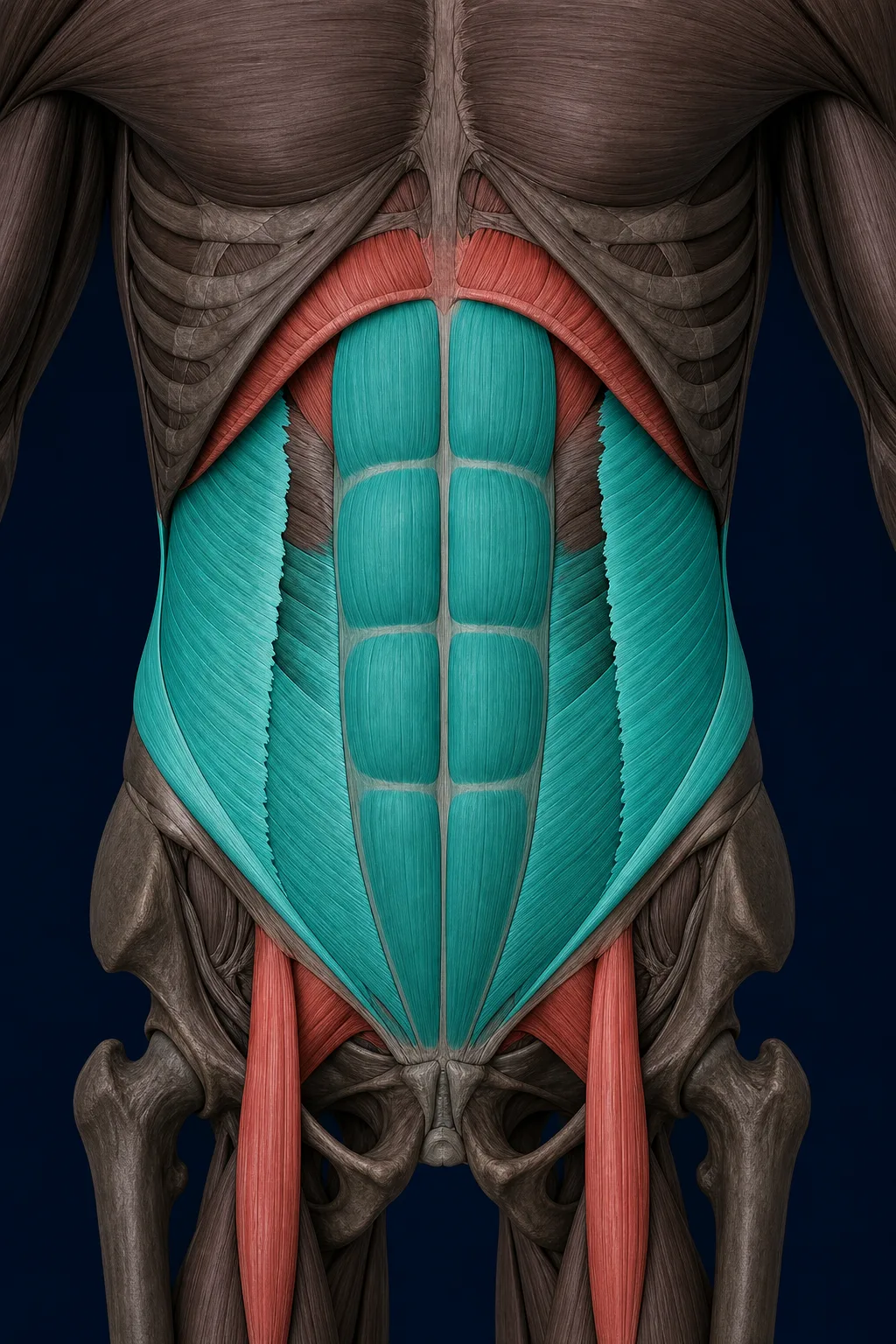
transversus abdominis, rectus abdominis, internal and external obliques
Exercise type
Core stability
Equipment
Exercise mat
Mechanics
Compound
Movement pattern
Anti-extension (contralateral)
Experience level
beginner
Secondary muscles
hip flexors, diaphragm, pelvic-floor muscles

Core stability

What this exercise works

The dead bug primarily trains the abdominal wall to resist lower-back extension while the arms and legs move in opposite directions.

Anatomy highlighting the structures involved in Dead Bug
Teal — primary muscles doing most of the workRed — secondary muscles assistingGrey — stabilizers and surrounding anatomy

Primary emphasis

  • transversus abdominis
  • rectus abdominis
  • internal and external obliques

Secondary muscles

  • hip flexors
  • diaphragm
  • pelvic-floor muscles

Stabilizers

  • multifidus
  • lumbar erector spinae
  • gluteal muscles

Movement and joint actions

  • Anti-extension control of the lumbar spine
  • Alternating shoulder flexion and hip extension
  • Trunk and pelvis stabilization

Muscle contribution changes with position, range, resistance and individual technique.

Why it can help

Potential benefits and carryover

Benefits depend on technique, dosage, consistency and whether the exercise suits the person. Sport carryover means supporting the physical demands of the activity—not guaranteeing performance or preventing injury.

Everyday benefits

  • Builds control of the lower back and pelvis while the limbs move
  • Practises coordinating breathing with abdominal tension
  • Provides a low-load starting point for trunk endurance
  • Can improve confidence with controlled floor-based movement

Training carryover

  • Supports bracing during squats, hinges and loaded carries
  • Builds the cross-body control used in more advanced core drills
  • Helps teach ribcage-over-pelvis positioning

Sport carryover

  • Supports trunk control during running and field-sport movement
  • Practises resisting unwanted spinal extension during limb motion

Technique

Dead Bug tips

Use these cues to keep the movement controlled and focused on its intended purpose.

  1. Keep the lower back gently heavy against the floor throughout each repetition.
  2. Exhale as the opposite arm and leg move away to help maintain abdominal tension.
  3. Use a shorter range if the ribs flare or the back begins to arch.
  4. Move slowly enough that you can stop and reverse the motion without momentum.

Overview

The dead bug is a beginner core-stability exercise: lying on your back, you move your arms and legs while keeping your lower back still and pressed into the floor. It teaches the core to hold the spine steady while the limbs move — exactly what your back needs during walking, lifting and everyday movement.

It is a gentle, low-risk exercise that suits many people with back pain, and it can be made harder in small steps.

How to Do It

  1. Lie on your back with knees bent over your hips and arms reaching toward the ceiling.
  2. Keep your lower back gently pressed toward the floor.
  3. Slowly lower one arm overhead while the opposite leg straightens and lowers toward the floor.
  4. Stop before your back lifts off the floor or your leg touches down uncomfortably.
  5. Return to the start slowly, then repeat on the other side.
  6. Continue alternating sides in slow, controlled repetitions.

What You Should Feel

Effort in the abdominal muscles while the back stays still. The movement should feel controlled, not rushed. Stop if you feel sharp back pain or leg pain.

Common Mistakes

  • Letting the lower back arch away from the floor as the limbs lower
  • Moving the arms and legs too fast or too far
  • Holding the breath
  • Using momentum instead of control

Make It Easier

  • Keep the knees bent and lift only the arm, keeping both feet on the floor
  • Lower the limbs only a short distance
  • Place hands on the abdomen to feel the core switch on

Progression

  • Lower the limbs farther while keeping the back still
  • Add a slow tempo on the lowering phase
  • Progress to the bird dog on hands and knees, then to standing core work

Common Questions

Is the dead bug good for back pain?

It is a common starting exercise for load-related back pain because it trains core control at low load. Pair it with the guidance in the back loading principles and progress gradually.

How many should I do?

Start with 2 sets of 6–8 slow alternating repetitions per side, two or three times per week. Control matters more than numbers.

References

  1. NICE. "Low back pain and sciatica in over 16s: assessment and management." NG59. 2016 (updated 2020). https://www.nice.org.uk/guidance/ng59
  2. NHS. "Back pain." https://www.nhs.uk/content-widgets/health-a-to-z/back-pain
This information is for education only and is not a medical diagnosis. InjuryAtlas does not replace an assessment by a qualified health professional. If you have severe pain, visible deformity, numbness, loss of function, or symptoms that are getting worse, seek medical care promptly.
Educational information only

This information does not diagnose an injury or replace care from a qualified healthcare professional.