Muscle-growth potentialHow well this movement can be loaded and progressed for building muscle.
Exercises · IA-CHE-EXE-011
Flat Dumbbell Bench Press
Learn flat dumbbell bench-press setup, form, muscles worked, benefits, mistakes and progression.
At a glance
Exercise profile
- Target muscles
- pectoralis major
- Exercise type
- Strength
- Equipment
- Flat bench and two matching dumbbells
- Mechanics
- Compound
- Movement pattern
- Push (bilateral with independent loads)
- Experience level
- intermediate
- Secondary muscles
- triceps brachii, anterior deltoid
What the science says
Study including the flat dumbbell bench press
What it found: An EMG comparison found similar pectoralis-major and front-deltoid activation during barbell bench press, dumbbell bench press and dumbbell fly, while the two pressing variations kept the muscles active for longer than the fly.
What that means here: This is acute muscle-activity data, not a long-term growth ranking. It supports the flat dumbbell press as a credible primary chest press when you can control the independent weights through a comfortable range.
Independent-arm horizontal pressing
What this exercise works
The pectoralis major drives the press while the triceps extend the elbows and the front deltoids assist; the rotator cuff stabilizes each independent dumbbell.
Primary emphasis
- pectoralis major
Secondary muscles
- triceps brachii
- anterior deltoid
Stabilizers
- rotator cuff
- serratus anterior
- forearm muscles
- abdominal muscles
Movement and joint actions
- Shoulder horizontal adduction
- Elbow extension
Muscle contribution changes with position, range, resistance and individual technique.
Why it can help
Potential benefits and carryover
Benefits depend on technique, dosage, consistency and whether the exercise suits the person. Sport carryover means supporting the physical demands of the activity—not guaranteeing performance or preventing injury.
Everyday benefits
- Builds the chest and triceps while each arm controls its own load
- Allows a natural hand and elbow path without a fixed bar
- Makes side-to-side strength differences easier to notice
- Offers a clear progression option beside barbell pressing
Training carryover
- Carries into barbell pressing, push-ups and sport-specific pushing
- Provides a primary chest movement when a barbell setup is unavailable
Sport carryover
- Supports upper-body pushing strength and contact tolerance
Technique
Flat Dumbbell Bench Press tips
Use these cues to keep the movement controlled and focused on its intended purpose.
- Set the dumbbells on the thighs before lying back rather than curling them from the floor.
- Keep the shoulder blades supported and the feet planted.
- Lower the dumbbells toward the sides of the mid chest with the forearms close to vertical.
- Press upward without banging the dumbbells together.
Overview
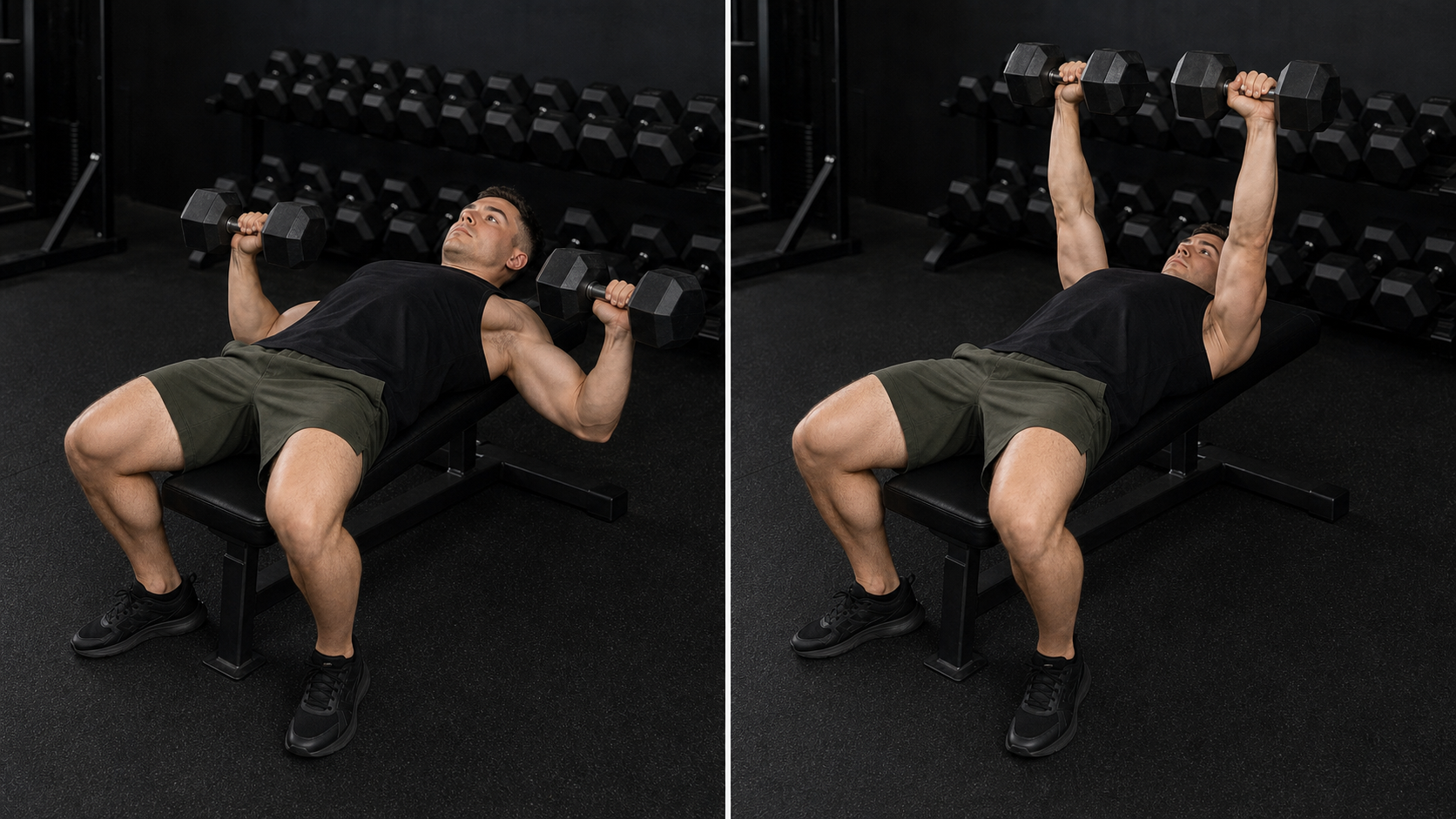
The flat dumbbell bench press is a chest-focused compound press in which each arm controls its own weight. The freedom is useful, but it also means the shoulder stabilizers have more organizing to do than they would with a single bar.
How to Do It
- Sit with the dumbbells on the thighs, then use the legs to help guide them into position as you lie back.
- Plant the feet and set the shoulder blades gently against the bench.
- Start with the dumbbells over the chest and the wrists stacked over the forearms.
- Lower toward the sides of the mid chest until the upper arms reach a comfortable depth.
- Press up and slightly inward without letting the dumbbells collide. Start with 2–4 sets of 6–12 repetitions.
What You Should Feel
Expect the chest, triceps and front of the shoulders to work. The stretch across the chest should feel controlled, not like a sharp pinch at the front of the shoulder.
Common Mistakes
- Dropping the elbows far below a comfortable shoulder range
- Letting the wrists fold backward
- Bouncing or colliding the dumbbells at the top
- Twisting to drop heavy dumbbells after the set
Progression
Add repetitions before moving to the next dumbbell pair. Because dumbbell jumps can be large, a small repetition improvement is still progress. End the set with enough control to bring the weights safely to the thighs or floor.
Educational information only — not a diagnosis. Use a spotter or lighter dumbbells when getting into and out of position is the hardest part.
This information does not diagnose an injury or replace care from a qualified healthcare professional.