Muscle-growth potentialHow well this movement can be loaded and progressed for building muscle.
Exercises · IA-CHE-EXE-010
Machine Pec Fly
Learn machine pec fly setup, chest muscles worked, benefits and form cues for controlled training.
At a glance
Exercise profile
- Target muscles
- pectoralis major
- Exercise type
- Strength
- Equipment
- Pec fly machine
- Mechanics
- Isolation
- Movement pattern
- Horizontal adduction (bilateral)
- Experience level
- beginner
- Secondary muscles
- anterior deltoid
What the science says
Study including a dumbbell fly
What it found: A shoulder-activation study compared flys with pressing and raises, showing that exercise choice changes how the deltoid portions contribute.
What that means here: This was a dumbbell fly and acute EMG—not a machine-pec-fly growth trial. Use the machine for a stable chest-focused arc you can control.
Stable chest isolation
What this exercise works
The pectoralis major draws the upper arms toward the midline while the front shoulders and shoulder blade muscles assist and stabilize.
Primary emphasis
- pectoralis major
Secondary muscles
- anterior deltoid
Stabilizers
- rotator cuff
- serratus anterior
Movement and joint actions
- Shoulder horizontal adduction
Muscle contribution changes with position, range, resistance and individual technique.
Why it can help
Potential benefits and carryover
Benefits depend on technique, dosage, consistency and whether the exercise suits the person. Sport carryover means supporting the physical demands of the activity—not guaranteeing performance or preventing injury.
Everyday benefits
- Provides direct chest work with a fixed, supported path
- Makes it easier to train near the target muscle without balancing free weights
- Lets you use controlled higher-repetition chest volume
Training carryover
- Adds chest volume after presses without the same triceps limitation
- Helps lifters learn to control shoulder position under a lighter load
Sport carryover
- Supports general upper-body pushing capacity
Technique
Machine Pec Fly tips
Use these cues to keep the movement controlled and focused on its intended purpose.
- Set the seat so the handles start around mid-chest height.
- Keep the chest tall and shoulder blades gently supported, not aggressively pinned.
- Bring the handles together with control and avoid slamming the stack.
- Use a comfortable stretch rather than forcing the arms far behind the body.
Overview
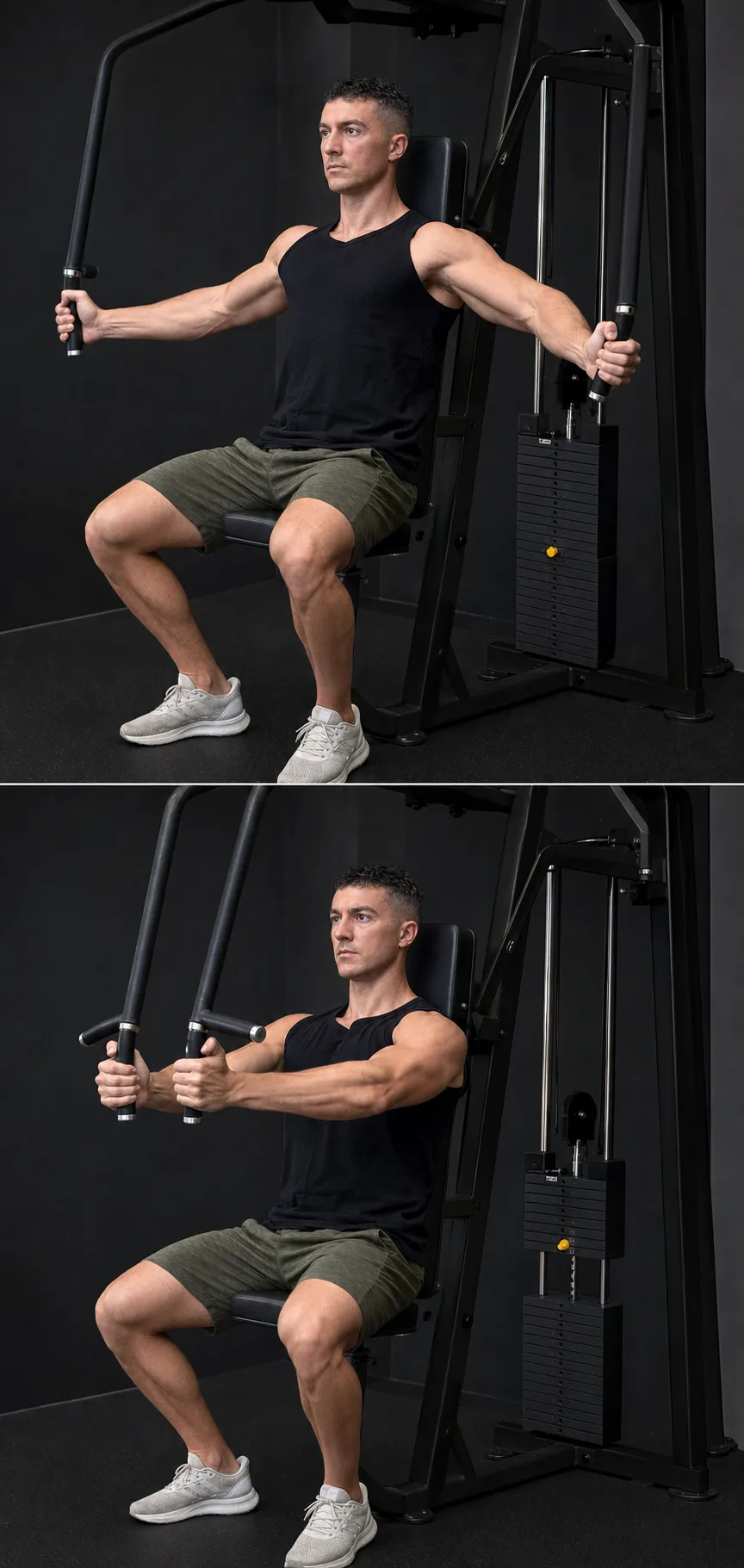
The machine pec fly—often called a pec deck—is a supported chest isolation exercise. The machine gives the arms a repeatable path, allowing the chest to be the main limiter without the balance demands of dumbbell flys.
How to Do It
- Adjust the seat so the handles or pads line up near mid-chest.
- Sit tall with the back supported and a comfortable bend in the elbows.
- Bring the arms together smoothly by squeezing through the chest.
- Pause briefly, then return under control to a comfortable stretch.
What You Should Feel
Chest effort across the front of the torso, with some front-shoulder contribution. There should not be sharp pain or a strong pinching sensation at the front of the shoulder.
Common Mistakes
- Starting with the seat too high or too low
- Slamming the handles together or bouncing the stack
- Forcing too much stretch at the back of the repetition
- Raising the shoulders toward the ears through the set
Progression
Use a controlled 10–20 repetition range. Increase the stack only when you can keep the shoulders settled and the return slow.
Educational information only — not a diagnosis.
This information does not diagnose an injury or replace care from a qualified healthcare professional.