Overview
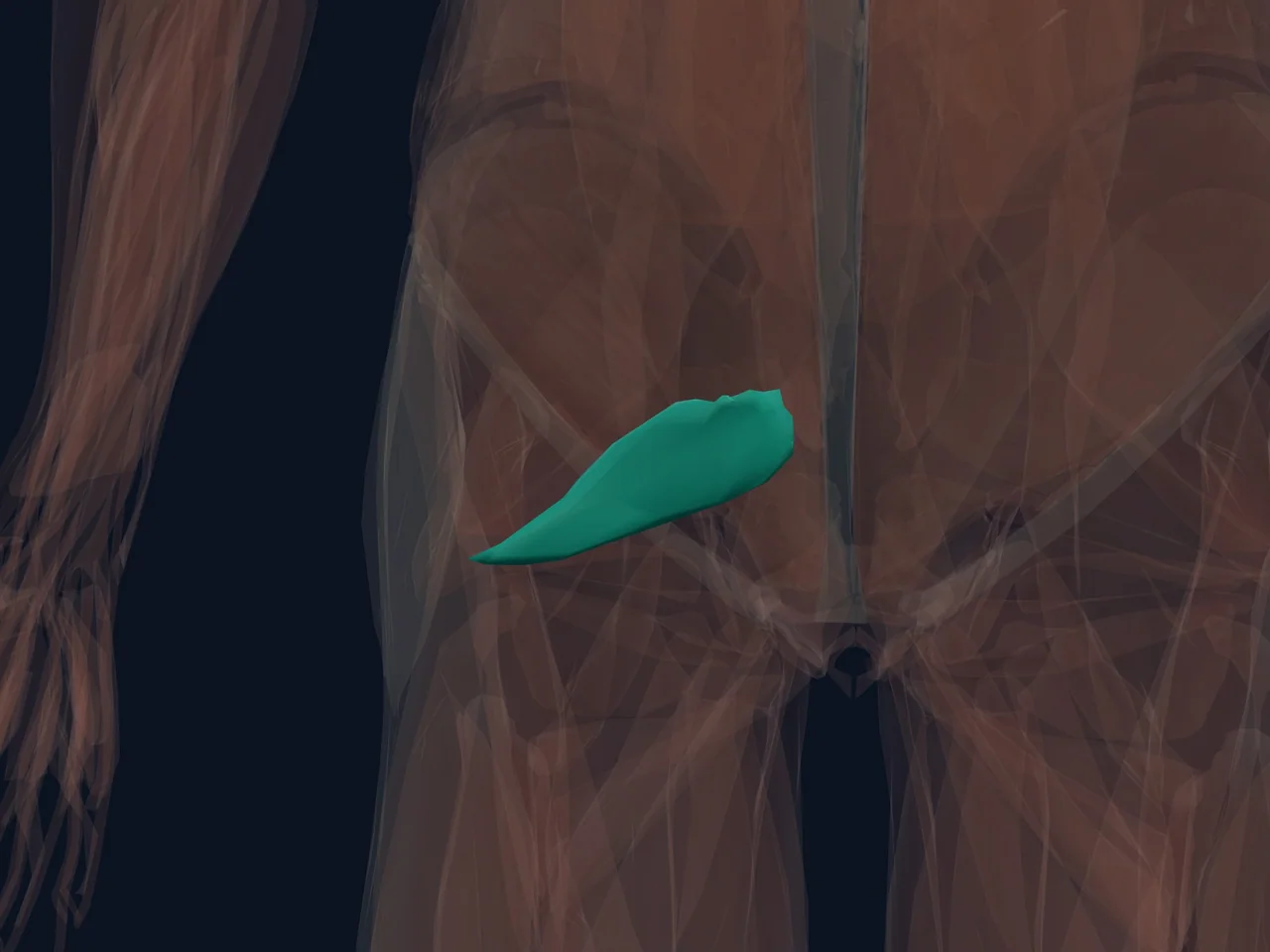
The piriformis is a small, deep muscle at the back of the hip. It runs from the front of the sacrum through the greater sciatic foramen to the top of the femur.
The sciatic nerve usually passes beneath it, although normal anatomical variations exist.
Location and Connections
- Begins on the front surface of the sacrum
- Crosses behind the hip joint
- Attaches near the top of the greater trochanter
- Sits beneath gluteus maximus and close to the sciatic nerve
What It Does
With the hip extended, the piriformis helps rotate the thigh outward. As the hip bends, its line of pull changes and it can assist abduction. It also contributes to keeping the femoral head controlled in the socket.
Common Problems
Deep buttock pain is sometimes labelled “piriformis syndrome,” but several hip, back and nerve conditions can create similar symptoms. A tender piriformis or pain while sitting does not confirm that the muscle is compressing the sciatic nerve.
Clinical Relevance
Assessment should consider the lumbar spine, hip and nervous system rather than focusing on one sore spot. New or progressive weakness, widespread numbness or changes in bladder or bowel function need prompt medical assessment.
Related Anatomy
References
- StatPearls. "Anatomy, Bony Pelvis and Lower Limb, Piriformis Muscle." https://www.ncbi.nlm.nih.gov/books/NBK519497/
- StatPearls. "Piriformis Syndrome." https://www.ncbi.nlm.nih.gov/books/NBK448172/