Overview
A hip fracture is a break in the upper femur, usually through the femoral neck or the region between the trochanters. It is a medical emergency, not an injury to monitor at home or treat with exercises.
Most hip fractures follow a fall in an older adult with reduced bone strength. They can also occur after high-energy trauma or, less commonly, through progressive bone stress in active people.
Where Hip Fractures Occur
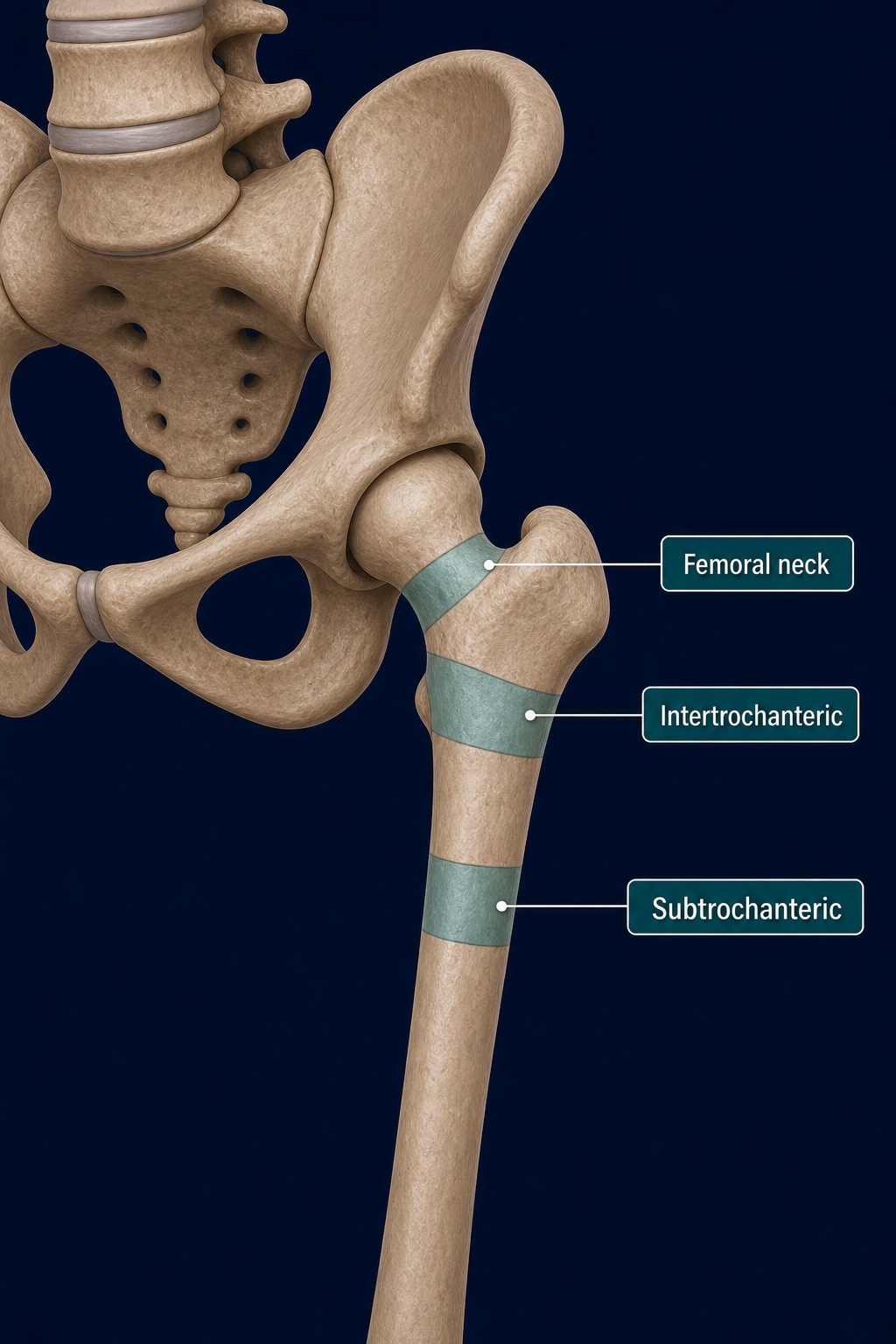
“Hip fracture” commonly refers to a break through the femoral neck, between the trochanters or just below them. The exact region and whether the fracture has shifted help determine treatment.
Warning Signs
- Severe groin or hip pain after a fall
- Inability to stand or bear weight
- A leg that looks shortened or turned outward
- Pain with even small movements of the hip
- New confusion or sudden loss of mobility after a fall in an older adult
Some impacted fractures allow limited walking at first. Being able to take a few steps does not completely rule one out.
What Happens Next
Suspected hip fracture needs urgent imaging and hospital care. Most people require surgery, with the procedure depending on fracture location, displacement, bone quality and previous mobility. Early pain control, prevention of complications and mobilization with the hospital team are central parts of care.
Recovery
Rehabilitation begins around essential tasks: getting out of bed, standing, walking safely and regaining confidence. Strength and balance work progress alongside management of osteoporosis, nutrition, medication and fall risk. Recovery varies widely and should follow the surgical team's weight-bearing instructions.
Get Emergency Help
Call emergency services after a fall when the person cannot stand, has severe hip or groin pain, or the leg appears shortened or rotated. Avoid repeatedly trying to make them walk.
Connected Guides
References
- American Academy of Orthopaedic Surgeons. "Management of Hip Fractures in Older Adults: Plain Language Summary." https://orthoinfo.aaos.org/globalassets/pdfs/hip-fractures-cpg_pls.pdf
- NICE. "Hip fracture: management." https://www.ncbi.nlm.nih.gov/books/NBK553768/
This information is for education only. A suspected hip fracture requires emergency medical assessment.