Overview
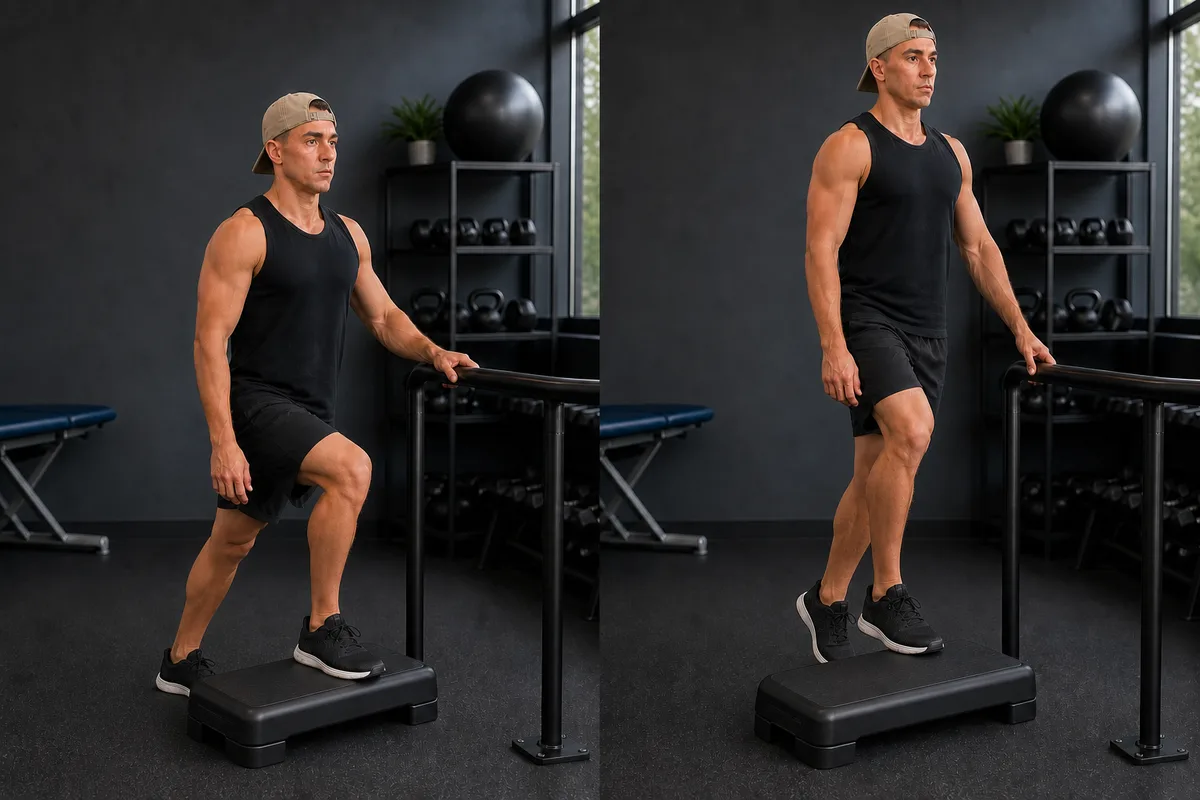
A low step-up trains the same basic task used on stairs. Step height makes the demand easy to adjust, while a railing or counter can provide balance support.
How to Do It
- Place one foot fully on a low, stable step.
- Hold a rail or counter lightly if needed.
- Lean forward slightly and press through the foot on the step.
- Stand tall without pushing hard from the trailing leg.
- Lower slowly and repeat 6–10 times.
- Begin with 2 sets per side.
What You Should Feel
The thigh and hip of the stepping leg should work. The knee should track in line with the foot without sudden collapse or twisting.
Make It Easier
- Use a lower step.
- Use more hand support.
- Perform fewer repetitions.
- Practise sit-to-stand first.
Progression
Reduce hand support, add repetitions, increase the step height slightly, then add a light external load. Change one variable at a time.
When to Stop
Use a lower step or more support if the knee collapses, twists or becomes increasingly painful. Stop for rapid swelling, locking, giving way or an inability to bear weight.
References
- Neal BS, et al. "Best practice guide for patellofemoral pain." British Journal of Sports Medicine. 2024. https://bjsm.bmj.com/content/58/24/1486
- Willy RW, et al. "Patellofemoral Pain: Clinical Practice Guidelines." Journal of Orthopaedic & Sports Physical Therapy. 2019. https://doi.org/10.2519/jospt.2019.0302
This information is for education only and is not a medical diagnosis. InjuryAtlas does not replace an assessment by a qualified health professional. If you have severe pain, visible deformity, numbness, loss of function, or symptoms that are getting worse, seek medical care promptly.