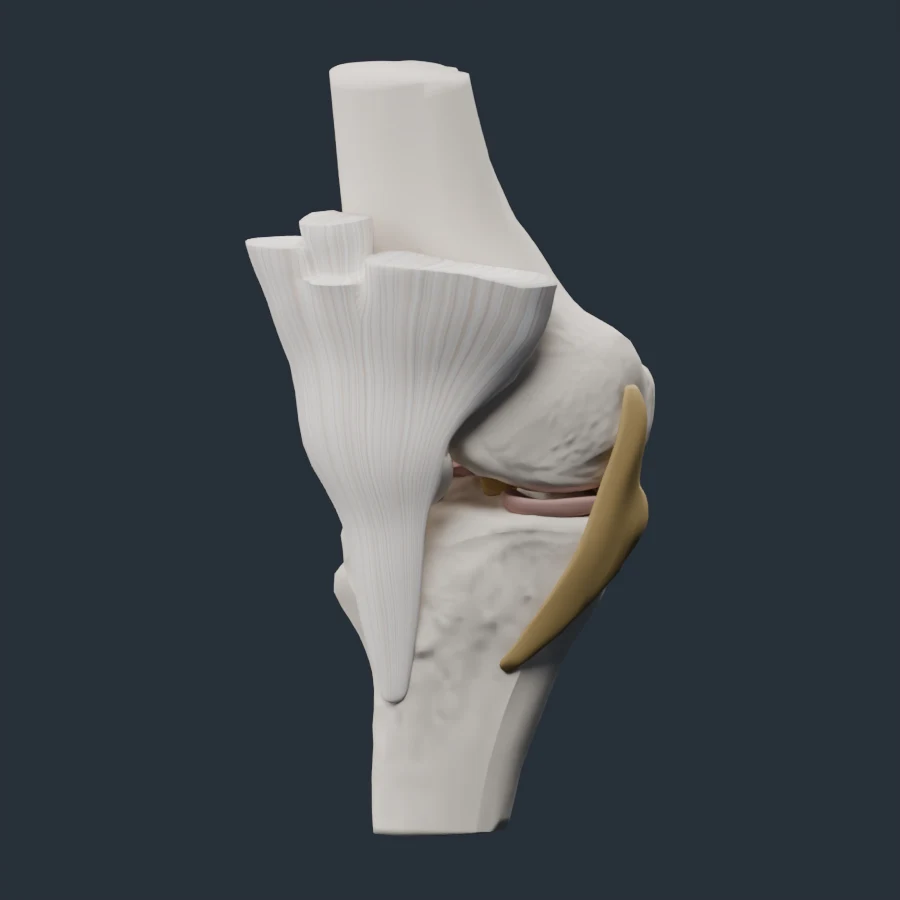
Overview
A PCL injury damages the strong ligament behind the ACL in the centre of the knee. A classic cause is a force that drives the shin backward while the knee is bent—such as the shin striking a dashboard—or a fall directly onto a flexed knee.
PCL injuries can be easier to miss than ACL injuries. Swelling and pain may be modest, and some people do not immediately feel dramatic instability.
Common Clues
- A direct blow to the front of the upper shin
- A fall onto a bent knee
- Deep or back-of-knee pain
- Swelling and stiffness after trauma
- Difficulty descending stairs or slopes
- A sense that the knee is unreliable during loaded bending
These findings cannot distinguish an isolated PCL injury from a combined ligament injury.
Assessment
Clinicians compare how the shin sits relative to the thigh and use tests such as the posterior drawer. X-rays may check for fracture or bone avulsion; MRI can show the PCL and associated soft-tissue damage. High-energy trauma requires careful assessment of the other ligaments, nerves and blood vessels.
Treatment
Many isolated lower-grade PCL injuries begin with non-surgical care. Rehabilitation commonly addresses swelling, range of motion, quadriceps strength and gradual return to load. Bracing may be used in selected cases.
Surgery is more likely to be considered for severe instability, displaced bony avulsion, combined ligament injury or persistent functional problems. Recovery plans differ substantially between an isolated sprain and a multiligament reconstruction.
When to Get Assessed
Get prompt care after a high-energy impact, obvious instability, numbness, a cool or pale foot, major swelling, inability to bear weight or suspected injury to more than one ligament.
Related Reading
References
- AAOS OrthoInfo. “Posterior Cruciate Ligament Injuries.” https://orthoinfo.aaos.org/en/diseases--conditions/posterior-cruciate-ligament-injuries/
- StatPearls. “Posterior Cruciate Ligament Knee Injuries.” https://www.ncbi.nlm.nih.gov/books/NBK430726/
This information is for education only and is not a medical diagnosis. InjuryAtlas does not replace an assessment by a qualified health professional. If you have severe pain, visible deformity, numbness, loss of function, or symptoms that are getting worse, seek medical care promptly.