Overview
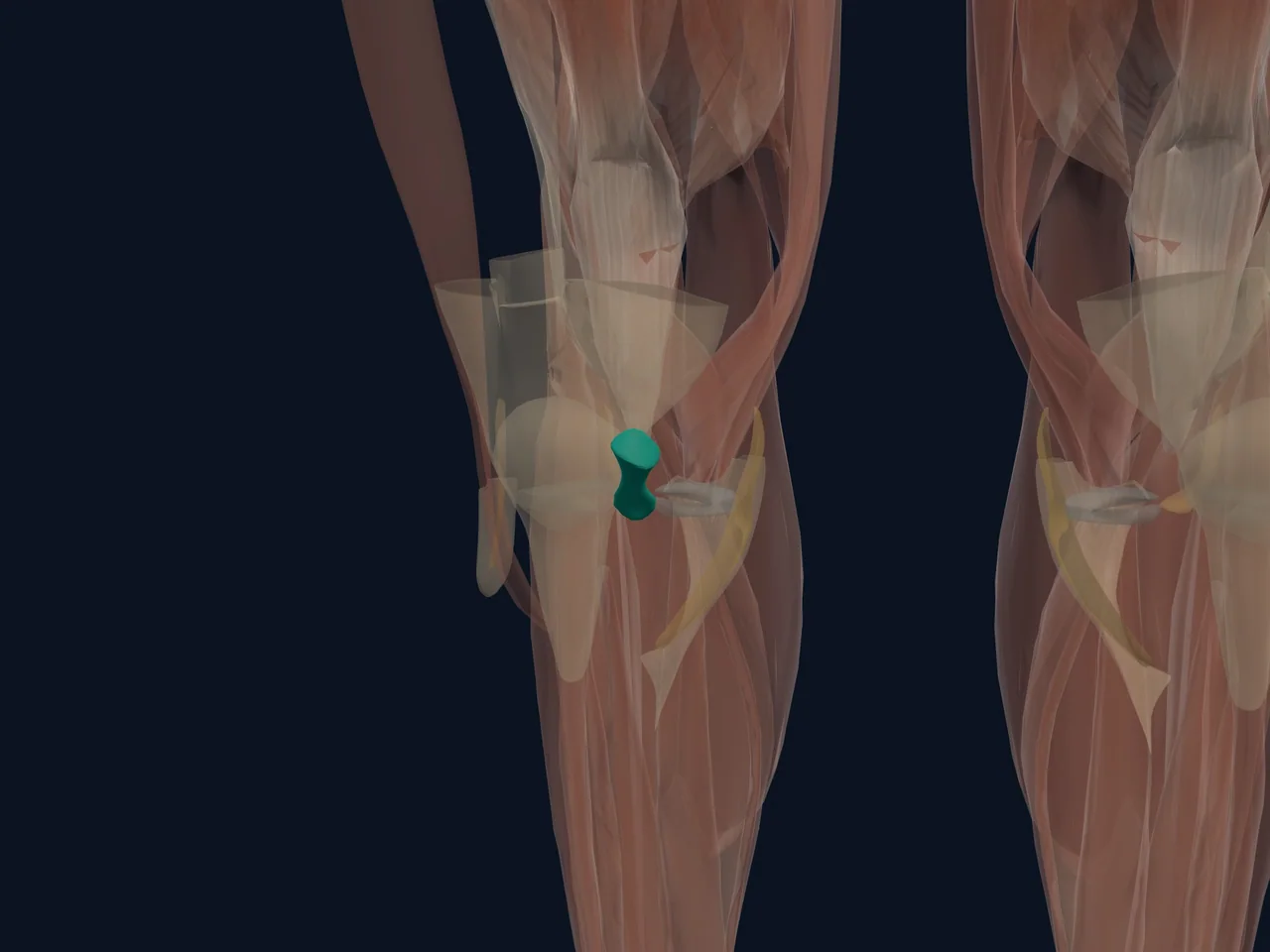
The posterior cruciate ligament (PCL) is the stronger of the two cruciate ligaments in the centre of the knee. It mainly resists the tibia moving backward relative to the femur and helps stabilize the knee during loaded bending.
Location and Attachments
- Runs deep inside the knee behind the ACL
- Connects the back portion of the tibia to the medial femoral condyle
- Has two main functional bundles whose tension changes with knee position
What It Does
The PCL restrains posterior tibial translation and contributes to rotational stability. It matters during tasks such as descending stairs or slopes, slowing down and controlling a bent knee under load.
Common Injury Pattern
A classic mechanism is a force to the front of the shin while the knee is bent, sometimes called a dashboard-type injury. A fall directly onto a flexed knee or a forceful hyperflexion injury can also affect it. PCL injuries may be subtle and can occur with other ligament damage.
Clinical Relevance
Deep pain, swelling or difficulty trusting the knee after trauma deserves assessment, but symptoms alone cannot identify the injured ligament. Clinicians use the injury mechanism, laxity tests and imaging when needed. Isolated and combined PCL injuries may require different management — see the PCL rehabilitation guide for how isolated recovery usually proceeds.
Related Anatomy
References
- StatPearls. "Posterior Cruciate Ligament Knee Injuries." https://www.ncbi.nlm.nih.gov/books/NBK430726/
- AAOS OrthoInfo. "Posterior Cruciate Ligament Injuries." https://orthoinfo.aaos.org/en/diseases--conditions/posterior-cruciate-ligament-injuries/