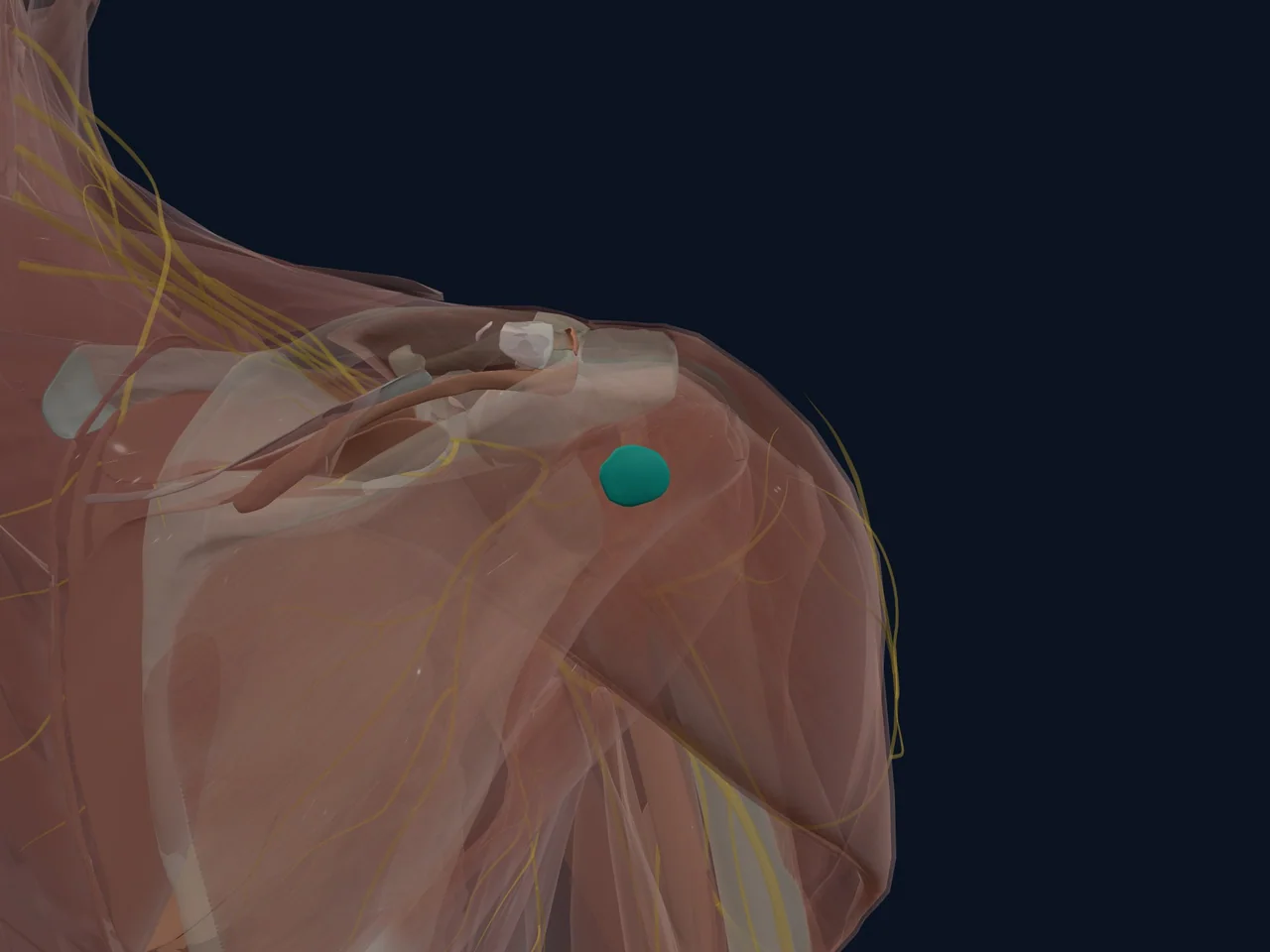
The infraspinatus bursa is a small fluid-lined sac near the back of the shoulder. It sits beneath the infraspinatus tendon and helps reduce friction as the tendon moves over nearby tissue.
Location
- On the posterior side of the shoulder joint
- Deep to the infraspinatus tendon
- Close to the back of the glenohumeral joint capsule
- Separate from the much larger subacromial-subdeltoid bursa in most people
Small shoulder bursae vary between people, and some may communicate with the joint. That makes their appearance less predictable than the major subacromial-subdeltoid bursa.
Function
The bursa provides a low-friction surface between the infraspinatus tendon and deeper structures. It supports smooth tendon movement when the arm rotates outward and during overhead activity.
Why It Matters
This bursa is not a common stand-alone diagnosis. Posterior shoulder pain is more often discussed in relation to the infraspinatus tendon, the joint, the labrum, or referred symptoms from the neck.
Fluid or irritation around a small bursa on imaging therefore needs to be interpreted alongside the examination and the rest of the scan. Its location alone cannot identify the source of pain.
Related Anatomy
- Infraspinatus — the rotator cuff muscle directly above it
- Glenohumeral joint capsule — the fibrous envelope deep to the tendon
- Subacromial bursa — the larger and more clinically familiar shoulder bursa
References
- Kennedy MS, Nicholson HD, Woodley SJ. “The morphology of the subacromial and related shoulder bursae: an anatomical and histological study.” Journal of Anatomy. 2022. https://pmc.ncbi.nlm.nih.gov/articles/PMC9005683/
- Chang LR, Anand P, Varacallo M. “Anatomy, Shoulder and Upper Limb, Infraspinatus Muscle.” StatPearls Publishing. https://www.ncbi.nlm.nih.gov/books/NBK513255/