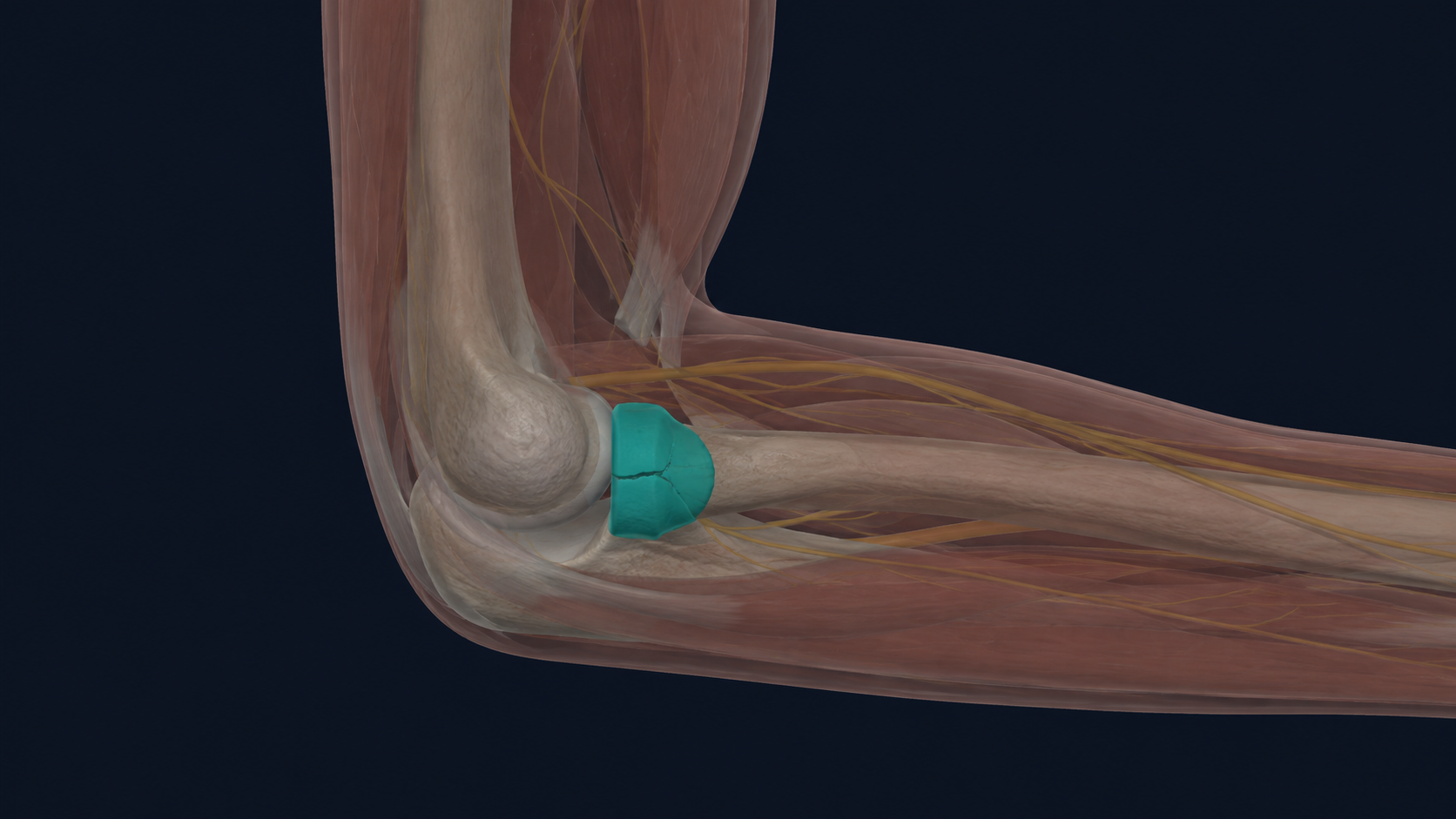
Overview
A radial head fracture is a break in the top of the radius, the forearm bone that meets the elbow joint. It commonly follows a fall onto an outstretched hand, but a direct impact can also cause it. The fracture may be small and still make the elbow difficult to move.
What It Usually Feels Like
- Pain and tenderness on the outside of the elbow
- Swelling and pain when bending or straightening the arm
- Pain or difficulty turning the palm up and down
- Reduced ability to push, lift or use the arm normally
Symptoms can overlap with an elbow sprain or dislocation. An examination and imaging are often needed to confirm the diagnosis and check alignment.
What Often Helps
Early care depends on the fracture pattern and joint stability. A clinician may recommend a brief period of protection followed by comfortable, guided motion. Do not force movement through sharp pain, and do not return to lifting or contact sport until the fracture and elbow have been assessed.
When to Get It Assessed
Arrange prompt assessment after a fall or blow when pain, swelling or loss of motion is significant. Seek urgent care for visible deformity, a cold or pale hand, new numbness or weakness, or pain that is severe and rapidly worsening.
Related Guidance
- Proximal radius anatomy — see the radial head in the 3D explorer
- Elbow joint overview — understand the joint surfaces and nearby structures
- General elbow loading principles — return-to-loading framework
References
- American Academy of Orthopaedic Surgeons. “Radial Head and Neck Fractures.” https://orthoinfo.aaos.org/en/diseases--conditions/radial-head-and-neck-fractures/
- NHS. “Elbow and arm pain.” https://www.nhs.uk/symptoms/elbow-and-arm-pain/
This information is for education only and is not a medical diagnosis. InjuryAtlas does not replace an assessment by a qualified health professional. If you have severe pain, visible deformity, numbness, loss of function, or symptoms that are getting worse, seek medical care promptly.