Overview
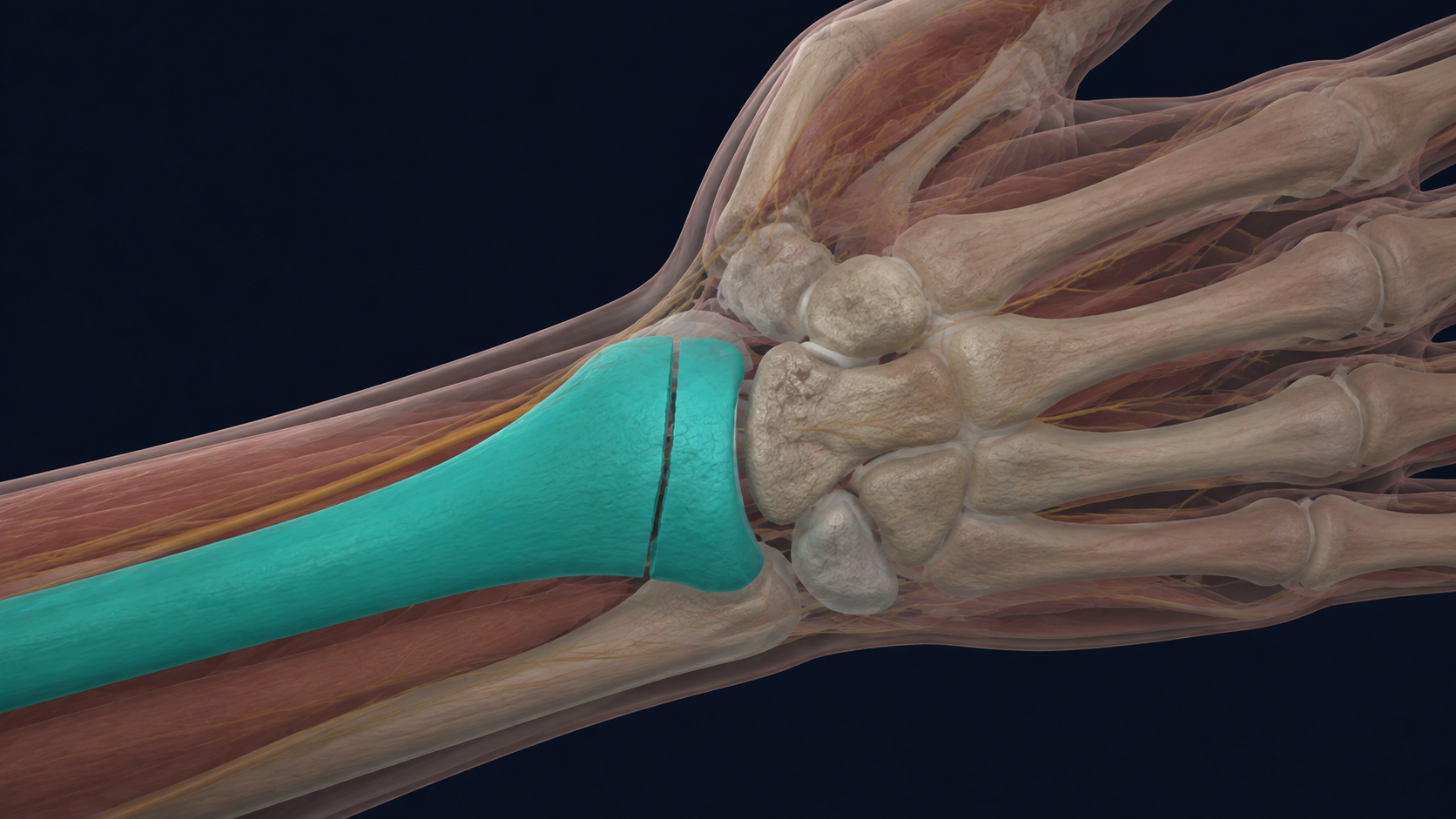
A distal radius fracture is a break near the wrist end of the radius, the larger forearm bone on the thumb side. Falls onto an outstretched hand are a common cause, but the injury pattern varies with force, age and bone strength.
What It Usually Feels Like
- Wrist pain, swelling and bruising after an impact
- Difficulty moving the wrist or gripping
- Tenderness near the thumb-side wrist
- Visible change in shape in a more displaced fracture
The appearance and pain level do not reliably show the fracture pattern. Imaging is needed to assess alignment and nearby joint involvement.
What Often Helps
Protect the wrist and remove rings early if swelling is developing. Avoid lifting, pushing or trying to straighten an obviously deformed wrist. Rehabilitation usually progresses from protected motion to grip, wrist strength and controlled loading after the fracture has been assessed.
When to Get It Assessed
Get prompt assessment after a fall or impact with significant wrist pain, swelling or reduced use. Seek urgent care for deformity, an open wound, numbness, a cold or pale hand, or rapidly increasing pain.
Related Guidance
- Wrist sprain — why a painful wrist after a fall may need imaging
- Proximal radius anatomy — the connected forearm structure
- General elbow loading principles — gradual loading principles
References
- American Academy of Orthopaedic Surgeons. “Distal Radius Fractures.” https://orthoinfo.aaos.org/en/diseases--conditions/distal-radius-fractures/
- NHS. “Broken arm or wrist.” https://www.nhs.uk/conditions/broken-arm-or-wrist/
This information is for education only and is not a medical diagnosis. InjuryAtlas does not replace an assessment by a qualified health professional.