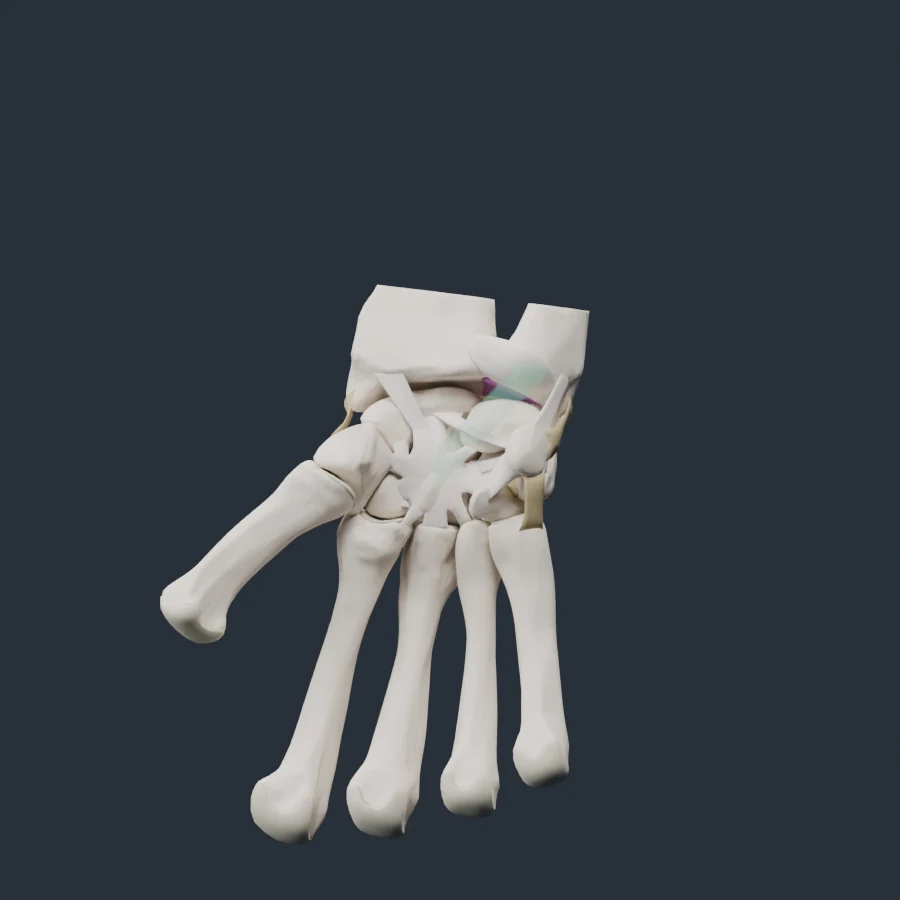
Overview
A wrist sprain is an injury to one or more ligaments that connect the small wrist bones. It often follows a fall onto an outstretched hand, a forceful twist or an awkward impact. The term is useful only after important look-alikes—especially fracture, scaphoid injury, TFCC injury or an unstable ligament injury—have been considered.
Typical Pattern
- Wrist pain and swelling after a fall, twist or impact
- Pain gripping, pushing up from a chair or bearing weight through the palm
- Stiffness, bruising or tenderness in one focused spot
- Symptoms that improve slowly over days rather than immediately resolving
The amount of swelling does not reliably tell you whether the injury is minor. A small fracture or important ligament injury can initially look like a “simple sprain.”
What to Do First
-
Protect and rule out serious injury
- Avoid falls, heavy grip and loaded extension
- Use a support for comfort if appropriate
Progress when: Fracture or instability has been excluded and swelling is settling
-
Restore motion
- Move the fingers, wrist and forearm comfortably
- Return to light daily tasks in short blocks
Progress when: Range is improving without a marked next-day flare
-
Build strength
- Progress grip, wrist and forearm resistance
- Add light supported weight-bearing
Progress when: Daily lifting and pushing are comfortable
-
Return to demand
- Build carries, pressing and sport-specific impact gradually
- Restore full confidence in the hand
Progress when: The wrist tolerates training and work without swelling or sharp pain
- Protect the wrist from falls, heavy gripping and loaded extension while it is acutely painful
- Use a removable support if it makes normal movement safer and more comfortable
- Keep the fingers, elbow and shoulder moving; start gentle wrist motion when fracture or instability has been excluded and pain allows
- Use ice, elevation or medication only for short-term comfort if helpful—not as a substitute for reassessment when pain is not settling
When Imaging Matters
After trauma, clinicians may use X-rays to assess for fracture. Early X-rays can occasionally miss some injuries, particularly at the scaphoid, so focused tenderness at the thumb-side hollow of the wrist, persistent pain or pain with loading deserves follow-up even if the first X-ray is normal.
Recovery Progression
Once serious injury is excluded, progress from comfortable range of motion to light grip, then wrist and forearm strength, then controlled weight-bearing. A good milestone is a wrist that tolerates daily use, rotation and light grip without increased swelling or a marked next-day flare. Heavier pushing, lifting and sport return later.
Seek Urgent or Prompt Assessment
- A fall with persistent wrist pain, especially near the thumb-side hollow
- Visible deformity, major swelling, inability to grip or inability to move the wrist
- Numbness, a cold/pale/blue hand or rapidly increasing pain
- Pain that remains sharp with pushing or gripping after a few days
- Clicking, giving way or persistent focal tenderness
Related Guidance
- Wrist extension isometric
- Forearm pronation and supination
- General elbow and forearm loading principles
References
- American College of Radiology. "ACR Appropriateness Criteria: Acute Hand and Wrist Trauma." https://acsearch.acr.org/docs/69418/Narrative/
- American Academy of Orthopaedic Surgeons. "Wrist Sprains." https://orthoinfo.aaos.org/en/diseases--conditions/wrist-sprains/
This is general education, not a diagnosis. A painful wrist after a fall should not be assumed to be a simple sprain without considering fracture.