Overview
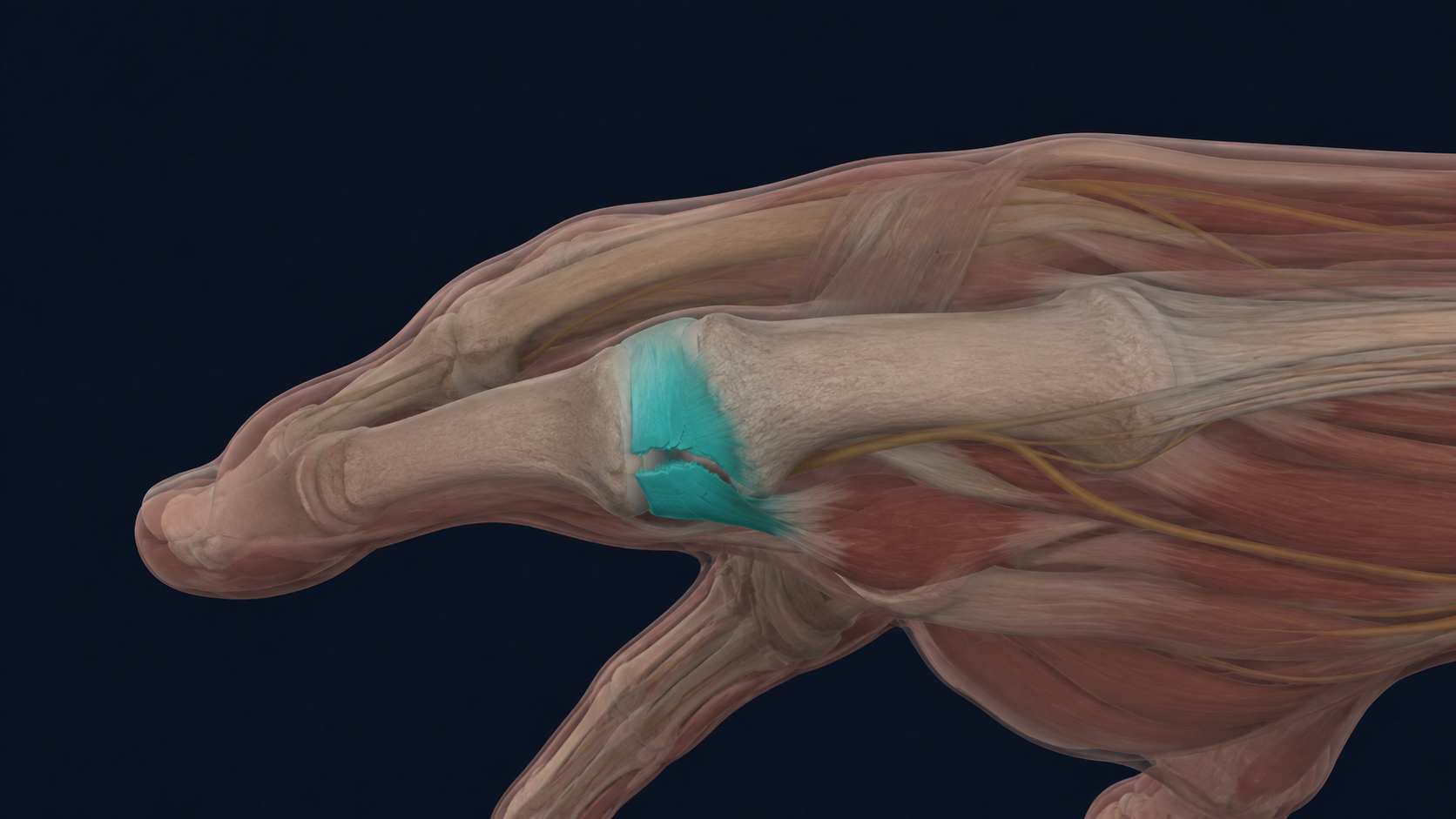
The thumb ulnar collateral ligament helps stabilize the main thumb joint during gripping and pinching. A forced sideways bend can stretch or tear it, sometimes pulling a small piece of bone with it.
What It Usually Feels Like
- Pain and tenderness on the inside of the thumb base
- Swelling or bruising around the thumb knuckle
- Pain with pinch, grip or opening a jar
- Weakness or a sense that the thumb is unstable
Pain and swelling do not show whether the ligament is partially or completely torn. A clinician may need to assess stability and use imaging.
What Often Helps
Protect the thumb from forceful pinching and sideways stress until it has been assessed. A removable support may be used, but the right treatment depends on stability, timing and whether a small fracture is present.
When to Get It Assessed
Arrange prompt assessment after a fall, ski-pole injury or forced thumb bend, especially with pinch weakness or instability. Seek urgent care for deformity, an open wound, numbness, a cold or pale finger, or rapidly worsening pain.
Related Guidance
- Wrist sprain — another common injury after a fall onto the hand
- General elbow loading principles — general graded-loading principles
References
- American Academy of Orthopaedic Surgeons. “Sprained Thumb.” https://orthoinfo.aaos.org/en/diseases--conditions/sprained-thumb/
- American Society for Surgery of the Hand. “Thumb UCL Injury.” https://www.assh.org/handcare/condition/thumb-ucl-injury
This information is for education only and is not a medical diagnosis. InjuryAtlas does not replace an assessment by a qualified health professional.