Muscle-growth potentialHow well this movement can be loaded and progressed for building muscle.
Exercises · IA-BAC-EXE-013
Barbell Row
Learn barbell row form, muscles worked, benefits, common mistakes and practical progression for back strength.
At a glance
Exercise profile
- Target muscles
- latissimus dorsi, middle trapezius, rhomboids, posterior deltoid
- Exercise type
- Strength
- Equipment
- Barbell and plates
- Mechanics
- Compound
- Movement pattern
- Pull (bilateral)
- Experience level
- intermediate
- Secondary muscles
- biceps brachii, brachialis, brachioradialis
What the science says
Related research: prone-supported rows
What it found: This study used a prone-supported barbell row, not the standing barbell row shown here. Changing the range altered lat and trapezius activity only modestly and inconsistently when time under tension was matched.
What that means here: For a standing barbell row, the sensible carryover is to use a controlled range and repeatable tempo. This study cannot tell us whether one standing-row range builds more muscle than another.
Horizontal pulling strength
What this exercise works
The lats, upper back and biceps pull the bar toward the torso while the hips, trunk and grip keep a stable bent-over position.
Primary emphasis
- latissimus dorsi
- middle trapezius
- rhomboids
- posterior deltoid
Secondary muscles
- biceps brachii
- brachialis
- brachioradialis
Stabilizers
- erector spinae
- abdominal muscles
- forearm and grip muscles
Movement and joint actions
- Shoulder extension
- Scapular retraction
- Elbow flexion
- Hip hinge isometric
Muscle contribution changes with position, range, resistance and individual technique.
Why it can help
Potential benefits and carryover
Benefits depend on technique, dosage, consistency and whether the exercise suits the person. Sport carryover means supporting the physical demands of the activity—not guaranteeing performance or preventing injury.
Everyday benefits
- Builds upper-back and lat strength with a simple barbell setup
- Trains the back to produce force while the trunk stays braced
- Lets you progressively load a horizontal pulling pattern
- Develops grip and posterior-chain endurance alongside the pull
Training carryover
- Builds strength for deadlifts, pull-ups and other rowing variations
- Balances pressing volume with direct upper-back work
- Supports stronger positioning for loaded carries and hinges
Sport carryover
- Supports pulling, grappling, climbing and paddling demands
- Builds upper-back strength useful for contact and racquet sports
Technique
Barbell Row tips
Use these cues to keep the movement controlled and focused on its intended purpose.
- Set the torso with a comfortable hip hinge and keep that angle through the rep.
- Pull the bar toward the lower ribs or upper abdomen rather than high into the chest.
- Keep the neck long and look slightly ahead of the feet instead of craning upward.
- Use less weight if the torso rises every repetition or the bar crashes down.
Overview
The barbell row is a horizontal pulling exercise for the lats, upper back and biceps. It also asks the hips and trunk to hold a strong, steady hinge, which is why clean position matters more than chasing weight.
How to Do It
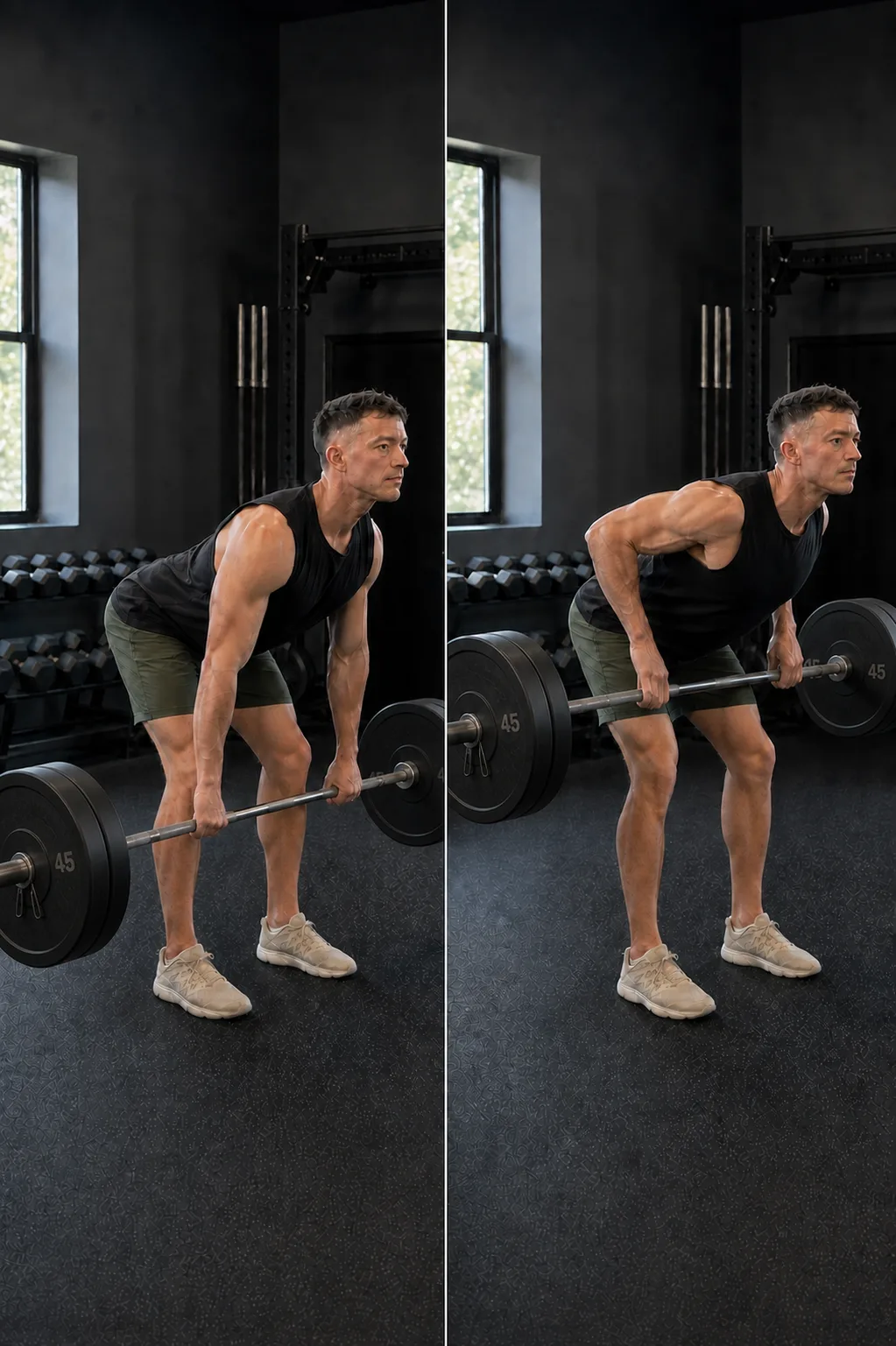
- Stand with the bar over the mid-foot and hinge at the hips until the torso is comfortably inclined forward.
- Take a grip just outside shoulder width and brace the trunk.
- Pull the bar toward the lower ribs or upper abdomen, keeping the elbows travelling back.
- Pause briefly without shrugging, then lower the bar under control.
- Keep the same torso angle for the set. Start with 2–3 sets of 6–12 controlled repetitions.
What You Should Feel
Expect effort through the sides of the back, between the shoulder blades, the biceps and the grip. The low back should feel like it is working to hold position, not like it is taking sharp or escalating pain.
Common Mistakes
- Standing more upright as the set gets harder
- Turning the row into a heave with the hips
- Pulling the bar too high and shrugging the shoulders
- Letting the lower back round under a load you cannot control
Progression
Build confidence with a chest-supported row or lighter barbell first. Add repetitions while the torso stays steady, then make small load increases. If the bent-over position is the limiting factor, keep some supported row work in the programme while you build it.
Educational information only — not a diagnosis. Stop and get assessed for sharp pain, progressive weakness, new numbness or symptoms after an injury.
This information does not diagnose an injury or replace care from a qualified healthcare professional.