Overview
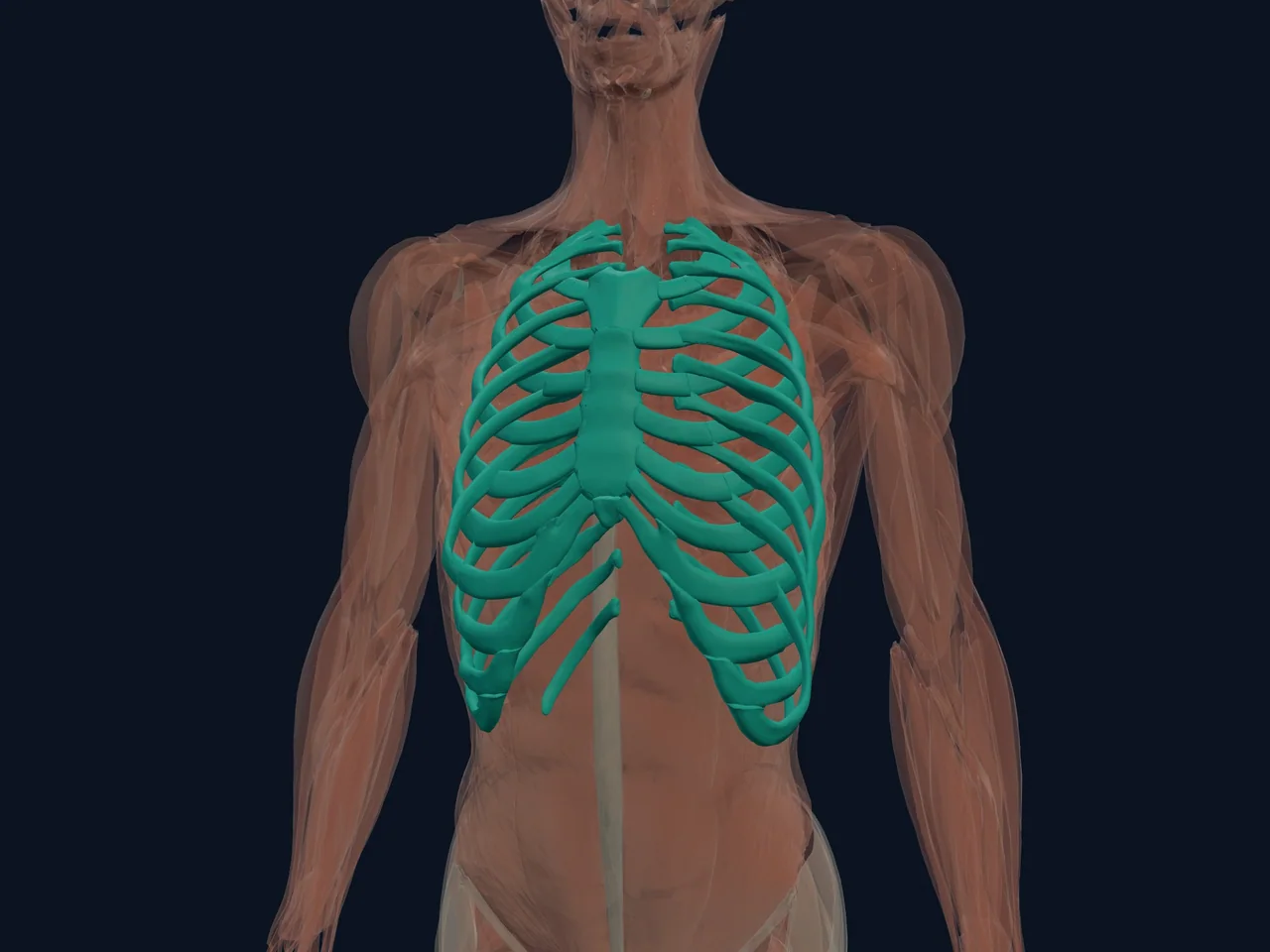
The ribcage is the bony cage that protects the lungs and heart. Most people have 12 pairs of ribs, connecting the spine at the back and curving around to the front of the chest, where most of them meet the breastbone (sternum) through flexible costal cartilage.
The ribcage moves with every breath, which is why rib injuries hurt more when you breathe deeply, cough or sneeze.
Location and Connections
- 12 pairs of ribs attach at the back to the 12 thoracic vertebrae
- True ribs (1–7) connect to the sternum directly through their own cartilage
- False ribs (8–10) connect to the sternum through shared cartilage
- Floating ribs (11–12) have no front connection to the sternum
- The sternum — breastbone — runs down the centre and also connects to the collarbones at its top
What It Does
The ribcage protects the heart, lungs and major vessels, anchors the muscles of breathing and the shoulder, and expands and recoils with each breath. The costal cartilage lets the front of the ribcage flex slightly, absorbing force that would otherwise travel directly to the sternum.
Common Problems
- Rib fractures or bruises — usually from falls, blows or forceful coughing
- Costochondritis — irritation of the cartilage where ribs meet the sternum
- Sternoclavicular joint sprains — at the collarbone–breastbone connection
- Intercostal strain — a pulled muscle between the ribs
- Pain with deep breaths, coughing or twisting, which is typical of ribcage injuries
Most ribcage injuries heal with time, pain control and breathing exercises — the ribs move with every breath, so they cannot be completely rested.
Clinical Relevance
Severe pain after trauma, difficulty breathing, or pain with a cough that produces blood needs urgent assessment. Older adults and people with many rib fractures need closer follow-up because chest infections are a real risk when rib pain limits breathing.
Related Anatomy
- Chest wall overview
- Intercostal muscles — the muscles between the ribs
- Diaphragm — the main breathing muscle
References
- StatPearls. "Anatomy, Thorax, Ribs." https://www.ncbi.nlm.nih.gov/sites/books/NBK538328/