Exercises · IA-HIP-EXE-007

Side-Lying Hip Abduction

Learn side-lying hip abduction for controlled lateral-hip and gluteal strengthening.

Browse Hip
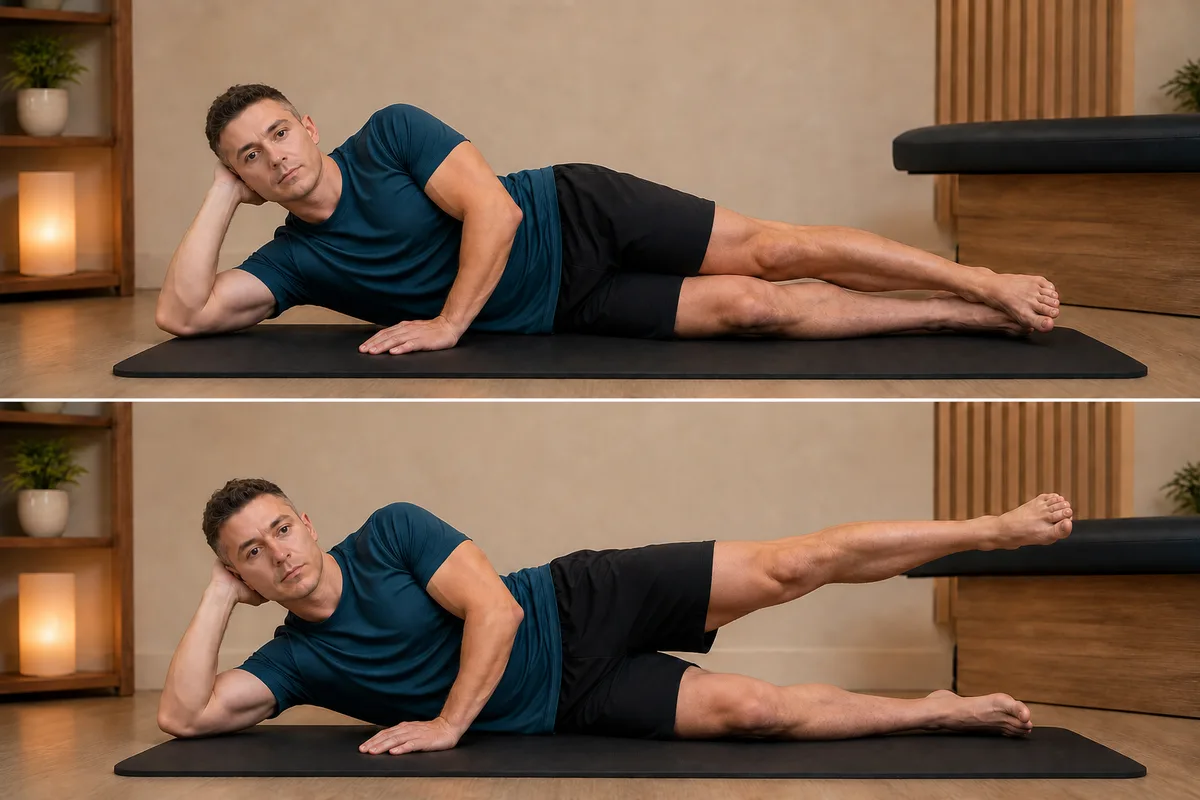
Start and finish demonstration of Side-Lying Hip Abduction
Start and finishUse the written steps below for the full technique and safety guidance.

At a glance

Exercise profile

Target muscles
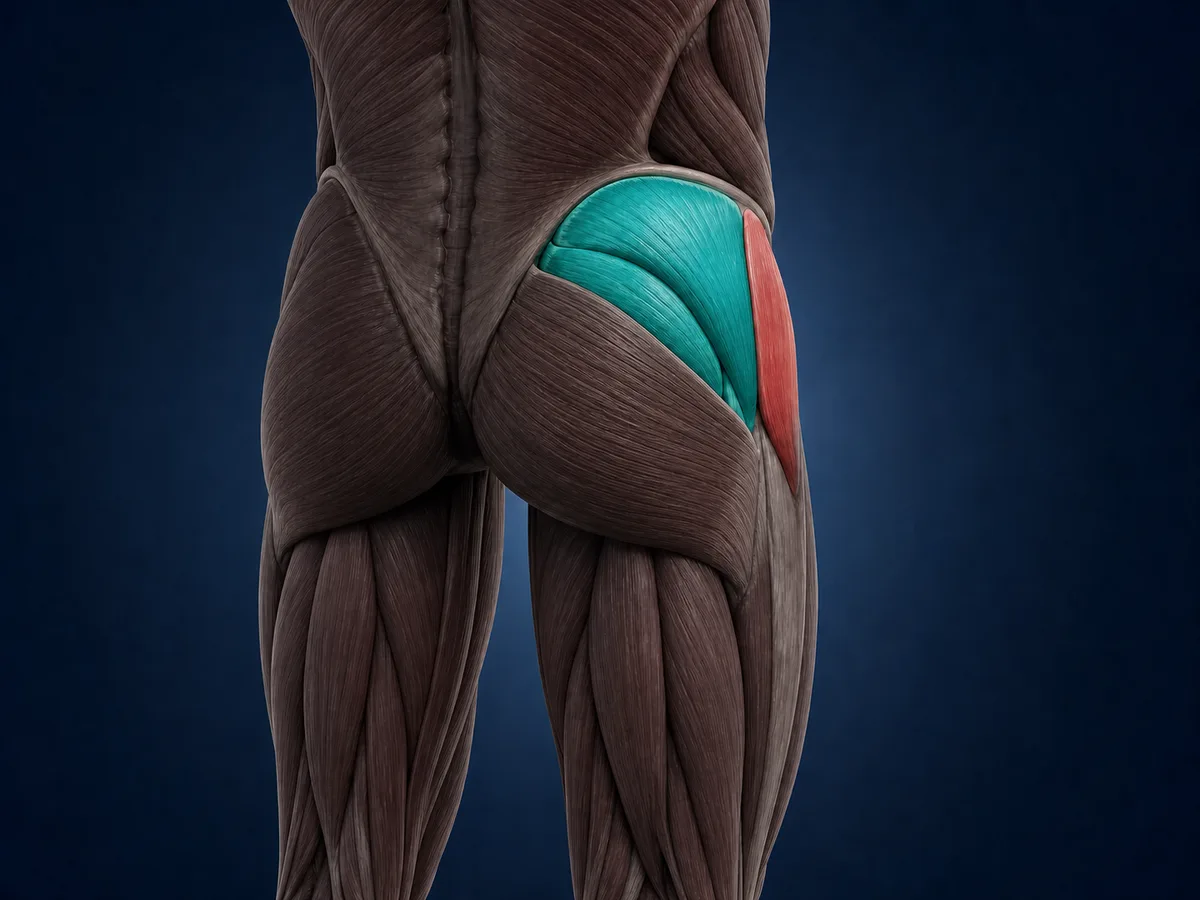
Gluteus medius, Gluteus minimus
Exercise type
Strength
Equipment
Exercise mat, Optional ankle weight
Mechanics
Isolation
Movement pattern
Hip abduction (unilateral)
Experience level
beginner
Secondary muscles
Tensor fasciae latae, Upper fibres of gluteus maximus

Lateral hip strength

What this exercise works

The lateral gluteal muscles lift the leg and help keep the pelvis controlled when body weight moves onto one side.

Anatomy highlighting the structures involved in Side-Lying Hip Abduction
Teal — primary muscles doing most of the workRed — secondary muscles assistingGrey — stabilizers and surrounding anatomy

Primary emphasis

  • Gluteus medius
  • Gluteus minimus

Secondary muscles

  • Tensor fasciae latae
  • Upper fibres of gluteus maximus

Stabilizers

  • Abdominal wall
  • Quadratus lumborum
  • Deep hip rotators

Movement and joint actions

  • Hip abduction
  • Frontal-plane pelvic control

Muscle contribution changes with position, range, resistance and individual technique.

Why it can help

Potential benefits and carryover

Benefits depend on technique, dosage, consistency and whether the exercise suits the person. Sport carryover means supporting the physical demands of the activity—not guaranteeing performance or preventing injury.

Everyday benefits

  • Builds strength and endurance at the outside of the hip
  • Supports pelvic control during walking, stairs and single-leg tasks
  • Provides a stable, supported alternative to standing hip exercises
  • Creates a foundation for balance, running and change-of-direction progressions

Training carryover

  • Supports later single-leg squats, step-downs and split squats
  • Builds a base for standing band walks and loaded hip-abduction work
  • Improves lateral hip endurance used during longer lower-body sessions

Sport carryover

  • Supports pelvic control demands in running and hiking
  • Builds lateral-hip capacity used in cutting and change-of-direction sports
  • Supports single-leg control in skating, skiing and field sports

Technique

Side-Lying Hip Abduction tips

Use these cues to keep the movement controlled and focused on its intended purpose.

  1. Stack the hips and keep the top leg in line with the trunk.
  2. Lead with the heel and keep the toes facing forward rather than turning upward.
  3. Use a smaller lift if the pelvis starts rolling backward.
  4. Pause briefly at the top and lower the leg without letting it drop.

Overview

Side-lying hip abduction strengthens the muscles at the outside of the hip while the trunk and pelvis remain supported.

How to Do It

  1. Lie on one side with the lower leg comfortable—straight as shown, or bent for added balance—and the top leg straight in line with the trunk.
  2. Stack the hips and point the top toes forward.
  3. Gently brace the trunk and lift the top leg a short distance, leading with the heel.
  4. Pause briefly, then lower slowly without rolling backward.
  5. Begin with 2 sets of 6–12 repetitions per side.

What You Should Feel

Expect effort at the outer hip and buttock. Stop if side-lying pressure or the movement causes sharp or steadily increasing pain.

Common Mistakes

  • Rolling the pelvis backward
  • Turning the toes toward the ceiling
  • Lifting too high
  • Swinging instead of controlling the leg

Progression

Add repetitions and pauses first. An ankle weight is a later option when body-weight repetitions are controlled.

References

  • South Tees Hospitals NHS Foundation Trust. "Hip Abduction in Side Lying." https://www.southtees.nhs.uk/resources/hip-abduction-in-side-lying/
  • Oxford University Hospitals NHS Foundation Trust. "Returning to Exercise." Side-lying hip abduction. https://www.ouh.nhs.uk/patient-guide/leaflets/files/109181exercise.pdf
This is general education. Side-lying abduction may not suit every stage of lateral hip pain or postoperative rehabilitation; follow your clinician's plan.
Educational information only

This information does not diagnose an injury or replace care from a qualified healthcare professional.