Overview
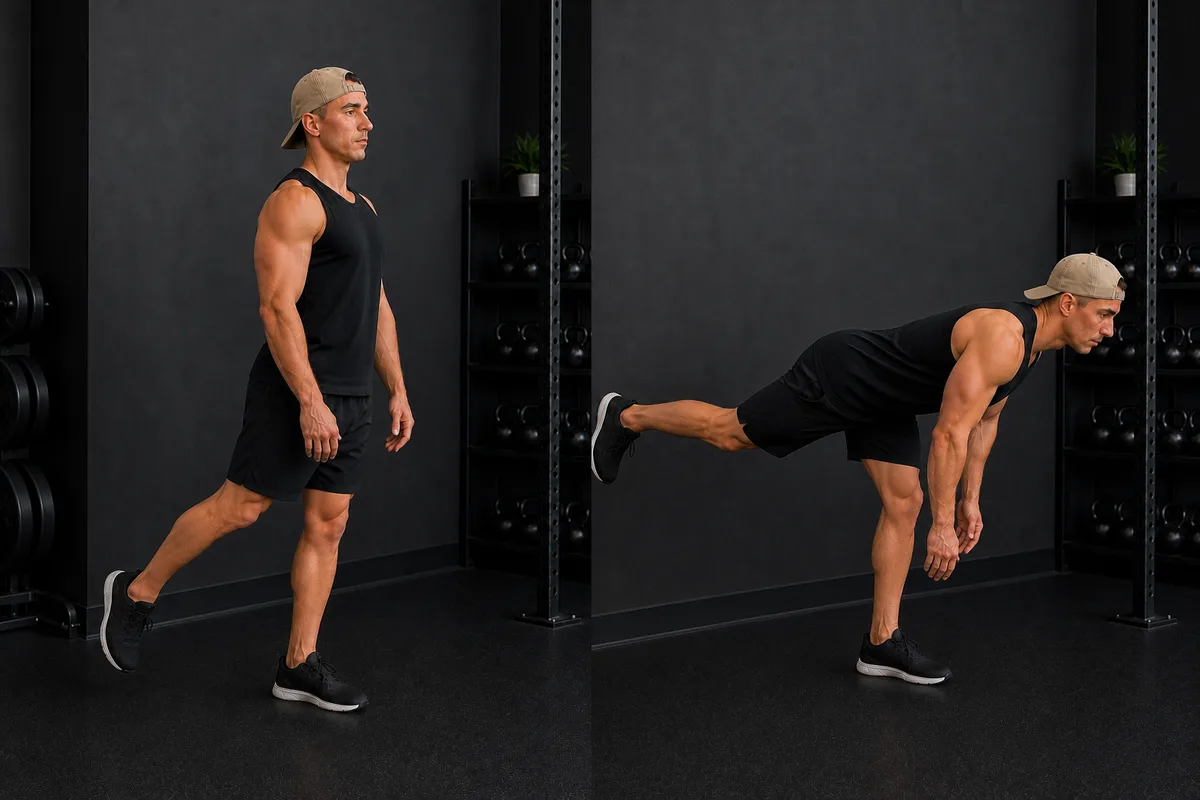
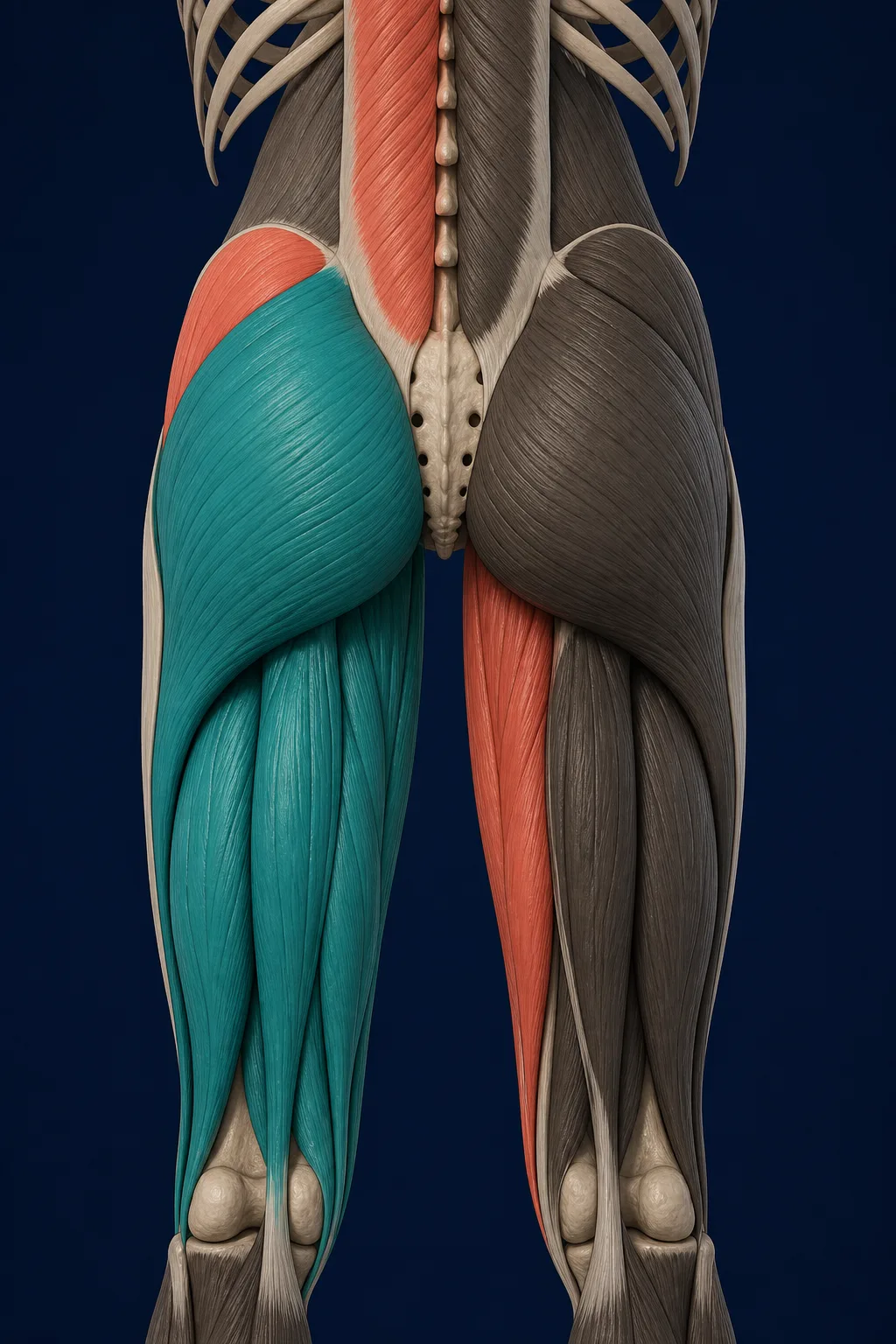
The single-leg deadlift combines a hip hinge with single-leg balance: you bend forward from the hip on one leg while the other leg extends behind you. It strengthens the glutes and hamstrings while training the hip to keep the pelvis level — useful for walking, stairs, running and lifting.
Start with light or no weight and master balance first. This is a progression from the two-footed hip hinge.
How to Do It
- Stand tall on one leg with a soft knee.
- Push your hips backward and hinge forward, keeping your back in a comfortable neutral line.
- Let the free leg extend straight behind you as your torso lowers.
- Stop when your torso is roughly parallel to the floor or your balance is challenged.
- Squeeze the glute of the standing leg and return to standing.
- Repeat on the same leg, then switch sides.
What You Should Feel
Effort in the glute and hamstring of the standing leg, with the hips staying level. Stop if you feel sharp hip pain, groin pinching or if the knee twists.
Common Mistakes
- Rounding the back to reach lower
- Rotating the hips open instead of keeping them square
- Rushing the movement instead of moving slowly and controlled
- Bending the standing knee into a squat instead of hinging
Make It Easier
- Hold a wall or countertop with one hand for balance
- Keep the range small — lower only a short distance
- Do the two-footed hip hinge first until the pattern is automatic
Progression
- Remove hand support once balance is comfortable
- Add light dumbbells or a kettlebell
- Slow the lowering phase to 3 seconds
- Add a single-leg balance hold at the top
Common Questions
Why is the single-leg deadlift useful?
It trains the glutes and hamstrings while challenging single-leg balance — the same demands as walking, stairs and running. Research on gluteal activation supports hip-extension and balance exercises like this for hip strength.
How do I know if my hips are level?
Imagine a line across the tops of your hip bones. They should stay roughly square and level as you hinge — if one side drops or rotates, shorten the range and slow down.
References
- Reiman MP, Bolgla LA, Loudon JK. "A literature review of studies evaluating gluteus maximus and gluteus medius activation during rehabilitation exercises." Physiotherapy Theory and Practice. 2012;28(4):257-68. https://pubmed.ncbi.nlm.nih.gov/22007858/
- Journal of Orthopaedic & Sports Physical Therapy. "Hip Pain and Mobility Deficits—Hip Osteoarthritis: Revision 2025 Clinical Practice Guideline." https://www.jospt.org/doi/full/10.2519/jospt.2025.0301
This information is for education only and is not a medical diagnosis. InjuryAtlas does not replace an assessment by a qualified health professional. If you have severe pain, visible deformity, numbness, loss of function, or symptoms that are getting worse, seek medical care promptly.