Overview
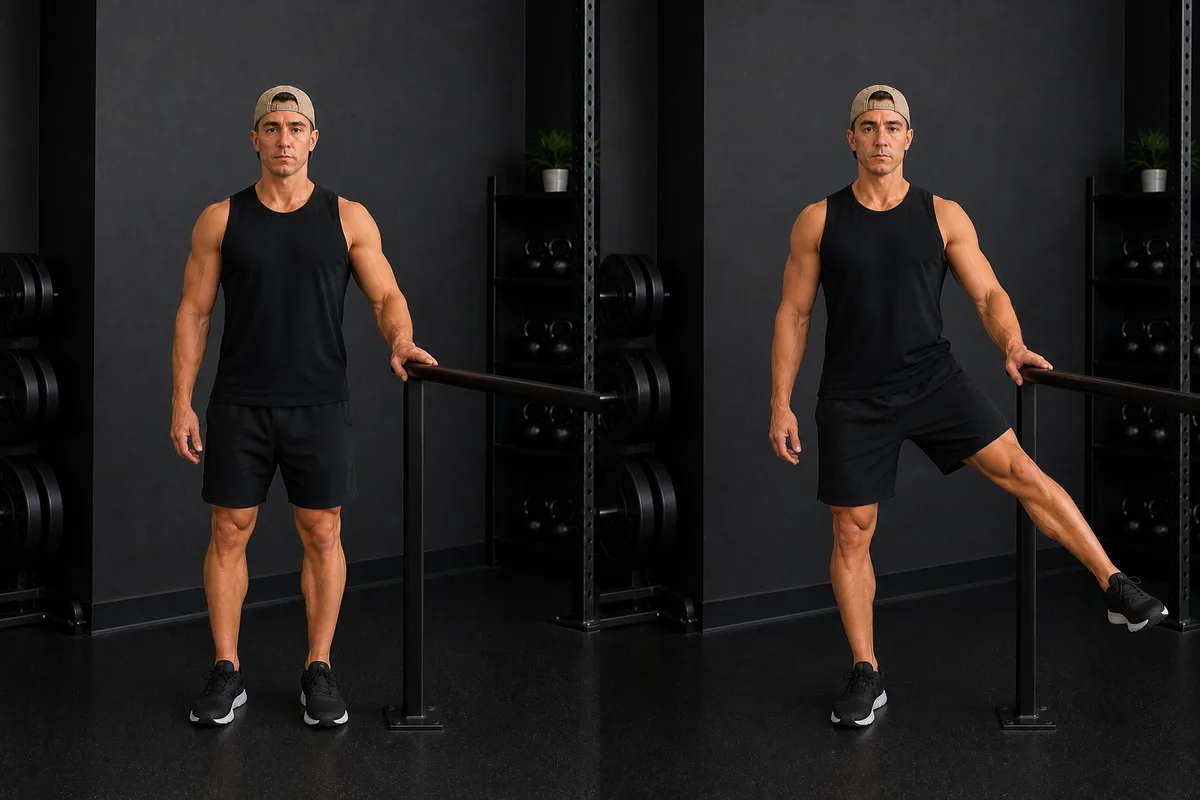
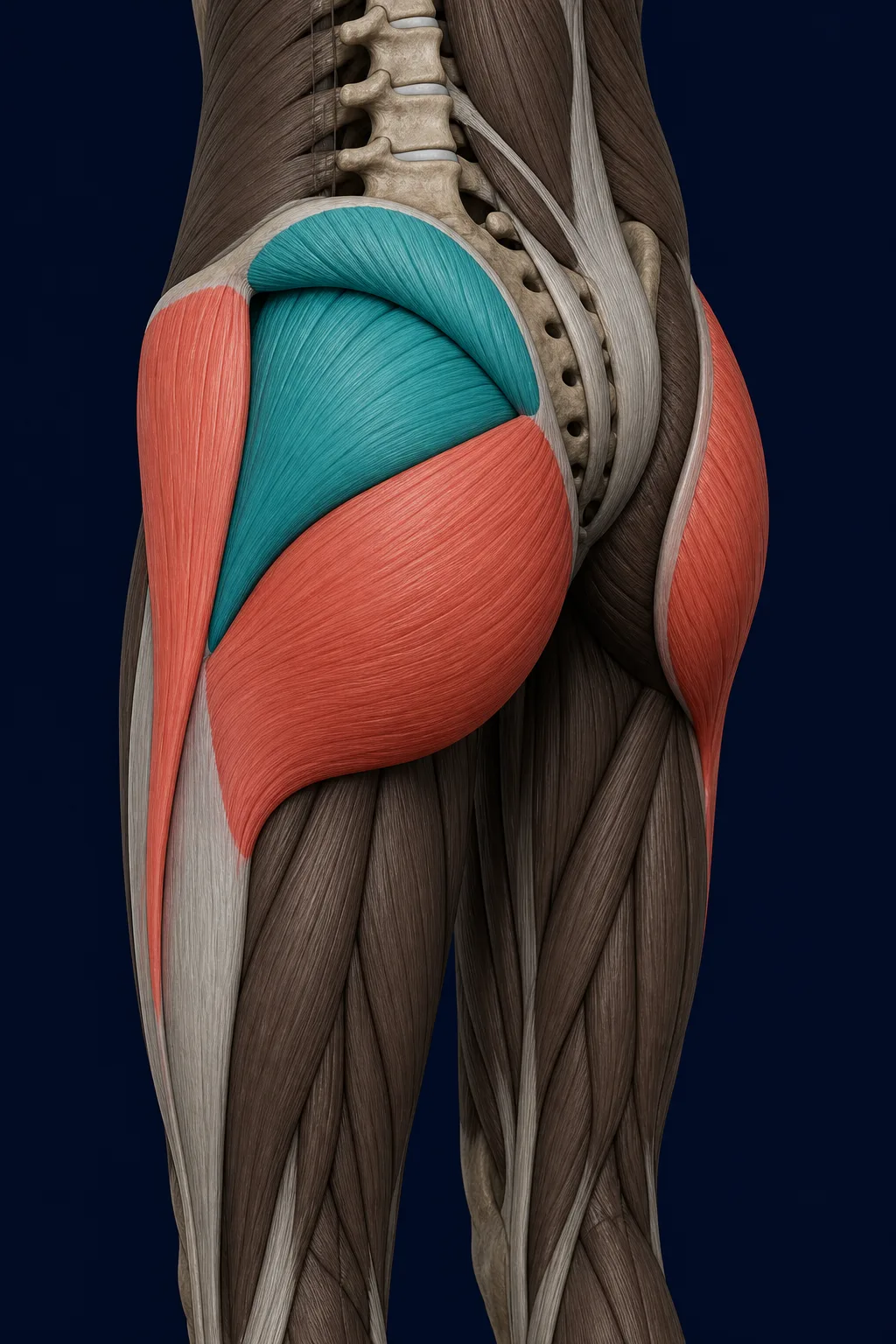
Standing hip abduction moves the leg out to the side against gravity or a band, strengthening the gluteus medius — the muscle that keeps your pelvis level when you walk and stand on one leg. It is a natural progression from the clamshell once lying work feels easy.
It is a common exercise in programs for outer-hip pain, gluteal tendinopathy and general hip conditioning.
How to Do It
- Stand tall beside a wall or chair for balance, feet hip-width apart.
- Keep the supporting leg slightly bent and the pelvis level.
- Slowly lift the outside leg out to the side, keeping the toes pointing forward.
- Stop at a comfortable height — roughly 30–45 degrees — without tilting the torso.
- Lower slowly with control.
- Repeat, then switch sides.
What You Should Feel
Effort in the muscle on the side of the hip. The pelvis should stay level and the torso still. Stop if you feel sharp pain over the outer hip or if the lower back arches.
Common Mistakes
- Leaning the torso toward the standing leg to get the leg higher
- Letting the hips roll backward
- Lifting the leg with momentum or a kick
- Lifting too high and twisting the hip
Make It Easier
- Use a smaller range of motion
- Hold a wall or chair for support
- Start with the clamshell if standing balance is hard
Progression
- Add a resistance band just above the knees or ankles
- Hold at the top for 2–3 seconds
- Do the movement without hand support once balance is solid
- Progress to single-leg balance work and step-ups
Common Questions
Is standing hip abduction good for outer hip pain?
It is a useful strengthening exercise for gluteal tendinopathy and greater trochanteric pain syndrome because it loads the gluteus medius at low to moderate intensity. Pair it with load management and progress gradually.
How many should I do?
Start with 2 sets of 10–15 slow repetitions per side, two or three times per week, and adjust based on how the hip responds the next day.
References
- Reiman MP, Bolgla LA, Loudon JK. "A literature review of studies evaluating gluteus maximus and gluteus medius activation during rehabilitation exercises." Physiotherapy Theory and Practice. 2012;28(4):257-68. https://pubmed.ncbi.nlm.nih.gov/22007858/
- Grimaldi A, Fearon A. "Gluteal Tendinopathy: Integrating Pathomechanics and Clinical Features in Its Management." Journal of Orthopaedic & Sports Physical Therapy. 2015. https://pubmed.ncbi.nlm.nih.gov/26381486/
This information is for education only and is not a medical diagnosis. InjuryAtlas does not replace an assessment by a qualified health professional. If you have severe pain, visible deformity, numbness, loss of function, or symptoms that are getting worse, seek medical care promptly.